




Indoor Playground Revenue Per Square Foot (RPF) Optimization: Profit Maximization Strategy
Of all potential indicators that one could examine when performing business management planning, gross sales income from a facility can be one of the most erroneous if the organization does not consider the efficiency ratio, Revenue Per Usable Square Foot (RPF). RPF represents the most crucial indication of an organization’s efficiency within the direct controllable costs of space, rent, and labor. You should master the construction of the RPF net profit of your Indoor playground.
Mastering the synergistic combination of three core strategies—Operational Excellence (focused on throughput and upselling), Optimized Profit Mix (balancing traffic-driving Anchor attractions and high-profit-margin Profit Drivers), and Strategic Design (structuring guest flow and eliminating dead space)—is essential for maximizing RPF. Mastering these principles will allow your playground to evolve into a profit-maximizing engine per square foot. Let's learn how to optimize RPF for your next indoor playground!
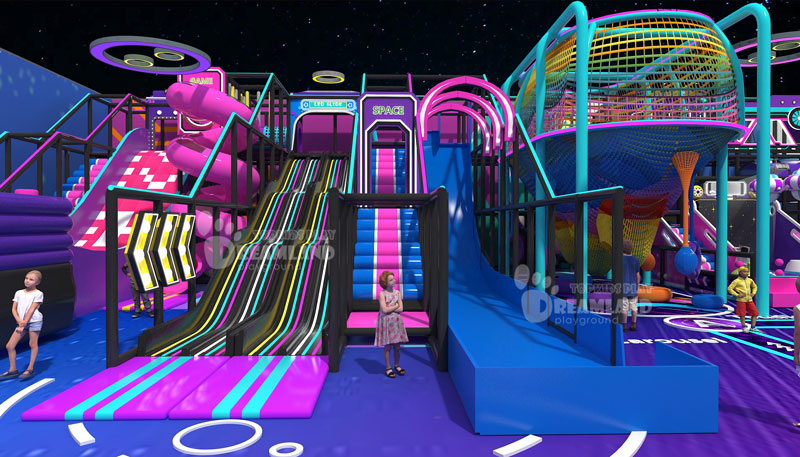
Optimizing Guest Flow Engineering: Guiding Customers to High-Profit Zones
High RPF Indoor Playgrounds are designed to mitigate the dependence on passive, organic guest movement. They design for movement to maximize conversion, Average Transaction Value (ATV), and exposure to high-priced add-on products and services. The flow of guest movement determines the pathway design for families from entry to anchor zones, and the number of income-generating touchpoints each flow cycle will pass.
A. "Hot Spot" Attraction Placement
Large soft play structures are Anchor Attractions with good traffic-pulling capabilities but limited revenue potential. However, their ability to generate traffic is valuable, and revenue inefficiency does not detract from the potential of their positioning. Positioning them deep within the venue ensures that every newly arriving guest first passes the Driver Attractions. This is where conversion is more likely to occur, with parents alongside children engaging with premium simulators, interactive challenge games, mini-bowling, and VR pod rooms, before they get to the main soft play. This approach to Anchor Attraction placement is a simple method of increasing RPF with no need for more staff, more advertising, or even more square footage in the venue. Purpose-built “forced-flow corridors” are designed to respond to passive foot traffic and increase RPF through expected revenue-optimizing upsell activities.
B. Eliminating Dead Space
Two ways to deal with lost profit due to wasted space in an Indoor Playground—especially in the case of lobbies and walls. In case there’s a successful competitor in the area, machines such as grip sock rentals, character photo ops, and redemption/massage chairs can fill highly visible, underused spaces with consistent dollars and take minimal expenses and staffing.
Vending micro-units are ideal for low corners. These micro-units are designed to operate with minimal staff, relying on smart anti-theft technology to secure assets. Optimizing their locations can also increase RPF due to conversion increase and the volume due to impulse purchases. Converting potential spaces also increases the average dollars per square foot.
C. Vertical Revenue Expansion
While horizontal growth is limited in some spaces, verticality offers a great opportunity indoors. Adding mezzanines, climbing and rope courses, and two-story structures can instantly increase capacity and profit without requiring extra rent. They also add more length and interactivity, resulting in increased engagement. The vertical improvements have a strong impact on real profit and RPF.
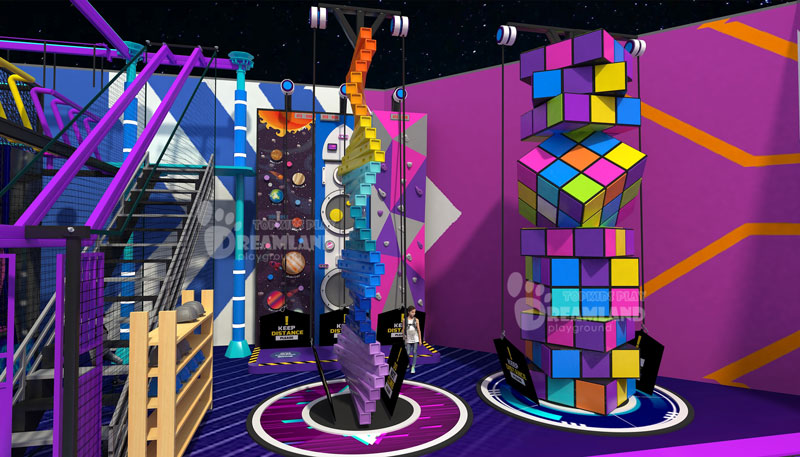
How to Do RPF-Driven Zoning in an Indoor Playground
When designing High-RPF Indoor Playgrounds, square footage allocation is determined using predictive models that include revenue density, operational throughput, and customer behaviors. Different operational Zones must be determined based on the economic functionality of the Zone, not the aesthetic appeal of the Zone.
A. High-Value Zones (RPF Accelerators)
These zones are more compact, highly priced, and exhibit extremely high revenue density/profitability. Operationally, they are designed to accomplish high profitability and swift operational completion. Games such as VR, themed escape rooms, AR, mini-bowling, interactive climbing (competition) walls, and other fast-completion games that are high cost per/minute value deliver optimal revenue density. These zones achieve the highest productivity (RPF) within the entire facility.
B. High Traffic Zones
These zones contain large soft play structures, toddler zones, and extensive trampoline sections. These zones are the major traffic separators and have moderate RPF, but are of even greater strategic value and importance. They act as the business’s traffic anchor, ensuring sustained repeated visitation. They are the primary strategic entry zones to convert guests to the business's premium profit/yield opportunities and secondary profit/yield event opportunities.
C. Auxiliary Profit Centers (Indirect Boost)
When designing Food & Beverage Areas (F&B), Retail Shops, and Rental Event Facilities (Party Rooms) for maximum profitability via operational streamlining, efficiency, and upselling, they yield strong Revenue Per Square Foot. On average, Party Rooms capture a consistent and reliable RPF. Food and Beverage (F&B) stations with low queue times and efficient workforce optimization (menu simplification and POS integration) yield outstanding additional profit.
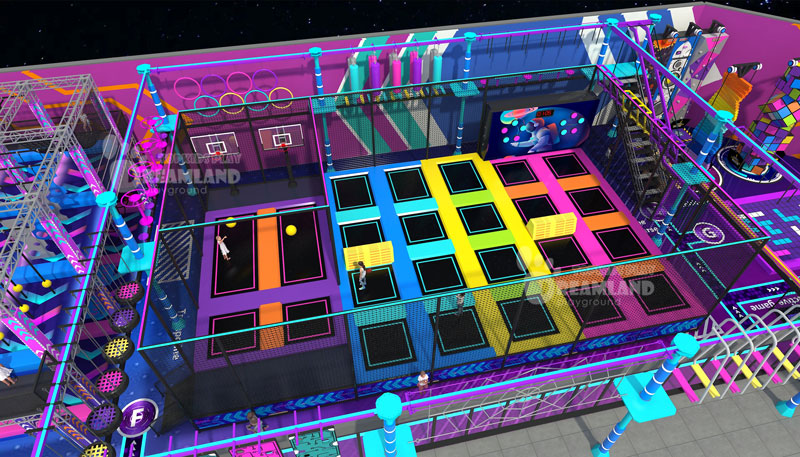
Balancing the Attraction Mix for Maximum Average Transaction Value (ATV)
To optimize the performance of any attraction, one must consider excitement levels, among other factors, and determine the proper weighting of each variable, such as the RPF economics, throughput capacity, guest psychology, and value of the attraction as a revenue funnel component. There are also distinctions among the factors, as some are traffic producers, some are profit producers, and some are length enhancers, leading to improved secondary spending.
A. Anchor Attractions (The Draw)
Anchor attractions are big drawing soft play structures, trampoline courts, large slides, and adventure zones. They are the major attractions designed to pull in families and are a major fixture of any facility. Their RPF is typically moderate; however, customer acquisition and retention hinge on these major anchors as they play a key role in the facility's identity and ultimately which Indoor Playground a family chooses over the competitors.
B. Profit Driver Attractions (The Conversion)
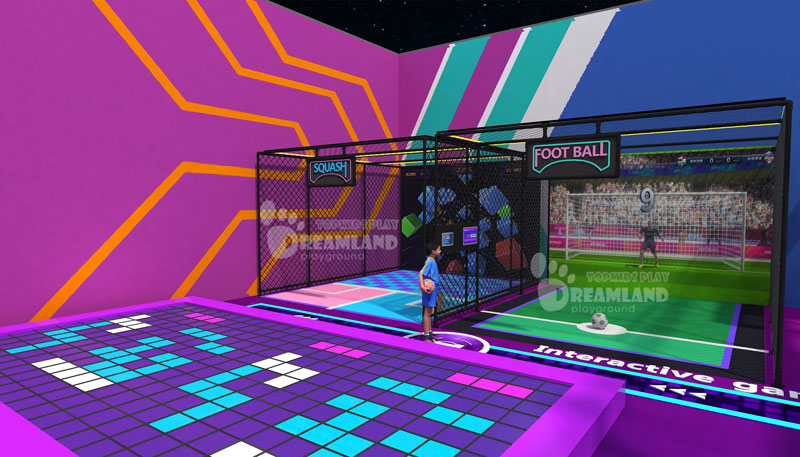
Among all attractions within a given venue, Driver Attractions are the most financially gainful. Their high profitability is a result of top pricing and high turnover rate, small real estate footprint, and impulse-buy potential. Such attractions include, but are not limited to, laser arenas, bumper cars, VR, projected interactive walls, interactive mini-games, ninja courses, and other quickly resetting mini-challenges. Instead of anchoring traffic, these attractions exist to convert traffic quickly and predictably, and to enhance the venue's revenue.
C. Dwell Time Enhancers (The Upsell)
Enhancers not only prolong customer stay and therefore secondary spending, but also amplify the stay's total duration. Families who circulate the venue are stimulated and entertained for long periods of time. Interactive play corners, charging zones, arcades, parent lounges, and all focus on prolonging customer stay, and contribute to total venue revenue and food and beverage uplift. The operator's indirect contribution to revenue is still significant, despite the lower revenue generation of the enhancers compared to the drivers.
D. Quick Overview Table
|
Attraction Type |
RPF Characteristic |
Operational Goal |
|
Anchor |
Moderate (High Gross Revenue) |
High Foot Traffic / Core Appeal |
|
Driver |
Extremely High (High Cost-per-Minute) |
Fast Cycle Throughput / High Utilization |
|
Enhancer |
Lower (High F&B Conversion) |
Increase Dwell Time / Boost Secondary Spend |
An even combination guarantees that every attraction fulfills a purpose in the creation of revenue. Anchor attractions provide the primary offerings that motivate a family visit. Driver attractions optimize the revenue potential of the visit; Enhancer attractions prolong visit-to-transaction time.
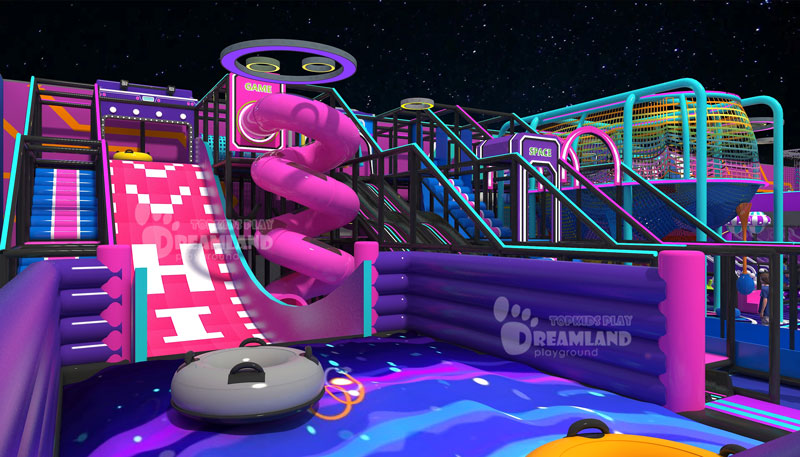
Optimizing Throughput to Eliminate Bottlenecks in Indoor Play
Even with excellent offerings and design, you will need Operational Excellence if you want to reach RPF’s peak. Throughput management, which is the management of how quickly a customer is moved through a revenue-generating process, impacts both RPF and ATV.
A. Technological Integration
When systems like RFID wristbands, automated check-ins, and integrated POS systems are in place, tasks become more efficient, and bottlenecks are avoided. Customers can digitally purchase additional offerings, recharge activity cards, and engage in activities without needing staff assistance. There are automated entry lanes that help to quickly increase throughput during peak hours and allow staff to supervise and shift their focus to selling instead of transactional activities.
B. Cycle Time Reduction
The number of paying customers who get to experience a Driver attraction in a given hour determines its revenue. There needs to be a reduction of idle time in a cycle if revenue is to increase. One way to achieve this is to relocate prep tasks outside the main activity area.
Using laser tag as an example, if staging rooms and vesting stations are positioned outside the arena, one group can get ready to play while another group is already in the arena. This also applies to challenge arenas, VR stations, and ropes courses. The more you reduce the cycle time, the more RPF you will get without the need to increase labor or purchase new equipment.
C. Staff Efficiency and Upselling
Just as the marketing mix, employee actions play a vital role in determining the revenue potential. Upselling is the employee strategy of top-tier Indoor Playgrounds. Employees are trained to suggest new purchases using the same phrases (e.g., tier system, bundles, extensions, upgrades to a party, etc.). A higher order of engagement, conflict resolution on the fly, and operational cadence are the focus of training. Effective payroll management reduces the staffing portion of revenue while guest spend increases through better revenue optimization.
Conclusion: Converting Space into Scalable Profit
Each indoor playground offers an additional avenue of earning and maximizing profit with Dreamland Playground. Our team creates customizable layouts based on qualitative and quantitative data to optimize our clients’ CapEx and drive profit improvement by ensuring that Anchors, Drivers, and Enhancers are working toward the highest RPF. Profit centers will be designed for all remaining playground sections as operational gaps, hidden cost risk, and misaligned high-RPF strategies will be avoided to ensure the sustainment of profits without play cost risk.
If you want predictable returns, a stronger business model, and a long-term partner who understands both operations and profitability, now is the time to connect with Dreamland. Start your project with us today and turn every square foot of your facility into measurable financial performance.
Frequently Asked Questions (FAQ)
Q1. What's an acceptable RPF benchmark for an indoor playground?
High-performing indoor playgrounds in the U.S. typically target an annual RPF in the range of $100–$300 per square foot, depending on location, population density, attraction mix, and competitive environment.
Q2. Do RPF calculations for party rooms and F&B outlets count?
Yes, party rooms and F&B outlets count. They often generate some of the highest RPF due to high margins and efficient use of dedicated space.
Q3. How Often Should RPF Be Measured?
In densely packed high-volume areas, every major attraction and playground space is recommended on a weekly basis. In order to estimate venue RPF on a monthly to quarterly basis, throughput metrics should be used.
Q4. Is It Justified To Take Away Attractions That Have Low RPF?
Not necessarily. Low-RPF anchors are good to have due to the pulling of visitors; high-RPF drivers should focus on traffic conversion, and secondary spend should be increased.