

How to Review an Indoor Playground Equipment Specification Package Before You Buy
Imagine you have received two offers from suppliers of indoor playground equipment. At first glance, both suppliers appear to offer very similar indoor playground equipment for family entertainment centers. They have created 3D renderings of similar attraction layouts and have listed their prices. However, when reviewing the indoor playground equipment specification sheets from both suppliers, there are some major differences. One supplier uses commercial-grade galvanized steel for the framework of the playground and lists all of the individual components that are used in the construction of the play structure. The supplier also outlines the installation requirements of the indoor playground. The other supplier provides only the dimensions of the individual pieces of equipment and some marketing images.
Whether you are designing a family entertainment center (FEC), a kids’ play area in a children’s play café, a shopping mall play area, a trampoline park, a church play area, or a mixed-use recreation facility, the specification sheet is one of the most important purchasing documents you will receive during the purchasing process. The indoor playground equipment specification sheet helps you to assess your potential venue, compare offers from different suppliers, plan your project, and detect potential errors before production starts.
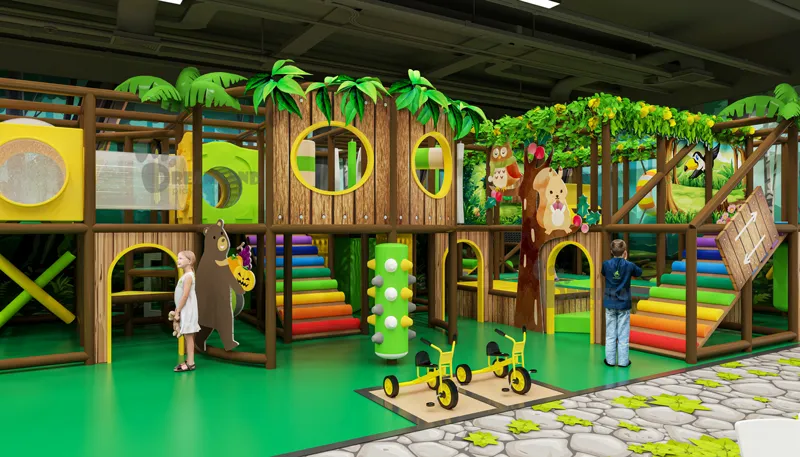
What Is an Indoor Playground Equipment Specification Sheet?
An indoor playground equipment specification sheet is a commercial and technical document that outlines key characteristics of equipment before production. The sheet will list details of all the equipment, including dimensions, materials, safety features, and details of how the playground is to be installed, packaged for shipping, and maintained after installation. Owners, architects, general contractors, installers, and the operations staff of a venue will all refer to the specification sheet in order to have a clear understanding of the playground being developed.
Before selecting a supplier to manufacture and supply play equipment for a proposed venue, the commercial buyer should scrutinize all project specifications. Ask the supplier for additional information and required documents as needed. These pre-purchasing checks can help the buyer identify and correct design errors before approving the specification, reducing the risk of later installation problems and additional costs.
Unlike a sales brochure, a technical specification package should not rely on marketing images alone. It should also define the equipment, materials, dimensions, responsibilities, and documentation included in the quotation.
A complete specification sheet typically includes:
- Equipment dimensions and required floor area
- Overall height and ceiling clearance
- Recommended user age range
- Maximum user capacity
- Structural and soft play materials
- Play component list
- Installation requirements
- Packaging and shipping information
- Maintenance recommendations
- Warranty information
- Supplier documentation related to materials or applicable standards
For commercial projects, this document serves multiple purposes.
- Project managers use it to coordinate installation schedules.
- Architects compare it with the building layout.
- General contractors evaluate installation readiness.
- Facility owners use it during quote comparison.
Insurance representatives and local authorities may also use it to request additional supporting documentation during the initial planning stage of the project.
Without a detailed specification sheet, it is impossible to compare two quotes from suppliers for the same project to check whether both quotes cover the same scope of work.
Buyer Scenario
Supplier A's specification sheet and installation plan for a three-level indoor playground are shown below. Two alternative supplier quotes for the same playground have been obtained, each for $280,000.
Supplier A provides:
- Complete equipment dimensions
- Material specifications
- Installation drawings
- Packing details
- Component schedule
- Maintenance documentation
Supplier B provides:
- One rendering
- Overall price
- Basic floor dimensions
There may appear to be a few differences between the two supplier quotations. However, the lack of comprehensive documentation in Supplier B’s quotation creates potential procurement problems that could lead to higher costs later in the project.
Supplier Questions to Ask
Before moving forward, consider asking:
- Which edition of ASTM F1918 was used?
- Which components are covered?
- Was the equipment tested or evaluated by an independent laboratory?
- Can you provide the relevant test reports and the scope of evaluation?
- Do the reports match the materials and equipment supplied for this project?
These questions provide an overview of what should be included in an indoor playground equipment specification sheet. The more complete the information provided by each supplier, the easier it is for commercial buyers to compare quotations for the required playground.
Start with the Basic Dimensions: Length, Width, Height, and Floor Area
The dimensions of the floor are usually the first part of the specification that a commercial buyer looks at.
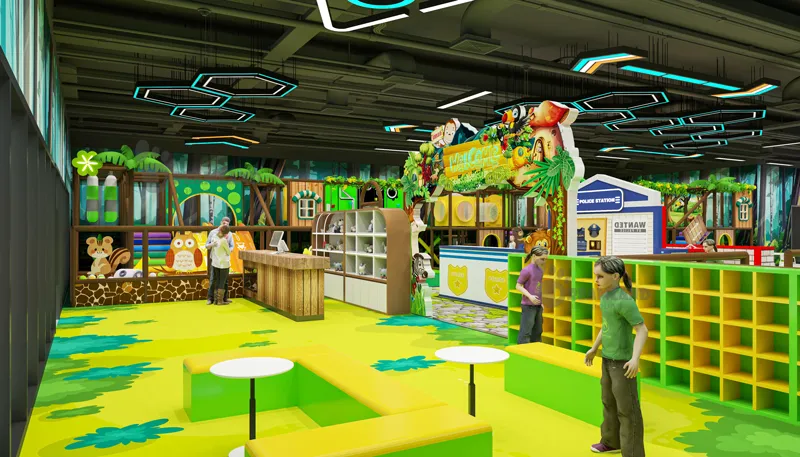
The floor plan of the quoted play equipment is just as important for commercial buyers to examine as the colorful rendering. The floor plan will help determine whether the equipment can be installed and operated correctly.
Compare the specification with your venue plans, considering not only the available floor area but also the actual layout.
Pay close attention to:
- Overall length
- Overall width
- Maximum equipment height
- Required safety clearance
- Circulation space
- Entry and exit locations
Then compare those dimensions with the building itself.
- Does the equipment fit between structural columns?
- Will it interfere with emergency exits?
- Is there sufficient clearance beneath sprinkler piping?
- Can lighting fixtures remain in their current location?
- Will HVAC ducts require relocation?
These factors will affect the installation and could end up costing a lot.
Venue Fit Matters More Than Equipment Size
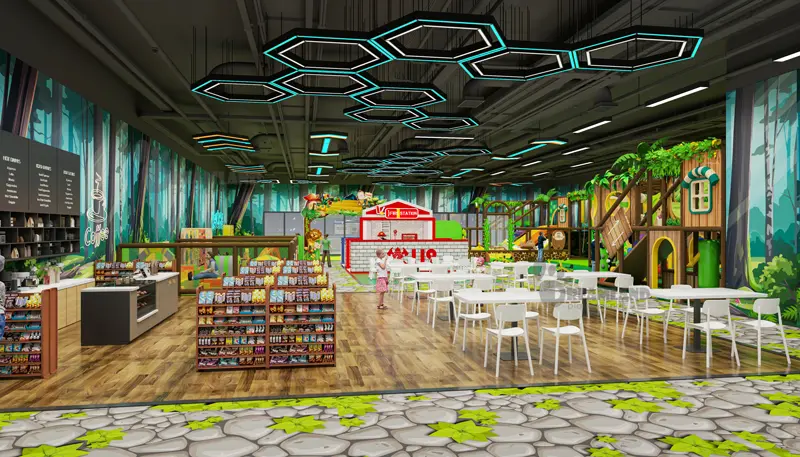
A 5,000 sqm playground may fit inside a 6,000 sqm building, but that does not mean it is suitable for commercial operation. Major design errors can occur during the planning stage and may be costly to correct later.
The venue also needs space for:
- Reception
- Seating
- Birthday party rooms
- Food service
- Walkways
- ADA-compliant circulation routes
- Storage
- Emergency access
Buyer Checklist
Before approving dimensions, confirm:
✔ Equipment fits inside the available floor area
✔ Ceiling height provides adequate clearance
✔ Structural columns will not interfere with the use of your play features.
✔ Emergency exits remain unobstructed
✔ HVAC, sprinklers, and lighting have been reviewed
✔ Customer circulation supports commercial operation
✔ Floor loading requirements have been evaluated where required.
Red Flag
- Some suppliers may only provide a 3D rendering of their play equipment. An attractive rendering is not enough to confirm that the play equipment supplied will fit within your venue.
Whenever possible, submit an architectural floor plan for quotation purposes. This allows the supplier to check venue fit before production, rather than after the goods have been manufactured, reducing the risk of costly alterations.
Check the Age Range and User Capacity
The recommended age range influences nearly every aspect of the equipment, including:
- Platform heights
- Slide design
- Obstacle difficulty
- Netting configuration
- Safety padding
- Entry control
- Supervision requirements
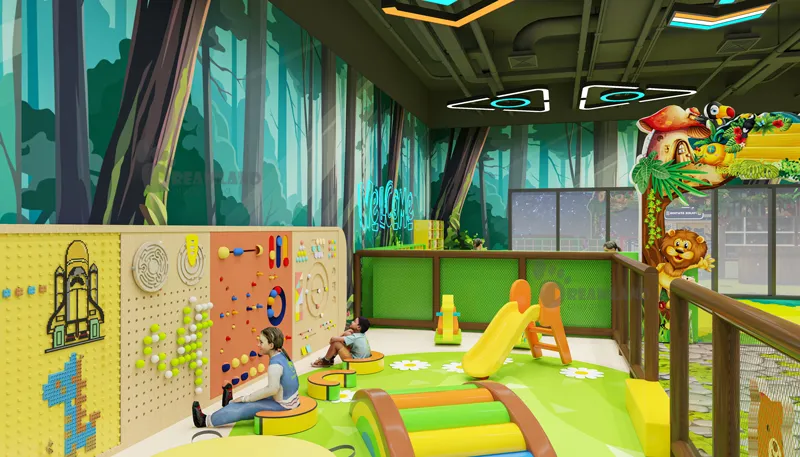
For example, a toddler play area consists of low-level platforms, soft interactive items, and gentle slides. A multi-level adventure structure for children aged 5-12 could be a several-meter-high climbing tower with rope challenges, tube slides, etc. Soft-contained playgrounds with trampolines or a ninja course require completely different planning.
Trampoline parks and ninja courses also have their own particular design requirements, which differ from soft-contained playgrounds. Comparing quotes for these different types of attractions using identical criteria may not be accurate.
Capacity Affects More Than Safety
The stated user capacity influences day-to-day commercial operation.
Higher capacities affect:
- Staffing requirements
- Admission management
- Birthday party scheduling
- Guest flow
- Peak-hour operations
- Fire occupancy planning
Questions Buyers Should Ask
When reviewing age range and capacity, consider asking:
- Which age group is each play zone designed for?
- Can toddler and older children's areas be separated?
- How was the maximum user capacity determined?
- Does the recommended capacity support our anticipated attendance?
- Are supervision recommendations included?
Buyer Scenario
One supplier recommends a coordinated layout with separate areas:
- Toddler zone
- Preschool soft play
- Main adventure structure
- Parent viewing area
The initial cost is higher, but the offer improves day-to-day operations for customers and helps staff manage children during peak times. Looking beyond the initial price of a project will ultimately lead to a stronger long-term return on your investment.
Understand the Materials Section
Galvanized Steel Structure
Look for details such as:
- Steel pipe diameter
- Wall thickness
- Galvanization method
- Surface finish
- Corrosion protection
PVC Soft Covers
While appearance matters, buyers should also ask about:
- Abrasion resistance
- Ease of cleaning
- Color consistency
- Odor levels
- Flame-retardant material options
- Replacement availability
Foam Padding
Ask suppliers:
- What type of foam is used?
- What density is specified?
- Will replacement foam be available in the future?
- Are replacement procedures documented?
Plastic Slides and Rotational Components
Commercial buyers should confirm:
- Material type
- UV stability (if applicable)
- Surface finish
- Color consistency
- Replacement part availability
Safety Netting and Rope Elements
The specification sheet should identify:
- Netting material
- Rope diameter
- Connection methods
- Fastening hardware
Platforms, Mats, and Flooring Interfaces
Ask suppliers:
- What materials are used?
- How are surfaces cleaned?
- Can worn components be replaced individually?
- Are replacement parts stocked after installation?
Decorative Elements
Commercial themed play equipment is an important feature when selecting an indoor playground for your family entertainment center. The theming of your playground may receive significant attention during sales presentations. It is important to know how the themed decorations attach to the structural play components and whether replacement parts are available.
How do the decorative elements attach to the play structure? Are replacement parts available for decorative components that may be damaged over time?
Buyer Checklist: Reviewing Material Specifications
Before approving production, confirm that the specification sheet identifies:
✔ Structural steel specifications
✔ PVC cover materials
✔ Foam padding details
✔ Slide materials
✔ Netting specifications
✔ Platform materials
✔ Decorative component information
✔ Available supplier documentation for key materials
Questions to Ask Your Supplier
Before finalizing your order, consider asking:
- Can you explain why these materials were selected?
- Which materials require routine replacement?
- Are replacement parts available after installation?
- Can you provide documentation supporting material specifications?
- Are optional material upgrades available for higher-traffic facilities?
Once the quotation has been accepted and the project has moved into manufacturing, evaluating or changing material quality becomes much more difficult. Therefore, it is important to review the specifications before final approval.
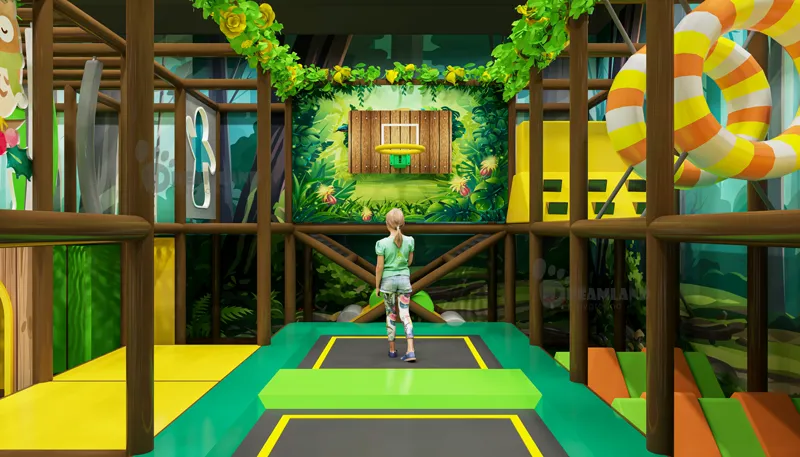
Safety Standards: Do Not Just Look for a Logo
Many specification sheets contain familiar logos or references to international standards. However, do not assume that every part of a project has been reviewed and specified simply because a logo appears on the first page of a specification sheet.
Instead of relying on familiar logos on the first page of a specification sheet and assuming everything is covered, review the details carefully. Ask suppliers specifically which parts of the total package are covered when they cite particular standards. Furthermore, always ask for documentation to substantiate such claims.
For the soft-contained play portion of a U.S. indoor playground project, ASTM F1918-21 is commonly referenced. Trampolines, climbing attractions, electrical systems, surfacing, accessibility, fire protection, and other building systems may require separate standards and local review.
Documentation Matters More Than Marketing
A reference to ASTM F1918 does not by itself mean that the playground is "ASTM certified." Rather than asking a general certification question, ask which components were evaluated, which edition and provisions of ASTM F1918 were used, who performed the evaluation, and what supporting documentation is available.
For example:
- Which portions of the equipment are covered by the ASTM F1918 evaluation?
- Can you provide documentation supporting those references?
- Which materials have supporting test reports?
- Are fire-related material properties documented?
- What documentation is available before production?
Coordinate With Local Professionals
These questions will give you a clearer idea of what has actually been specified rather than relying on general marketing language. Commercial playground projects involve multiple stakeholders.
Depending on your location, you may need to provide documentation to:
- Architects
- General contractors
- Building officials
- Fire reviewers
- Insurance providers
- Local inspectors
As with any commercial playground project, there are typically several people involved in the process of purchasing a play structure.
Red Flag
Be cautious if a supplier lists multiple compliance claims but cannot clearly state which standards apply to which components.
Well-prepared supplier documentation will clearly outline the relevant standard references for each component, rather than making generic compliance claims.
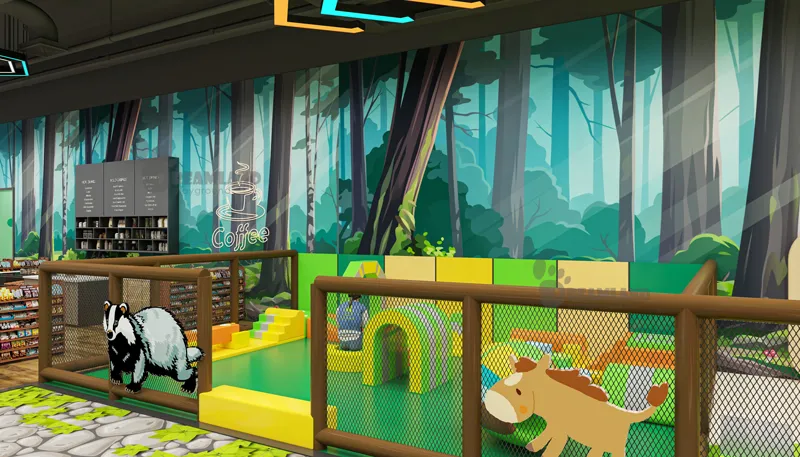
Component List: What Exactly Is Included in the Quote?
One of the most common commercial procurement mistakes is to confuse what has been drawn up in a rendering with what has been included in a quote.
The specification sheet defines the actual project scope. Each commercial buyer should review the list of components in detail to check that all the elements shown in the rendering are included in the quote before approving the supplier to proceed with production.
Typical components may include:
- Spiral slides
- Tube slides
- Ball pools
- Climbing walls
- Rope bridges
- Crawl tunnels
- Punch bags
- Obstacle courses
- Interactive play panels
- Toddler play equipment
- Ninja elements
- Trampoline areas
- Themed decorations
- Entry gates
- Protective padding
Some suppliers also include:
- Installation hardware
- Spare parts
- Maintenance kits
- Safety signage
- Assembly drawings
Quote Comparison Example
Supplier A includes:
- Three slides
- Ball pool
- Installation hardware
- Spare netting
- Maintenance kit
Supplier B includes:
- Three slides
- Ball pool
Even when two quotations appear to cover identical play equipment, it is not wise to base your decision solely on price.
Buyer Checklist
Before approving the quotation, verify:
✔ Every play component is listed
✔ Optional attractions are identified
✔ Spare parts are specified
✔ Installation accessories are included or excluded
✔ Signage requirements are clarified
✔ Maintenance items are documented
A complete component schedule for the playground equipment helps to identify and prevent possible errors that could lead to disputes during the production of the equipment, shipping of the components, and the actual installation on site.
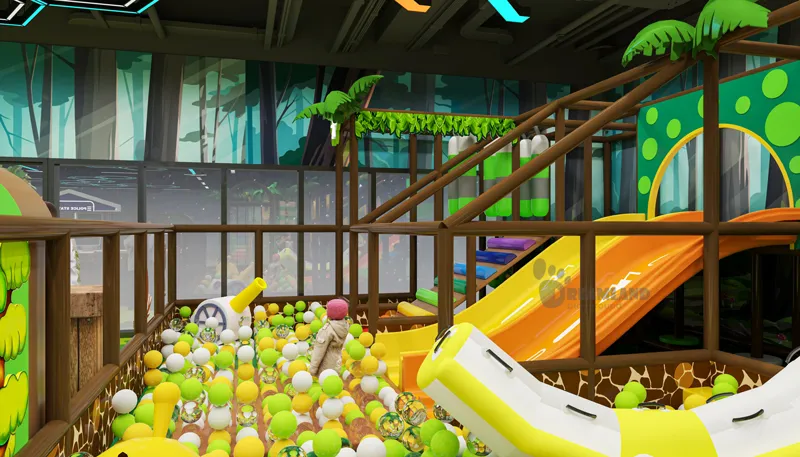
Installation Requirements: What the Venue Must Prepare
Successful installation begins long before equipment arrives on-site.
A well-prepared specification sheet will clearly outline the necessary information that the venue must provide prior to the equipment arriving on-site so the installation team can work efficiently and complete the job on time.
Commercial buyers need to include installation preparation in their initial project planning instead of relying on suppliers to deal with the problems after production has started.
Typical installation requirements include:
- Finished flooring
- Confirmed floor elevations
- Ceiling clearance
- Electrical access
- Lighting coordination
- HVAC coordination
- Sprinkler coordination
- Delivery access
- Equipment staging area
- Forklift or unloading equipment, if required
- Local labor responsibilities
Installation Readiness Starts With Accurate Information
Provide accurate site information before finalizing the design. These documents will help suppliers assess venue fit before production rather than during installation.
Whenever possible, submit:
- Architectural floor plans
- Reflected ceiling plans
- Ceiling height measurements
- Column locations
- Utility locations
- Entrance dimensions
- Loading dock information
Buyer Questions to Ask
Before manufacturing begins, ask:
- What must be completed before installation?
- Who is responsible for unloading containers?
- Is local labor required?
- How long is installation expected to take?
- What site conditions could delay installation?
- Are installation drawings included with the project documentation?
Red Flag
If the specification sheet provided to you contains little or no information regarding installation requirements, request the additional documents before approving the production design.
Installation planning is of equal importance to the design of the playground equipment and affects the project schedule, the commercial opening date, and the costs of the project as a whole.
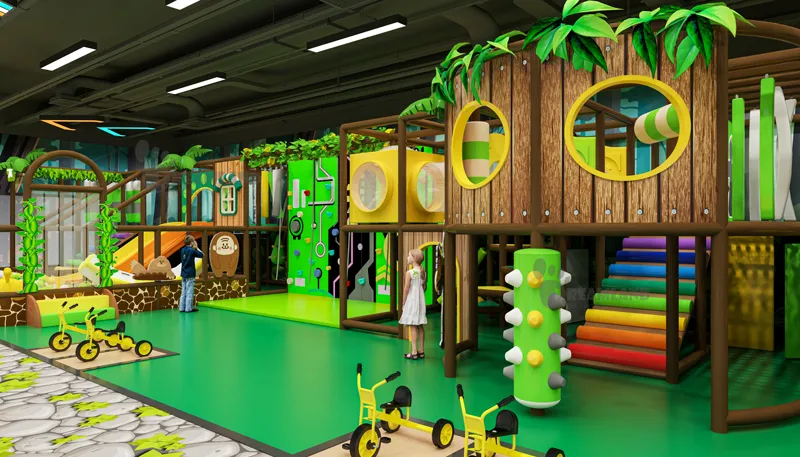
Packaging, Shipping, and Container Information
Information on indoor playground packaging and shipping is often included in the specification sheet, along with other project details.
When you purchase playground equipment from an international supplier, incomplete packaging, shipping, or supporting documentation can delay even a well-designed indoor playground project.
What Shipping Information Should Be Included?
The specification sheet also lists details on packaging, transportation to the customer, and delivery to the site.
- Estimated shipment volume
- Gross and net weight
- Number of cartons or wooden crates
- Container loading estimate (20GP, 40GP, or 40HQ)
- Packing list
- Product labeling system
- Installation drawing references
- Delivery sequence, if applicable
Why Packaging Details Matter
Most indoor playground systems arrive at the customer’s facility as hundreds of separate components that must be assembled into the finished play structure.
The playground components are delivered to the job site in hundreds of separate boxes, and without an organized system of packaging and labeling, the installers may spend as much time searching for individual parts as they do assembling the playground equipment itself.
Ask whether components will be labeled on the outside of the cartons so they can be easily identified, and whether the supplier’s packaging system corresponds with the installation drawings.
Buyer Scenario
A large shopping mall was preparing to open a three-level indoor playground within a short time frame.
Although both suppliers delivered the necessary playground equipment on time, Supplier A’s way of packing the individual components in an organized manner meant the installers could start working immediately. Supplier B, on the other hand, experienced delays in identifying components and sorting out the materials.
Buyer Checklist
Before shipment, confirm:
✔ Packing list has been provided.
✔ Container quantities have been confirmed.
✔ Gross shipment weight is documented.
✔ Cartons correspond with installation drawings.
✔ Delivery schedule supports project planning.
✔ Warehouse or staging space is reserved for the receipt of goods.
Maintenance and Cleaning Information
Once an indoor playground is operating commercially, maintenance becomes very important. What is required for cleaning, safety checks, and other work, and what are the estimated costs for operation over time? All of this should be outlined in the specification sheet as well.
The specification sheet will also include information on the required maintenance to keep the playground clean and safe for use. This information will allow the buyer to compare quotes on the total cost of operating the playground over time, as opposed to just the initial purchase price.
Routine Cleaning
Buyers should ask whether the supplier provides guidance for cleaning:
- PVC padding
- Plastic slides
- Ball pools
- Netting
- Soft play components
- Decorative panels
Inspection Schedule
Ask suppliers whether documentation includes recommendations for inspecting:
- Structural connections
- Netting
- Foam padding
- Hardware
- Slides
- Rope elements
- Protective covers
Replacement Parts
Questions worth asking include:
- Are replacement parts available after installation?
- What is the expected lead time?
- Can individual components be ordered separately?
- Which parts are considered normal wear items?
Warranty Documentation
Warranty information should clearly explain:
- Coverage period
- Included components
- Exclusions
- Claim procedures
- Documentation requirements
Red Flags in a Poor Specification Sheet
Some suppliers’ documentation is dominated by renderings of what the finished play area will look like and contains very little technical information for the commercial buyer to reference when comparing quotes. In order to avoid potential problems later in the project, the commercial buyer must scrutinize the technical information supplied by the supplier to ensure that what is shown in the renderings is actually included in the specification and in the bill of components.
Warning Signs to Watch For
Be cautious if the specification sheet is missing any of the following:
- Overall dimensions
- Equipment height
- Floor area requirements
- Material specifications
- User age range
- Capacity information
- Component list
- Installation requirements
- Packaging details
- Maintenance recommendations
- Warranty information
Renderings Without Supporting Documentation
Although attractive renderings are helpful for visualizing a project, they must be accompanied by sufficient information on the play elements shown (i.e., in the specification sheet and in the list of components). Many commercial buyers start their evaluation of potential suppliers by comparing prices.
Incomplete Installation Information
If installation responsibilities are unclear, misunderstandings can occur regarding:
- Site preparation
- Local labor
- Equipment unloading
- Utility coordination
- Project scheduling
Buyer Checklist: Red Flags
Before approving any quotation, ask yourself:
✔ Are equipment dimensions clearly documented?
✔ Are materials identified?
✔ Does the component list match the rendering?
✔ Are installation requirements explained?
✔ Is shipping information complete?
✔ Is maintenance documentation available?
✔ Have supplier questions been answered in writing?
How to Compare Specification Sheets from Different Suppliers
Price is a critical factor, but the lowest-priced quotation may not include all necessary components, suitable materials, adequate installation support, or sufficient supplier documentation. Compare each line item in detail to ensure that you are comparing like for like.
Create a Comparison Matrix
Review each supplier based on:
- Equipment dimensions
- Venue fit
- User age range
- Capacity
- Structural materials
- Soft play materials
- Included play components
- Installation support
- Shipping documentation
- Warranty terms
- Replacement parts
- After-sales service
Ask the Same Questions to Every Supplier
Be consistent when asking suppliers to quote on a job. Ensure that they have all relevant information about the project, and ask the same questions each time. This will make it easier to compare their responses.
Use Your Floor Plan During Quote Comparison
One of the most effective ways to compare proposals is to provide every supplier with the same architectural floor plan. This allows each supplier to produce a quotation for the project, complete with specifications for all of the play equipment shown in the drawings, based on their own interpretation of how best to supply the play area described.
This allows each company to evaluate:
- Venue fit
- Ceiling clearance
- Structural columns
- Customer circulation
- Installation readiness

Final Buyer Advice
A specification sheet should outline the main play equipment, help establish the true cost for the buyer, and help ensure that the supplier delivers the same product shown in the renderings and described in the quotation.
The best commercial projects are supported by strong documentation, careful project planning, and clear communication between the buyer and supplier.
Always read specification sheets provided by potential suppliers carefully before making any purchasing decisions, and ask for further information and supporting documents if required. Also, make sure to clarify project details with the supplier’s architects, main contact, and other relevant people involved in the project, including other contractors and local authorities where required, before products actually go into production.

How Dreamland Helps Buyers Review Indoor Playground Specifications
Dreamland works with the buyer to review floor plans and create customized play structures and designs. Buyers can also review the specifications and make changes to the layout and materials before production begins. This is especially important because every playground is unique and will have its own specific space, operational, and installation requirements.
Dreamland can also identify potential problems before they become issues, especially with regard to venue fit, installation readiness, and supplier documentation. This will make comparing quotes from various suppliers much easier. Many buyers contact us while comparing quotations from alternative suppliers.
In these instances, we reveal to the buyer the key differences between suppliers’ offers that are not apparent from a simple comparison of price, such as:
- Differences in quality and type of materials used;
- The number of play components included in the quotation;
- The scope of the installation work to be carried out;
- Details of the shipping and delivery documentation provided by suppliers.
We can help review the specification before production to highlight potential problems, allowing changes to be made before costly manufacturing begins.
Conclusion
An indoor playground equipment specification sheet for commercial play equipment is more than just a technical document; it is a tool for planning a project and comparing quotes. Reviewing specifications before production begins and requesting documentation when required will help you to make informed purchasing decisions to avoid costly errors.
Send Dreamland Playground your floor plan, your ceiling height, and other relevant details of your proposed commercial indoor play area, such as venue dimensions. Let us know your proposed mix of equipment, and we will supply you with a comprehensive specification review tailored to your project. This will enable you to compare suppliers’ quotes in greater detail and confirm whether your proposed playground will actually fit within your proposed venue and is installation-ready.
Frequently Asked Questions
What is included in an indoor playground equipment specification sheet?
A specification sheet will include dimensions, height, age range, user capacity, materials, play components, installation requirements, shipping details, and maintenance information.
Why is the equipment height important?
Important factors to consider when matching play equipment height to building constraints include ceiling height, sprinkler heads, lighting, HVAC, and the overall building layout. Always check these before ordering.
Should I compare indoor playground suppliers by price or specifications?
When comparing quotations from different indoor playground suppliers, always compare the specifications first. Look at the dimensions, the materials, the included components, the installation, the documentation, and the warranty. Do not compare prices alone.
What safety standard should I look for in a U.S. indoor playground project?
ASTM F1918 is a voluntary consensus standard commonly referenced for soft-contained play equipment. Local building, fire, accessibility, and licensing requirements may also apply.
When should I review the specification sheet?
Review it before production starts. Changes to dimensions, materials, equipment, and installation methods are much easier to make during specification review and project planning than during production.