

How Much Does a 5,000 Sq. Ft. Indoor Playground Cost? A Complete U.S. Budget Guide
Starting an indoor playground in the USA can cost anywhere from $350,000 for a 5,000 sq ft facility with basic soft play equipment and minimal renovation to over $1.2 million for a large indoor playground with high-end custom themes, large capacity play structures, and extensive construction.
|
Project Level |
Estimated Total Investment |
|
Basic |
$350,000–$550,000 |
|
Standard |
$550,000–$800,000 |
|
Premium |
$800,000–$1,200,000+ |
Note that the costs mentioned above are for the total project cost, not just the cost of the indoor playground equipment. A detailed breakdown of a total project cost for starting an indoor playground business would include the cost of equipment, safety flooring, shipping the equipment to the project site, professional installation of the indoor play structures, necessary interior construction, electrical and plumbing work, modification to the existing HVAC system, fire-safety upgrades and associated permits and inspections, playground furniture, technology such as Point of Sale systems, security systems, large signs, insurance and contingency funds.
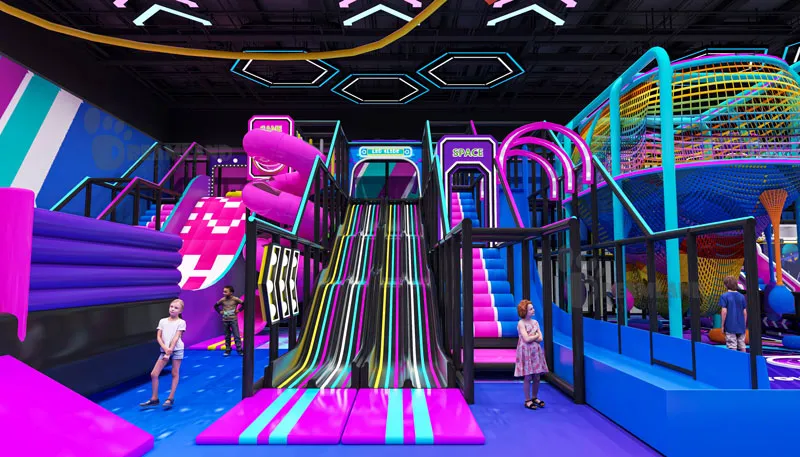
What Is the Cost Breakdown for a 5,000 Sq. Ft. Indoor Playground?
For a 5,000 sq. ft. indoor playground, costs are typically divided among construction and build-out (40–50%), play equipment (25–40%), safety systems, permits, furnishings, marketing, and working capital. If you are considering starting an indoor playground business, one key factor is the project's startup cost. Two different indoor play facilities of the same size can have drastically different costs. For example, two 5,000 sq. ft. facilities can have different costs due to varying building conditions, equipment footprints, mixes of attraction types, and local construction requirements.
In determining the total indoor playground startup cost, it is very important to understand the amount of work that is required to complete the space and open for business. Playground equipment is often one of the largest single cost items in an indoor playground project, alongside construction and build-out; it is only one of the many components that make up the overall cost to open a facility. This would include the cost for construction of the interior of the space as well as any required modifications to the building to meet local building codes. The cost for transporting the equipment to the facility as well as professional installation of the various pieces of equipment. Finally, there are the costs for preparing the site for the equipment and making any necessary improvements to the space.
A realistic indoor playground startup cost generally includes:
- Playground equipment
- Safety flooring and padding
- Ocean freight and inland transportation
- Installation labor
- Building renovations
- Electrical, plumbing, and HVAC modifications
- Fire protection upgrades
- Permits and inspections
- Reception furniture
- Party room furniture
- Point-of-sale system
- Security cameras
- Signage
- Insurance
- Initial opening expenses
Property acquisition and financing are usually not included in equipment or construction estimates because they depend on the investor’s real estate strategy. However, the owner’s full startup budget should include applicable security deposits, pre-opening rent, utilities, and working capital.
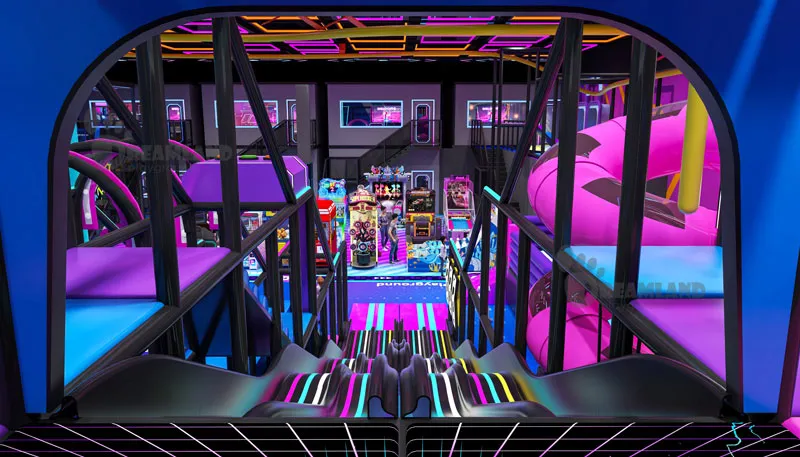
What Does a 5,000 Sq. Ft. Indoor Playground Include?
A 5,000 sq. ft. indoor playground typically includes a main play structure, toddler zone, party rooms, reception area, seating, restrooms, storage space, and circulation areas. One of the biggest misconceptions in the industry is that a 5,000 square foot facility contains 5,000 square feet of play equipment. In reality, there is more to a leased space than just play equipment. Typically, there is a dedicated area for reception, guest circulation, restrooms, storage, party rooms, and waiting areas.
|
Area |
Approximate Size (sq. ft.) |
|
Main Play Area |
2,200–2,700 |
|
Toddler Play Area |
300–600 |
|
Party Rooms |
500–700 |
|
Reception & Waiting Area |
400–600 |
|
Restrooms, Storage, Hallways & Circulation |
800–1,200 |
|
Total Facility Size |
Approximately 5,000 |
Individual area ranges are illustrative and are not intended to be added at their maximum values.
In many cases, the play equipment will occupy about 50% to 65% of the total space of the indoor playground. This is an important factor for manufacturers of indoor play equipment, as they usually quote a price for the equipment based on the play area or footprint of the play equipment.
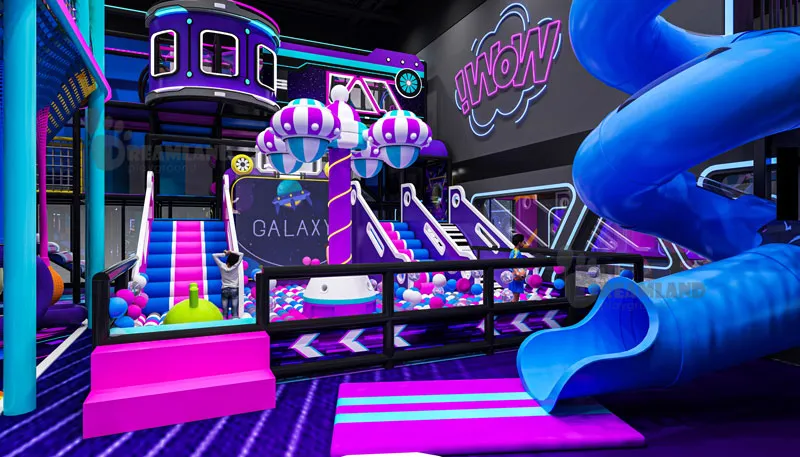
What Is the Cost Breakdown for a 5,000 Sq. Ft. Indoor Playground?
To give investors a realistic idea of the required startup funds for an indoor playground, the costs are grouped into 5 categories. Every business is different, so costs will vary, but these are the main areas to consider when planning and comparing offers.
Playground Equipment and Safety Flooring Costs
A typical package may include:
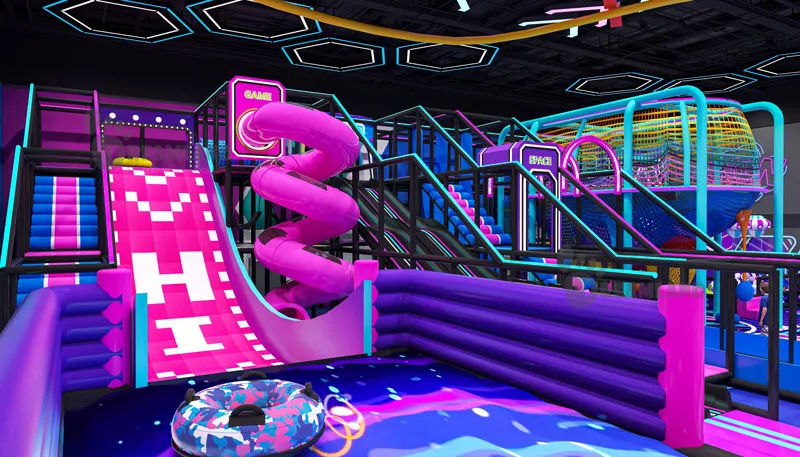
- Multi-level play structure
- Toddler playground
- Spiral and tube slides
- Climbing obstacles
- Ball play activities
- Interactive play elements
- Safety barriers
- Protective padding
- Impact-absorbing flooring
The commercial indoor playground equipment cost generally increases with:
- Larger equipment footprint
- Additional play levels
- Higher structures
- Greater guest capacity
- Custom themes
- Premium attractions
Shipping and Installation Costs
Typical expenses include:
- Ocean freight
- Customs clearance
- Import duties where applicable
- Inland trucking
- Unloading
- Equipment staging
- Professional installation labor
- Installation supervision
Construction and Build-Out Costs
Typical construction work includes:
- Interior framing
- Drywall
- Painting
- Commercial flooring
- Restroom construction or renovation
- Plumbing modifications
- Electrical upgrades
- Lighting
- HVAC improvements
- Ceiling work
- Utility connections
- General finishing
Fire-Safety and Permit Costs
- Sprinkler system modifications
- Fire alarm integration
- Emergency lighting
- Exit signage
- Fire-rated construction
- Occupancy reviews
- Plan approvals
- Building permits
- Fire inspections
- Final occupancy inspections
These costs vary by city, county, and state.
Furniture, Technology, and Opening Costs
Common expenses include:
- Reception desks
- Waiting area seating
- Party room furniture
- Lockers
- Point-of-sale systems
- Security cameras
- Wi-Fi equipment
- Computer hardware
- Digital displays
- Interior signage
- Exterior signs
- Insurance
- Initial supplies
- Staff orientation and training before opening
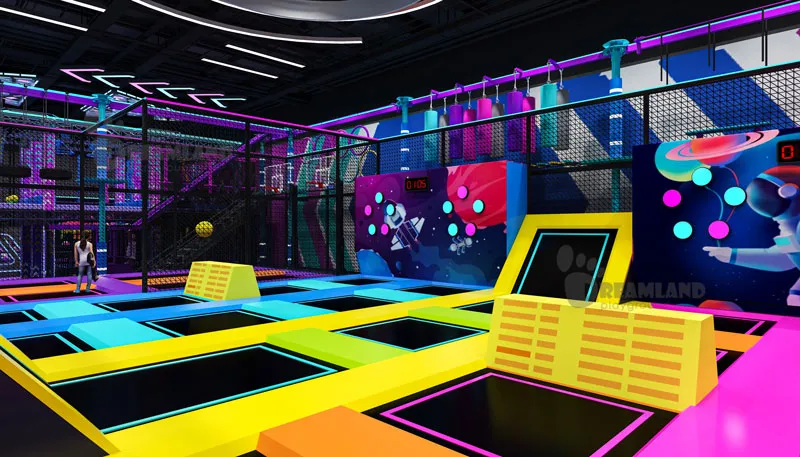
How Much Does Indoor Playground Equipment Cost for a 5,000 Sq. Ft. Facility?
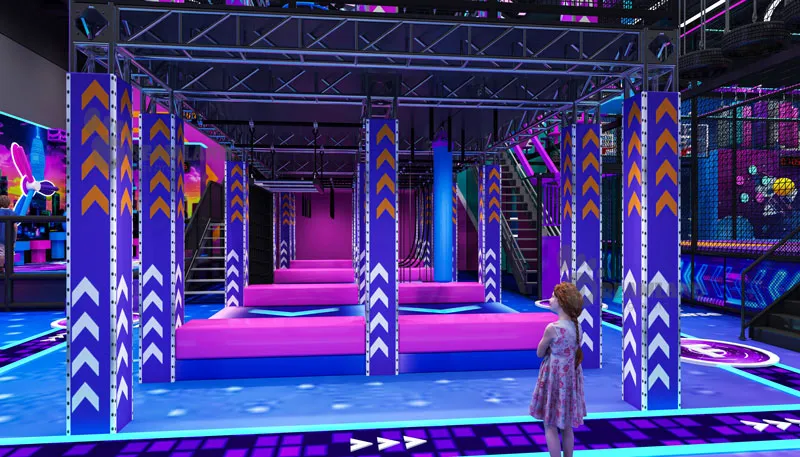
Indoor playground equipment for a 5,000 sq. ft. facility typically costs between $100,000 and $500,000+, depending on the size, complexity, and level of customization. Equipment pricing is based primarily on the equipment footprint, structure height, attraction mix, and level of customization—not simply on the total square footage of the building. A higher clear ceiling may allow a taller playground design, which can require additional steel, decks, netting, and play components.
Equipment pricing depends primarily on three factors:
- Equipment footprint
- Equipment height
- Attraction mix
It is more beneficial to an indoor playground manufacturer to receive a preliminary floor plan of the intended area for the play equipment, the ceiling height of the area, and the intended playground design, or a list of the specific attractions that the investor intends to have in the facility. This enables the manufacturer to more accurately provide a price quote for the necessary play equipment.
Higher-cost attractions may include:
- Climbing walls
- Ropes courses
- Trampoline areas
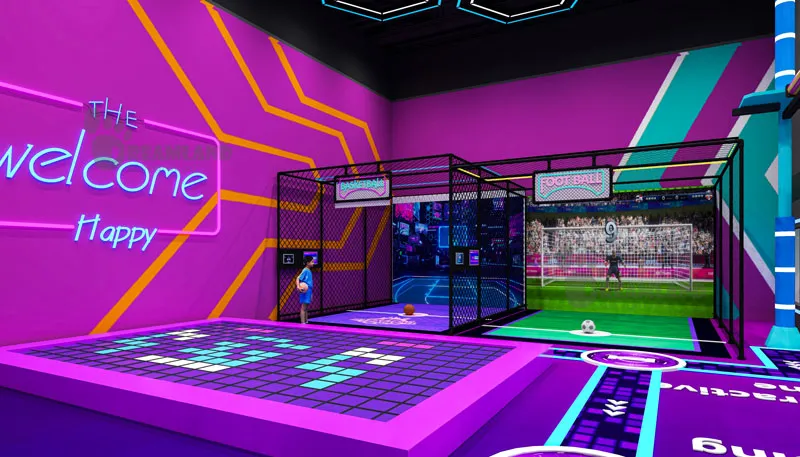
- Digital interactive games
- Fiberglass theme features
- Large custom slides
How Much Do Construction and Build-Out Costs Add to the Project?
For cold-shell or substantial renovation projects, construction and build-out costs may reach $70–$150+ per square foot of the affected area. Lightly renovated second-generation spaces may cost less. For example.
Cold Shell Space
A cold shell would typically be the most expensive, as the interior of the building would not have been completed, and much of the interior infrastructure, such as electrical, plumbing, etc., would typically be supplied by the investor and/or general contractor and/or builder. Examples of this would be:
- Restrooms and plumbing systems
- Electrical distribution and lighting
- HVAC equipment and ductwork
- Interior walls and ceilings
- Commercial flooring
- Fire-protection modifications
Standard Retail Space
A typical Retail Storefront will require less work to construct the Tenant Improvements. The purpose of the work will focus on how to create a play area/playground within the confines of the typical Retail Storefront. Much of the work will be focused on demising the space to allow for play to occur. Work lists may include:
- Updating interior finishes
- Reconfiguring partitions
- Modifying electrical and HVAC systems
- Installing safety flooring
- Adjusting fire-protection systems where required
Former Gym, Daycare, or Entertainment Venue
A former gym, daycare, or entertainment venue may reduce build-out costs if existing systems can be reused. However, the proposed occupancy classification, change-of-use requirements, and code compliance must still be confirmed by the project design team and the local authority having jurisdiction.
- Open floor plans
- Existing restrooms
- Suitable utility capacity
- An existing layout and building systems that may be suitable for the proposed use, subject to local approval
- Higher ceilings
Renovation may still be required for such facilities. Reusing existing features may reduce demolition and construction costs. However, permit requirements and fees will depend on the proposed use and the local jurisdiction.
What Is the Cost per Square Foot to Build an Indoor Playground?
For preliminary budgeting, the total project cost of an indoor playground may range from approximately $70 to $250+ per square foot, depending on the facility condition, equipment scope, location, and level of customization. Using the indoor playground cost per square foot is a practical method for estimating the cost of an indoor play facility during the initial planning phase. It is not meant to be a detailed quote, but a rough guide for investors to get a realistic idea of what to expect before finalizing the building, floor plan, and other construction details.
|
Project Level |
Estimated Cost per Sq. Ft. |
|
Basic |
$70–$110 |
|
Standard |
$110–$160 |
|
Premium |
$160–$250+ |
Using the indoor playground cost per square foot is a good tool for rough estimates of projects during the early stages of planning. It is also good for investors to have a general starting point for a building and playground equipment layout and construction, before getting into too much detail for finalizing specifications for the quoted price for the project. However, these estimates are only good for providing a very general starting point, as actual costs for indoor playgrounds can vary greatly from project to project, even with very similar floor plans.
For example, the final cost depends on factors such as:
- The actual equipment footprint within the facility
- The number of play levels and the overall structure height.
- The various options of play equipment that the indoor playground will be equipped with, such as soft play, climbing walls, and trampolines, etc.
- The condition of the leased building
- The extent of construction and utility upgrades required
A small indoor soft play area with a simple structure could fall at the lower end of the costs, whereas a large area with multi-level play equipment, themed and specially designed for children, could reach high costs despite having the same floor area.
Cost per square foot is a great initial guide and should be used as a rough budgetary guide for Indoor Playgrounds in the early stages of planning before the building, playground layout, and construction details are finalized.
What Factors Affect the Cost of a 5,000 Sq. Ft. Indoor Playground?
The cost of a 5,000 sq. ft. indoor playground is mainly influenced by building construction, play equipment quality, customization, flooring, safety features, location, labor costs, and permits.
Building Condition
The existing building in which the indoor playground will reside has a huge impact on the price to construct the play area. A building with existing utilities and minimal demo work is less expensive to complete construction on a property than one that has not.
Key factors include:
- Existing electrical, plumbing, and HVAC systems
- Fire-protection infrastructure
- Previous use, such as a gym or daycare
- Amount of demolition or renovation required
Clear Ceiling Height
Ceiling height for indoor playgrounds is important for not only determining the height of your soft play structures, but also for the overall height and complexity of your indoor playground. Higher ceiling structures enable more levels of play in a vertical space, and increase the cost of the equipment and the subsequent cost of installation.
Higher ceilings typically support:
- Multi-level play structures
- Longer tube slides
- Climbing features
- Larger play capacity
Equipment Footprint and Capacity
Costs for equipment are based on the actual play area that is to be completed in the facility and not on the square footage of the facility. A larger equipment footprint within a 5,000 sq. ft. facility may require more safety flooring, play components, and installation time.
Costs increase with:
- Larger equipment footprints
- More play components
- Higher guest capacity
- Denser equipment layouts
Theme and Customization
Typical “off-the-shelf” soft play structures would cost less than custom themed play structures. Themed play structures have increased design complexity and typically are more expensive to manufacture.
Examples include:
- Custom colors and branding
- Fiberglass themed features
- Unique layouts
- Decorative entrances
Project Location
Construction costs also vary from state to state, from region to region, and from city to city. Costs can vary due to local market conditions as well as local building codes and regulations.
Location can affect:
- Labor rates
- Material costs
- Permit fees
- Inspection requirements
Attraction Mix
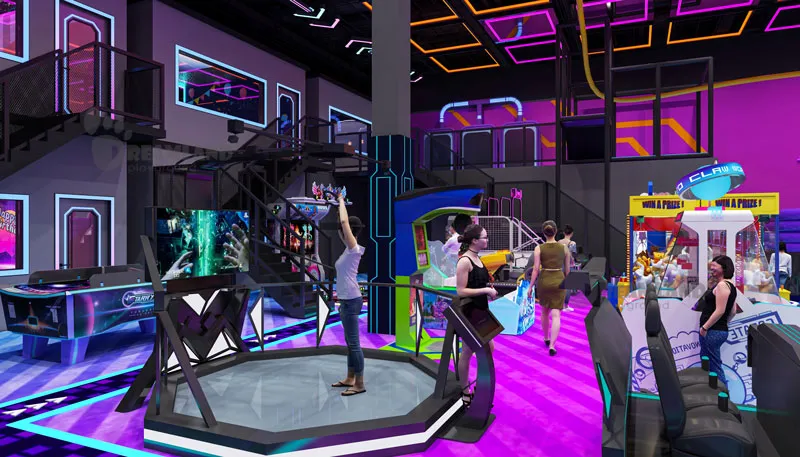
Additionally, the mix of play equipment included in the indoor playground is one of the largest factors affecting overall cost. Complex attractions such as ropes courses, climbing walls, trampoline zones, digital interactive systems, and large themed features generally cost more than a basic soft-play package, and owners must understand how each attraction will affect the bottom line of their business.
Examples include:
- Climbing walls
- Ropes courses
- Trampoline areas
- Digital interactive games
- Large themed features
What Costs Are Often Left Out of Indoor Playground Quotes?
Indoor playground quotes often exclude permits, site preparation, utility upgrades, shipping, installation, insurance, inspections, staff training, and ongoing maintenance costs. Before you start to compare prices offered by different tenderers for your playground quotation, ask if the quoted price includes the following costs for your indoor playground.
- Freight, customs, and import-related charges
- Inland delivery and unloading
- Installation labor and on-site supervision
- Building improvements and utility upgrades
- Permits, inspections, and code compliance
- Rent and utilities during construction
- Insurance and pre-opening staff training
- Spare parts and basic maintenance tools
- Opening marketing and signage
- Initial working capital for the first months of operation
When selecting an indoor playground supplier, it is important to compare the total installed cost, including equipment, freight, customs clearance, inland delivery, unloading, and installation, rather than comparing equipment prices alone. The equipment supplier should provide a detailed breakdown of the quoted scope, including inclusions and exclusions. The owner, architect, engineers, general contractor, and other project partners should then combine these costs into the full opening budget. This should include a list of what is included in the quoted price and what is not, as well as a list of the additional expenses that the owner will be responsible for. This will allow you to compare the proposals from different suppliers on a more accurate basis to determine which will provide the best value for your money, and allow you to avoid any unexpected expenses later in the project.
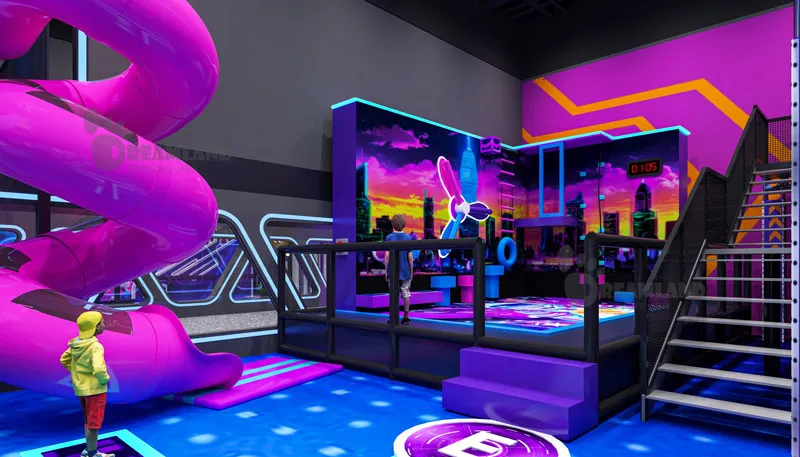
Reduce startup costs by selecting essential equipment, using a phased expansion plan, and choosing standard designs—without cutting corners on safety standards or inspections. We will work with you to provide cost-effective startup planning and to save you money where unnecessary.
Consider the following cost-saving strategies:
- Identify potential improvements required by the building's structural, electrical, plumbing, and fire protection systems prior to signing a lease to minimize construction costs and risks post-lease signing.
- Select a space that has the proper utilities to reduce the amount of construction that needs to occur in order to create a safe indoor playground for your children to play.
- Negotiate tenant improvement (TI) support from the landlord.
- Use a standard play structure as your core and add a few custom play features.
- Go for the core elements of play that fit your target audience and the size of your play area.
- Optional features can be added in a second phase, when the business is established and generating customers.
- Integrate the design of play equipment, fire protection, and MEP (mechanical, electrical, and plumbing) early in the design process to avoid costly rework during the construction of your indoor playground facility.
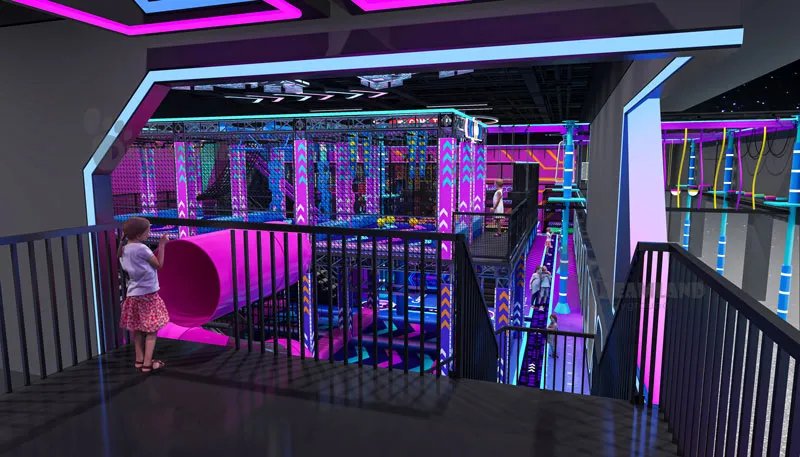
How Much Working Capital Should You Reserve Before Opening?
Consider reserving 3–6 months of operating expenses as an initial working-capital target, then test that amount against the projected ramp-up period, monthly cash-flow forecast, and financing plan. Some projects may require a larger reserve.
Construction Contingency
A construction contingency fund is used for unexpected expenses during the build-out period, such as hidden building problems, design changes, required utility and MEP (mechanical, electrical, and plumbing) upgrades, increases in cost of building materials, etc. Required additional work to satisfy local building and fire codes also needs to be covered by this contingency fund. Construction contingency funds help prevent serious problems and costly delays by allowing needed work to be completed without creating financial panic.
Operating Working Capital
Operating working capital refers to the cash available to cover payroll, rent, utilities, marketing, and other operating expenses after opening. Revenue may build gradually while the business develops a consistent customer base.
Remember to include both a construction contingency and operating working capital in your financial model for a more accurate start-up cost and less financial stress during the opening period.
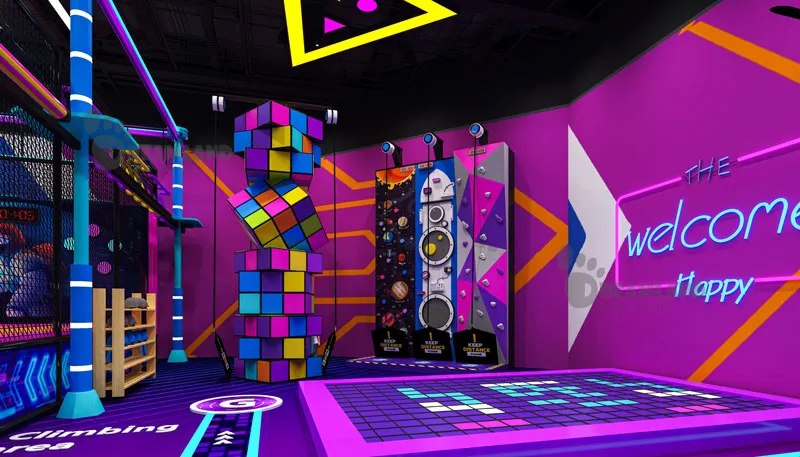
What Safety and Compliance Costs Should Be Included in the Budget?
Involving Safety and compliance as part of the initial project budget is vital to allow for proper planning as opposed to additional costs down the line.
Key cost categories include:
- Equipment-related standards and documentation: What are the design/evaluation standards for this equipment? What test reports or supporting documentation exist for this piece of equipment?
- Building and fire requirements (Sprinkler system modifications, fire alarms, emergency lighting and exit signs as well as building code requirements).
- Electrical issues: Dreamland can provide the equipment load and connection requirements. Any necessary electrical service, circuit, or distribution upgrades should be determined by the project’s licensed electrical professional and the local authority having jurisdiction.
- Accessibility features: Accessible entrances and restrooms, accessible routes to required public areas and play components, and other features required by the applicable ADA standards and local code.
- Permits and inspections: Include costs of plan reviews by various departments, getting the required building permits, fire inspections, electrical inspections, etc., until final occupancy approval.
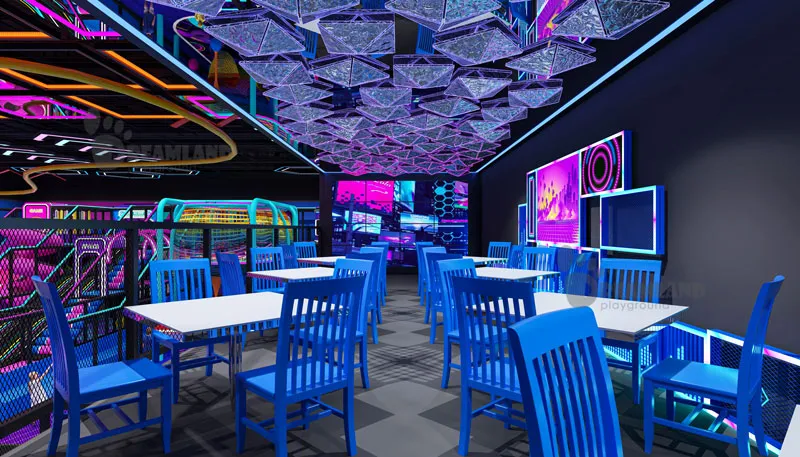
There is more to preparing an indoor playground budget than simply knowing the total floor area of a 5,000 sq. ft. building.
To provide a reliable quotation, manufacturers typically need information such as:
- Total facility size and a basic floor plan
- Clear ceiling height
- Building condition (cold shell, retail space, or existing entertainment venue)
- Desired equipment footprint
- Target age group
- Preferred attractions and theme
- Project location
- Available budget and expected timeline
Passing on these details to the manufacturer of your choice allows for an appropriate design of the indoor play equipment in your facility, a better estimate of the building requirements, and of the total investment for the attractions you wish to install in your new indoor play facility. It can save you from possible design errors or additional costs for changes in your children’s play facility.
If you are planning a new indoor playground, Dreamland Playground can review your plans and provide a preliminary design concept for your playground and an equipment budget based on the size of the space, your objectives, and the range of playground attractions that you are interested in offering to your customers. Time to ask Dreamland to receive a quality plan and a realistic estimate of your total investment.
Frequently Asked Questions About 5,000 Sq. Ft. Indoor Playground Costs
Is $300,000 Enough to Open a 5,000 Sq. Ft. Indoor Playground?
Usually not for a complete 5,000 sq. ft. indoor playground project in the United States. A $300,000 budget may cover a limited equipment-focused scope or an unusually low-cost second-generation space, but it is below the preliminary total-project range used in this guide.
How Much Does the Playground Equipment Alone Cost?
The cost of the playground equipment depends on the space that the individual pieces of equipment will take up in the facility, the height of the play structures, and the number and type of attractions that will be included in the playground.
How Much Space Should Be Used for Playground Equipment?
In the sample layout used in this guide, play equipment may occupy approximately 50%–65% of the facility. The final ratio will depend on circulation, egress, accessibility, restrooms, party rooms, the business model, and local code requirements.
Does the Startup Budget Include Rent?
Equipment and construction estimates may exclude rent, deposits, financing, and property acquisition. However, the owner’s full startup budget should include applicable pre-opening rent, deposits, utilities, and working capital.
What Ceiling Height Is Recommended for an Indoor Playground?
A clear ceiling height of 16–20 feet may be suitable for many multi-level indoor playground concepts, but it is not a universal requirement. The minimum height should be confirmed based on the selected equipment design, required clearances, building systems, and local approvals.