

Toddler Zone Design Guide: 10 Tips for Creating a Parent-Friendly Indoor Playground
In designing the toddler zone, there is a need to factor in the number of toddlers as well as their coordination, attention span, and play habits. The equipment that needs to be installed for toddlers in your indoor play space should be appropriate for toddlers, including soft flooring, low platforms, climbing equipment, and open floor space. In the design of the toddler play area, there is a need for good visibility for parents as well as comfortable seating that does not hinder the activity of the children. In designing the toddler commercial playground, durability of the materials and ease of cleaning are very important considerations.
Start With the Right Age Group, Not the Equipment
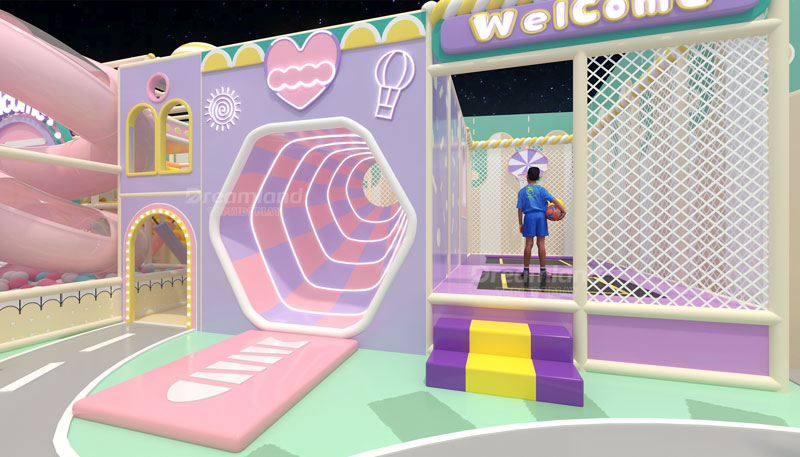
The design of your toddler play area should begin with a clear definition of the age of children your play area is designed to serve. The activities that children of this age group can do while crawling, walking, climbing, balancing, and playing alone vary a great deal. Younger two-year-olds need low-level activities and solid surfaces to play on, while older two-year-olds can start to do simple climbing, balancing and interactive activities.
Choosing the correct toddler play equipment, once you have established the correct age range of children for your Toddler Zone, allows you to create activity zones and movement routes that are suitable for the children of the correct age and ability. The equipment can be of the correct height, difficulty, safety features, and capacity for the children of the correct age range.
Separate Toddlers From High-Energy Play Areas
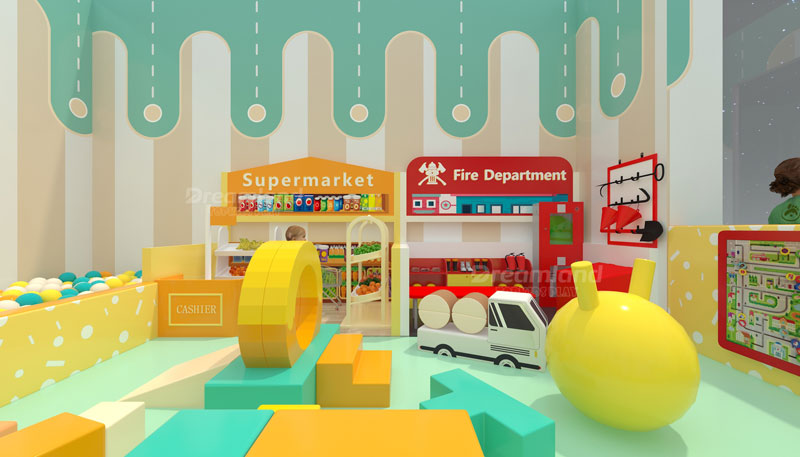
In planning the zoning of your indoor playground, it is also important to consider how to separate the toddler soft play area from the older children and high-energy attractions. The toddler has less control over their balance, speed, and direction than older children. Running, jumping, and sliding on fast slides are activities that increase the risk of collision and accidental impact with a toddler who is less able to move out of the way in time.
Low padded barriers, transparent panels, safety netting, or even just a controlled entry point can be used to separate the toddler soft play from the rest of the playground and also prevent older children from cutting through the toddler area to get to other attractions.
Position the toddler play area so that it can be seen from seating and cafes surrounding the play space. Make sure the entrance/exit is wide enough for caregivers and strollers, but can be controlled to prevent unsupervised access by older children. This area should be safe for toddlers, but not walled off from the rest of the indoor playground.
Choose Low, Soft, and Age-Appropriate Play Equipment
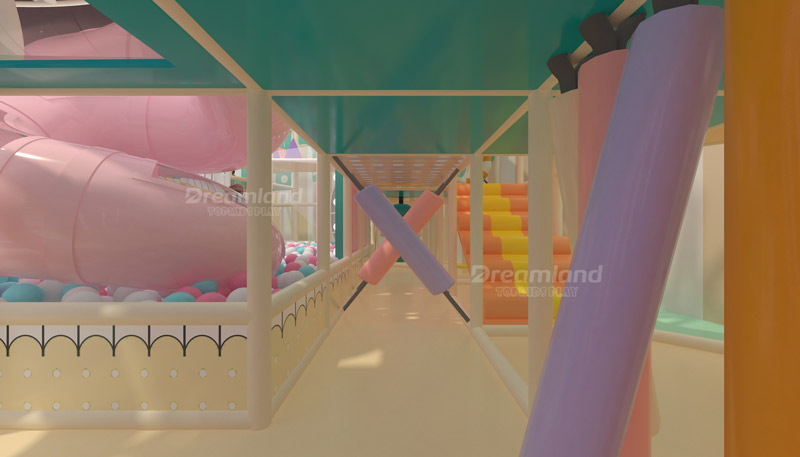
Toddler playground equipment should offer sensory experiences and physical challenges that children can achieve, not great velocity or high force. Playground equipment for toddlers consists of low climbing structures, small slides, crawl-through tubes, padded steps, ramps, foam cubes, touch boards, and shallow ball pits, which are effective in helping young children develop balance and body control. Experts say toddler playground equipment helps with climbing and problem-solving within manageable limits for children.
The recreation space should have soft play equipment with rounded edges, padded floors, stable stairs, and gaps of the right size. Many people think that soft play equipment should enable young children to move from one task to another without the need for high-level physical abilities. Because small tasks that young children can complete independently provide meaningful interaction, soft play equipment builds their bravery and movement through frequent use.
Design Soft Flooring for Crawling, Falling, and Exploring
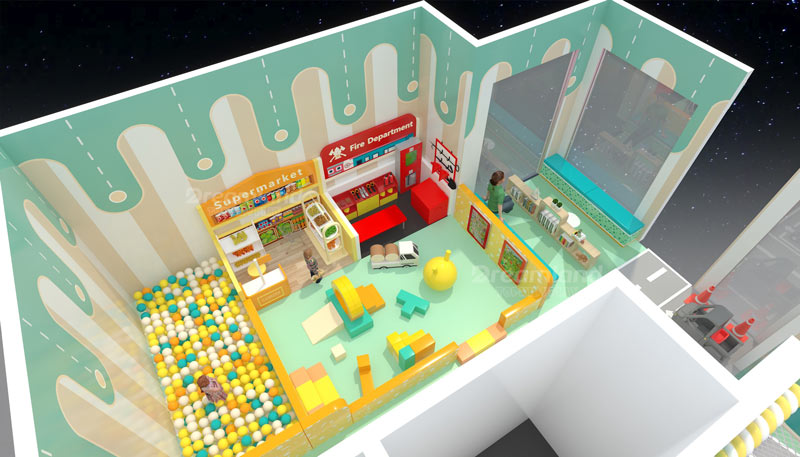
Toddler playground flooring needs to be strong enough to withstand regular crawling, sitting, kneeling, walking, and the odd fall. Young children spend a lot of time on the ground, so the surface should provide adequate impact attenuation and be comfortable for children to move around on. Soft play flooring may include impact-attenuating rubber systems, cushioned mats and other appropriate flooring types for specific types of equipment.
When choosing soft play flooring, bear in mind the sharp changes in height of the floor, exposed seams, loose mats and sharp edges. Transitions between surfaces must be smooth, especially in the areas where children enter the play area and where they play with the equipment. For cleaning and maintenance, the flooring must be accessible for inspection, for cleaning, and for repair of damaged or worn areas.
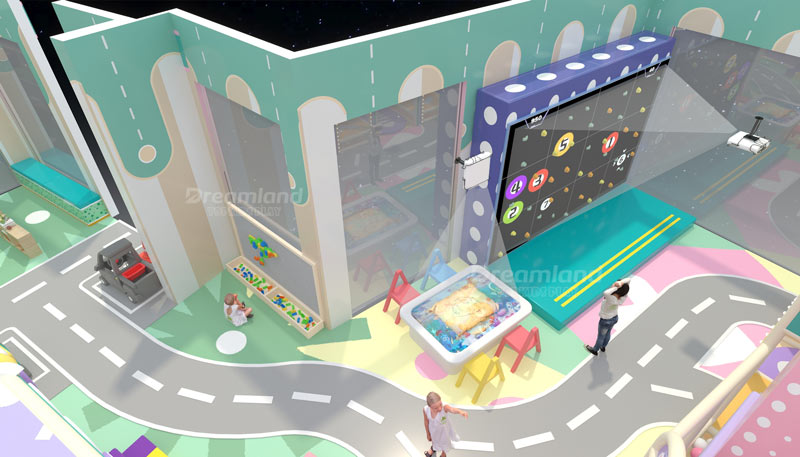
Give Parents Clear Sightlines and Comfortable Seating
Designing a parent-supervised playground is important from the moment parents or caregivers enter the area. They need to be able to see most of the play area without having to constantly get up from their seat to find their child. This means that tall play structures, solid decorative walls, columns, and closed features all create blind spots which make supervision difficult.
Position parent seating within the indoor and soft play areas to enable them to see into the main activity zones. This could be along the perimeter of the area or at focal points such as near entrances or exits. Benches, café tables and lounge seating within the soft play area should provide good viewing positions without hindering circulation through the area and should seek to avoid being screened from view of toddlers playing by tall items within the soft play area.
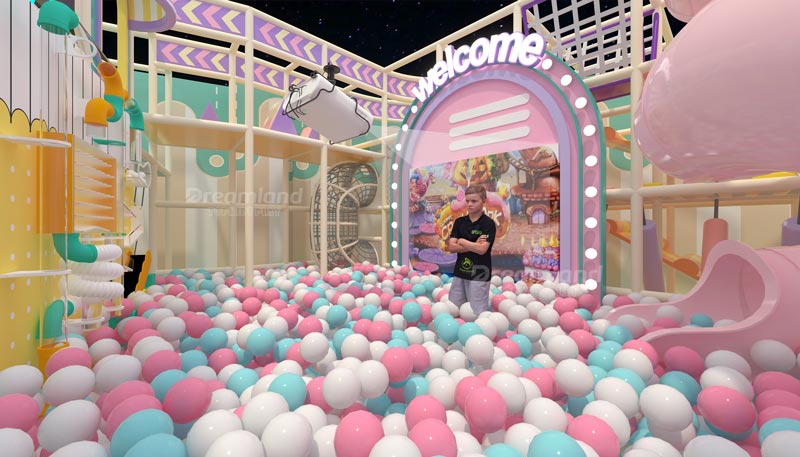
Add Sensory and Developmental Play
A toddler indoor playground needs to provide experiences beyond just climbing, sliding, and running. Opportunities for children to explore various textures, sounds, and colors are created by the addition of sensory play apparatus within a limited spatial area. Research shows that mirrors, textured panels, uncomplicated gears, interactive boards, building blocks, and tactile surfaces encourage exploration because these items do not require massive construction. Because a toddler indoor playground uses these elements, children can learn about cause-and-effect activities easily.
Including role-play components like miniature kitchens, shops, and workbenches helps the development of young children. Different forms of sensory play are supported by these engagements, while building blocks and uncomplicated manipulatives encourage physical coordination and problem-solving skills. It has been observed that combining physical and imaginative tasks gives toddlers many ways to participate at their own speed. This variety allows a toddler indoor playground to utilize restricted space better.
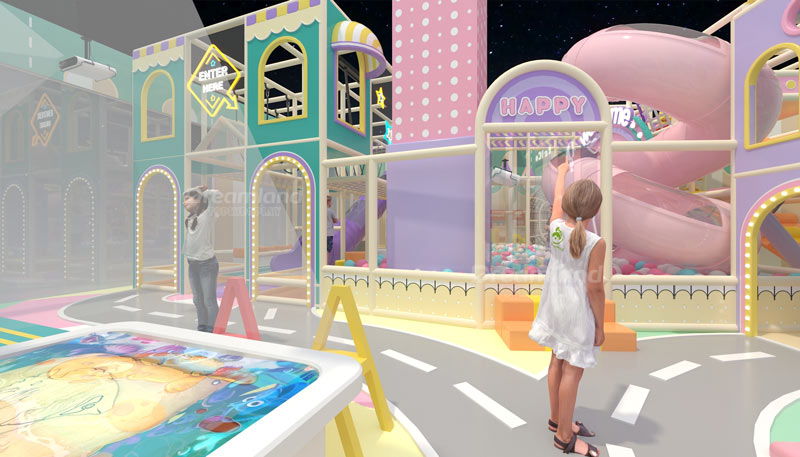
Make Cleanliness Easy to See and Easy to Maintain
Planning for toddler indoor playground cleanliness must happen during the initial design phase rather than as a secondary task after setup. Many people believe that toddler playground hygiene is significant because young children often touch their faces after crawling on the floor. Surfaces that personnel can inspect and wash thoroughly must be selected by the owners, specifically for handrails, sensory panels, tunnels, and floor mats. A toddler indoor playground requires high-touch features to stay sanitized to prevent the spread of germs.
Designers should prevent the creation of unnecessary gaps or unreachable corners that make washing difficult. Removable soft components should be simple to take out, wash, and dry when the situation requires. Practical access for regular inspection and washing must be provided for ball pools and tunnels. It is often suggested that a well-designed regular procedure allows personnel to recognize spills and damaged materials quickly. Effective soft play maintenance protects hygiene while preserving the condition of the apparatus, which provides parents with a visibly cleaner toddler indoor playground.
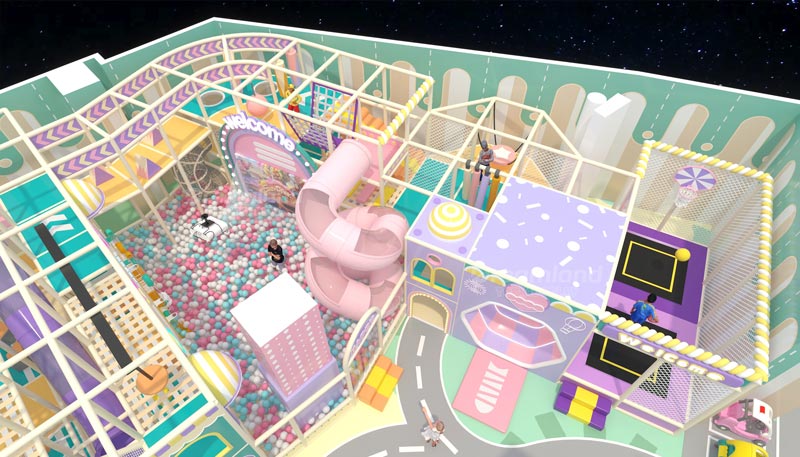
Keep the Design Playful Without Overstimulating Toddlers
A themed playground for toddlers needs to provide a lot of scope for play, but in a way that doesn’t make the area look too cluttered. By choosing a theme and sticking to a restricted palette of colors and forms, the overall impression of a consistent, visually organised play space for toddlers is created. The shape, color and texture of walls, stairs, balustrades, doors and playground features can be developed to create a background for the play furniture and interactive play features, in the form of themed shapes, textures and characters.
By using a visual hierarchy within the area, we can ensure that parents and children are directed to the main entrance, the main activities such as interactive games, and the main play structures. We can also use the background of softer colors and simple graphics and highlight specific features using brighter colors and more complex graphics. We can also incorporate the themed shapes, textures, and characters into the design and use them as accents rather than to cover every wall and piece of equipment.
The layout of your toddler area needs to take into account what families bring with them and what they need. That means stroller parking, storage for shoes, lockers and a hand-cleaning station close to the play area. Baby-changing facilities and child-friendly toilets should also be easily accessible without having to take families through the busiest part of the play area.
Indoor playground traffic flow throughout the toddler area needs to ensure that parents can easily move between the reception, storage for strollers, changing of babies, restrooms for children and adults, seating and the play area. Access for staff to carry out cleaning and other activities such as inspections, restocking of toys and equipment and dealing with any incidents must also be easily achieved without disturbance to children playing in the area. A thoughtful family indoor playground design considers the whole family’s visit to the playground.
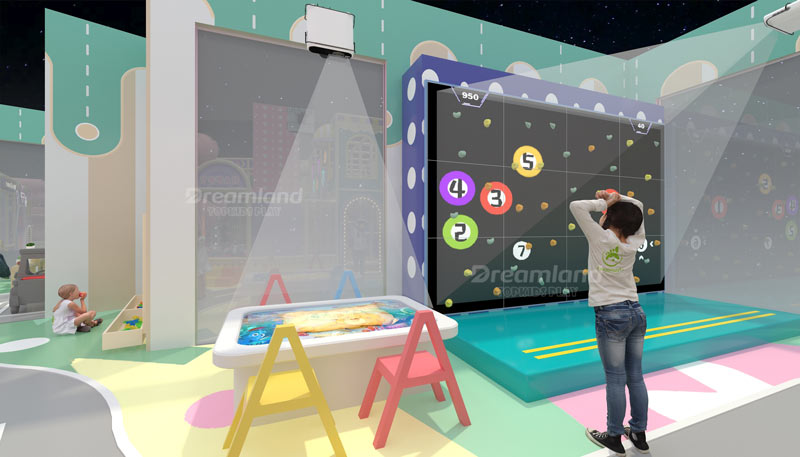
Design Around Real Family Needs and Daily Operations
Before the equipment layout is completed or manufacturing begins, the safety requirements must be factored into the planning for the toddler zone. According to experts, at the design stage, the spacing of the equipment, impact protection, padding, netting, barriers, entrances, exits, and possible entrapment points are reviewed in an effort to protect young individuals. Also, maintenance access and evacuation routes should be established so that working personnel can examine the equipment, perform repairs, and respond to urgent situations when the play area is active.
You cannot rely on assumptions alone. It is important to follow the specific indoor playground safety standards and the local requirements of the project location. It is pointed out that an experienced supplier can help to review equipment dimensions, safety zones, materials, and installation conditions during the design process. Compliance is only one part of the equation for safe commercial playgrounds. Safety also involves clear sightlines, controlled access, practical maintenance and effective emergency planning.
Great toddler zones offer age-appropriate challenges for young children, balanced with visibility, comfort, cleanliness, convenience and confidence for guardians. When these elements work together, many say toddler playground safety becomes part of the overall customer experience. When young people are playing, visibility and comfort give parents confidence.
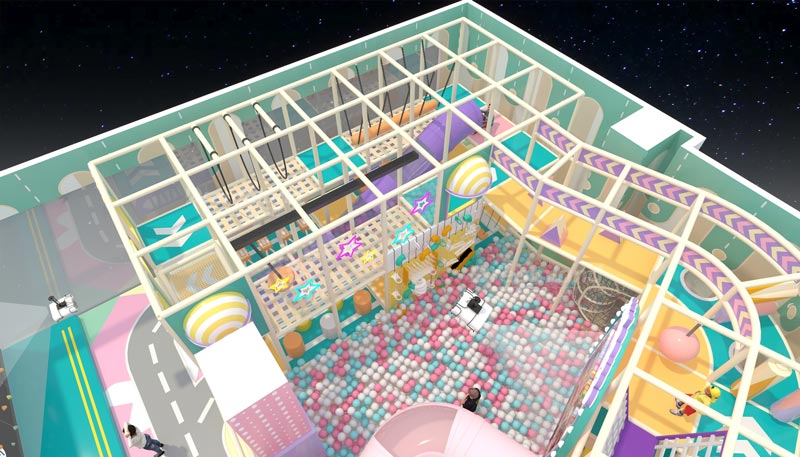
Toddler Zone Design Checklist for Investors
Review this toddler zone checklist before approving a toddler playground design or requesting final manufacturing drawings:
- Age range: Specify the toddler age range to be served by the toddler zone.
- Space: Confirm the available floor area, ceiling height, columns, and permanent building elements.
- Zoning: Separate toddlers from older young children and high-energy attractions.
- Equipment: Choose low, soft, age-appropriate equipment that provides achievable challenges.
- Flooring: Use appropriate impact-attenuating soft play flooring with a smooth transition.
- Visibility: Maintain good sight lines from parent seating areas and food service areas.
- Traffic flow: Provide convenient routes for young children, guardians, strollers, and working staff.
- Sensory Play: Use activities that are interactive, tactile, creative, and developmental.
- Hygiene: Ensure that surfaces, ball pools, tunnels, and soft elements are easy to examine and sanitize.
- Parent facilities: Provide resting spots, shoe storage, lockers, hand-sanitization areas, and changing facilities.
- Safety: Check spacing, padding, barriers, entrances, exits, entrapment risks, and evacuation access.
- Maintenance: Plan access for cleaning, inspection, repairs, and equipment replacement.
- Future needs: Allow flexibility for equipment updates, capacity changes, or expansion.
- Parent experience: Ensure the commercial toddler play area feels safe, clean, visible, comfortable, and easy to use.
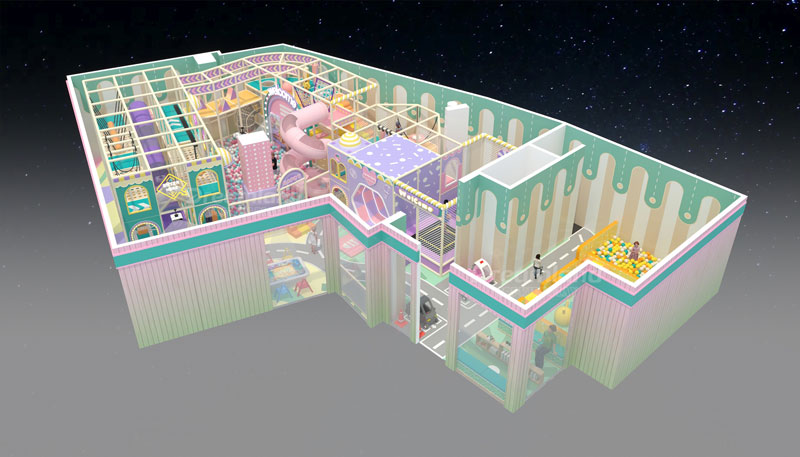
Build a Toddler Zone Families Want to Visit Again
Don't think that a toddler zone has to be the biggest part of your playground. No, it is one of the most important areas and needs to be planned very carefully. A good area for toddlers means that children can play with age-appropriate facilities while parents can sit and relax, watching their children and easily getting to and from facilities that they need. Visibility, cleanliness, flow through the area, correct play equipment, and seating areas for parents all contribute to a successful toddler zone and the trust of parents. Long visits from parents and repeat business are key to the success of any commercial operation.
The toddler zone is a key area of your indoor playground, and we can design this area for you to meet your requirements and create a great customer experience. We would require a copy of your current floor plan and ceiling height, as well as information on the age range of children you want to cater for and how many children you expect to be in the zone at any one time. Additionally, we would require information on the theme of your indoor play playground, the types of play equipment and activities you want to include, and your project budget.
FAQ
FAQ1: What should be included in a toddler zone?
Soft play, low climbing walls, mini slides, crawl-throughs, sensory activities, soft floor surfaces, boundaries, seating for parents, and clean access to toilets and hygiene facilities.
FAQ 2: What equipment is best for a toddler indoor playground?
Soft play equipment such as low climbing walls, mini slides, soft staircases, ramps, crawl tunnels, foam blocks, sensory panels and shallow ball pools are ideal for toddlers.
FAQ 3: How should a toddler zone be separated from older kids?
Use low padded barriers, transparent partitions, safety netting or controlled entrances to enclose toddlers within the toddler area whilst parents can see their little ones playing safely.
FAQ 4: How big should a toddler zone be?
There is no one-size-fits-all for the size of your Toddler Zone. You should base the area of your Toddler Zone on the age range of children you wish to cater for and the number of children you anticipate in the area at any one time, as well as the choice of equipment, the area required for safe circulation around the equipment and for safety clearances, and the overall floor space available.
FAQ 5: Where should a toddler zone be located in an indoor playground?
Position the toddler area away from high-energy play equipment and older children, and locate it where parents can clearly see their children playing. This may be positioned near parent seating, restrooms, and other family facilities that parents frequent.
FAQ 6: What makes parents love a toddler play area?
When choosing an indoor play center, parents are looking for clear visibility of their children, safe and appropriate play equipment, a clean environment, comfortable seating, easy access to toilets and other facilities, and a well-organized layout that allows their children to play confidently.