

Ninja Course Equipment Guide for Indoor Parks: Essential Obstacles, Design Tips & Business Ideas
Ninja courses are liked by many people now because ninja courses offer active choices for fun inside buildings. Since ninja courses have obstacles for climbing, balance, and speed, ninja courses make visitors work hard instead of sitting still. It has been observed that ninja courses help people stay busy with physical activities. Individuals with different levels of ability all find that ninja courses have tasks that match their strength.
Managers of indoor parks see that ninja courses encourage customers to come back often. People want to return to ninja courses to beat their old times or to try harder tasks. Experts claim that ninja courses are useful for training sessions and birthday parties. More money is earned by the business when ninja courses make the facility more active. Because ninja courses provide these options, the building stays interesting for visitors.
What Is a Ninja Course?
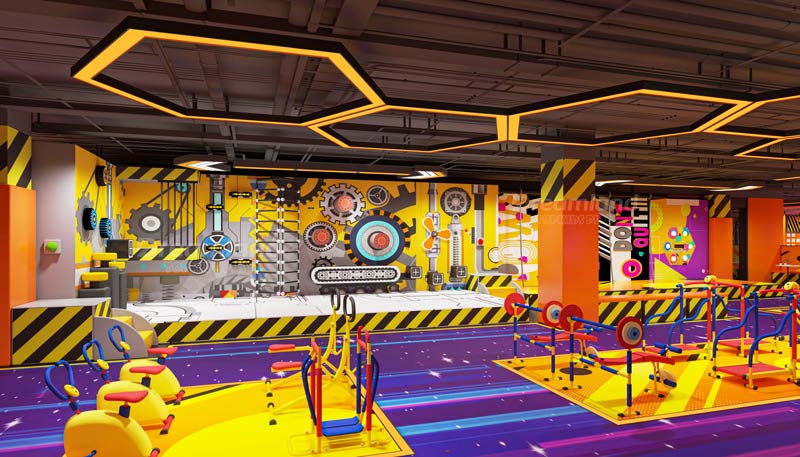
A ninja course is a special area with obstacles that test how much strength a person has in their body. Ninja courses put together climbing walls, swinging things, and balance beams into one continuous course. When people jump, crawl, or grip things, people are finishing the ninja course. Many people believe that ninja courses make exercise feel like a game. Speed and coordination are tested by a ninja course through various movements.
Different kinds of tasks are provided by ninja courses, which makes ninja courses better than a simple play frame. Children, teenagers, and adults can use ninja courses to test and develop their strength. These ninja courses are placed in fitness facilities or activity centers for everyone. It is observed that ninja courses mix physical training with competition. Because ninja courses have variety, they help people grow stronger.
Why Add Ninja Course Equipment to Your Indoor Park?
Attract a Wider Customer Base
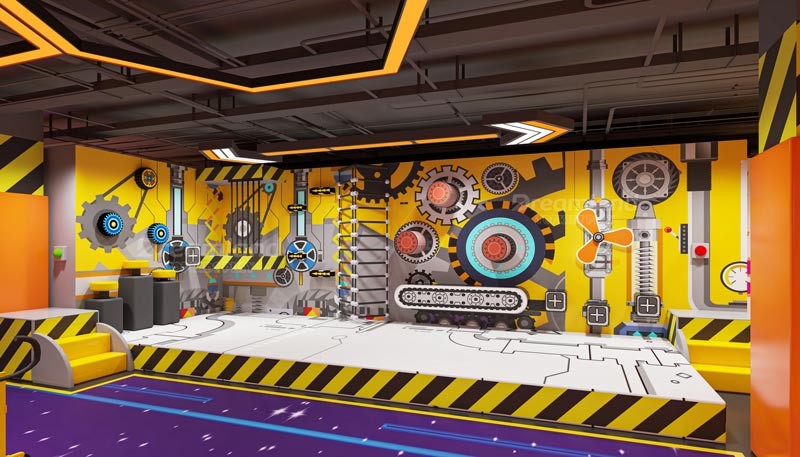
Since ninja courses attract both younger and older visitors, ninja courses help businesses find more customers. Beginners find tasks they can do, while experienced people find hard obstacles that match their ability. Many people believe that ninja courses provide more variety than a regular soft-play area. Customer groups are expanded by ninja courses when the obstacles are made for everyone.
Increase Play Time
The way ninja courses use climbing and swinging makes visitors want to do the obstacles many times. More time is used by visitors when ninja courses have difficult levels to finish. Experts claim that ninja courses keep both the body and mind actively engaged. Even though ninja courses are tiring, people try the obstacles again to achieve better results. Skills improve when ninja courses are used regularly.
Differentiate Your Indoor Park
Get a unique attraction in your indoor play park by adding ninja course equipment. Such a well-designed ninja course can be the focal point of your playground, giving you a unique selling point against playgrounds with more conventional play equipment.
Generate Birthday and Event Revenue
Use the Ninja Course for Birthday parties for children, group activities, school trips, and other events. Set up a timed challenge for the group or have an instructor show them how to complete the obstacles in a course.
Encourage Competitions and Memberships
Like many attractions found in indoor play centers, a ninja course can be used to generate revenue from Birthday Parties, Events, as well as via Membership and Training Programs. These types of programs will turn occasional visitors into regular customers and provide a constant flow of income.
Essential Ninja Course Equipment for Indoor Parks
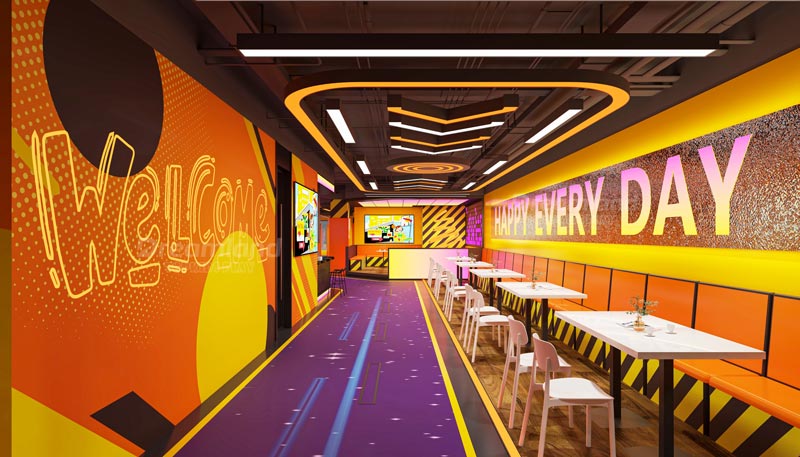
There are many different obstacles to choose from when designing a commercial ninja course. The variety of playground equipment, such as grip strength, balance, agility, coordination, climbing, and endurance, can be chosen based on the target customers as well as the space you have available and how much traffic you think it will get. The obstacles can be arranged to form different routes for people of different abilities to complete.
1. Monkey Bars
Monkey bars help develop upper-body strength. A classic playground feature that also improves hand grip strength and exercise coordination. These can be set up at a variety of heights and with different spacing to meet the requirements of different age groups.
2. Rope Climb
The rope climb tests grip, pulling strength, coordination, and endurance. The rope climb can be designed as an intermediate to advanced activity for use with children aged 8 years +. It is also suitable for older children, teenagers and adults.
3. Balance Beams
Balance beams improve balance, stability, body control and overall coordination. Because they are relatively compact and can be adjusted in width, height, and direction, balance beams are particularly suited for smaller playgrounds.
4. Warped Wall
The warped wall is a signature ninja obstacle. It tests the user’s running speed, lower-body power, agility, and coordination as they try to reach the top of the wall as quickly as possible. This obstacle is recommended for medium to large commercial facilities with plenty of approach space and clear safety zones.
5. Hanging Obstacles
Many hanging obstacles found on a commercial ninja course require upper-body strength, grip strength, balance, and coordination. These can include hanging rings, hanging ropes, monkey bars, hanging steps, and even various types of suspended grips. Many hanging obstacles are available in different heights and can be spaced at varying distances from each other to to provide an appropriate challenge for participants. Most hanging obstacles must be anchored to a structural component and will typically be placed on a surface that has sufficient impact absorption, such as a large padded floor mat. Obstacles must also be placed far enough apart to prevent collision between participants.
How to Design a Commercial Indoor Ninja Course
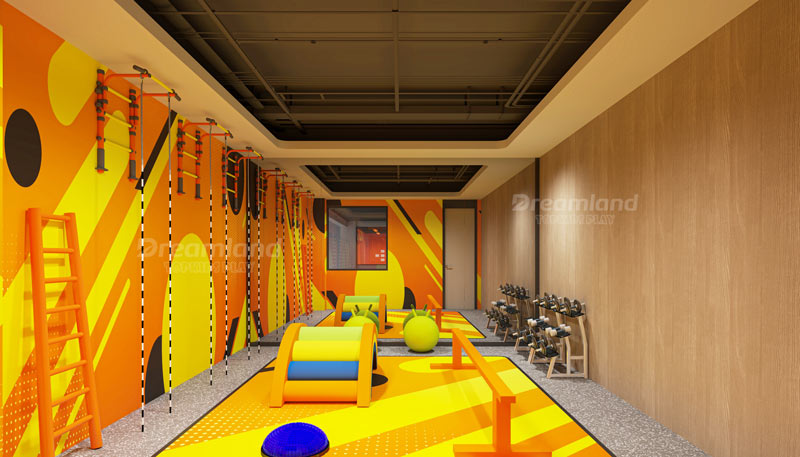
Creating a commercial indoor ninja warrior course involves making the best use of the available space to create a challenging yet safe course for users of all abilities. Ideally, the course should be divided into three areas, one for beginners, one for intermediate users, and one for more advanced users. It is also important to allow sufficient space around each obstacle for users to move around it safely, have a safe landing area in case they fall, and for staff to watch them.
Incorporating considerations of safety and customer flow through the use of appropriate impact-absorbing flooring, sturdy equipment, and rounded or protective edges, ensuring sufficient space between individual pieces to allow for effective movement between them. An effective course is designed to facilitate a logical flow from start to finish, enabling effective supervision by the facilities staff and participants to complete the course in one direction where appropriate. Clear entry and exit points, waiting areas for customers, and spaces for spectators to watch others complete the course ensure a fun and engaging activity for all participants.
Your indoor ninja warrior course design needs to consider how your business is going to operate, i.e., how your staff will be able to get around the course and maintain the equipment. This also allows you to design a course that can be altered and updated to provide your customers with new and exciting challenges over time. In most cases, this can be achieved by changing the way the obstacles are configured.
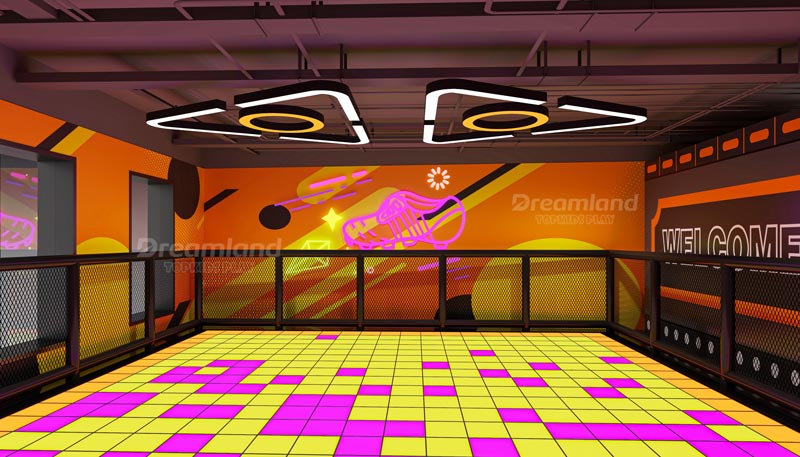
Ninja Course Design Ideas for Different Indoor Parks
Ninja Course in Trampoline Parks
Experts claim that a ninja course can be combined with a trampoline park to provide different types of movement besides regular leaping. Different items, including balance beams, hanging rings, monkey bars, and jumping platforms, are often placed near jumping areas because an energetic mixture of leaping, climbing, and agility challenges is desired. Safety separation is maintained by the design while allowing visitors to move easily from one activity to another.
Ninja Course in Family Entertainment Centers (FECs)
Many people believe that FECs can use modular ninja courses to bring in children, teenagers, and adults with various abilities. A compact ninja course is often installed alongside soft play areas, arcades, or climbing entertainment features. Because business managers include beginner and advanced lanes, people of various ages participate safely while the available floor space is maximized.
Ninja Course in Adventure Centers
It has been observed that adventure centers incorporate larger ninja courses for athletic individuals. These ninja courses include warped walls, climbing obstacles, hanging elements, and competition sections to provide visitors with more challenging experiences. A more demanding experience is created by adventure centers through flexible layouts. People master new challenges when the difficulty is adjusted by individuals in a working position.
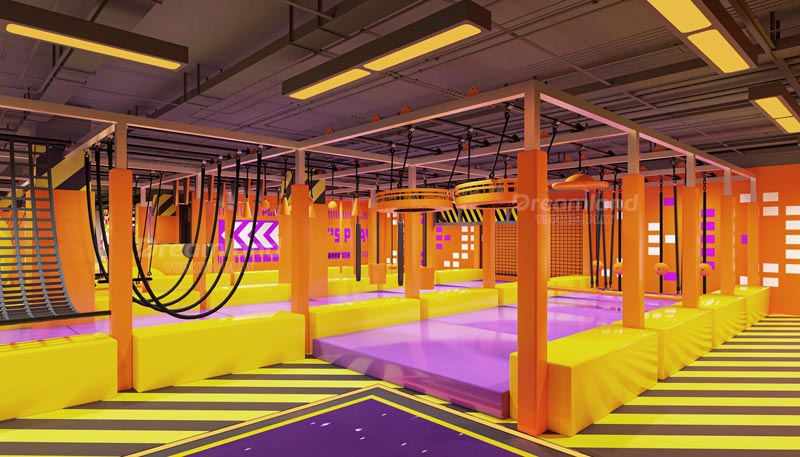
How Much Does an Indoor Ninja Course Cost?
Financial requirements for an indoor ninja course depend on space, obstacles, and building components. The total project cost can also be influenced by customization and installation requirements. A small ninja course with simple obstacles costs less money because fewer materials are needed compared to a large commercial setup. A realistic budget is created by business owners when they understand these factors and the building location.
Course Size
Many people believe that bigger ninja courses require more equipment and structural support. The investment is increased by the floor area and height because the arrangement of obstacles changes. A high number of obstacles is included when the ceiling height allows for more structures.
Number and Type of Obstacles
The number and type of obstacles also greatly affect the cost. Basic elements such as balance beams and climbing walls are less expensive than more complex elements like warped walls, hanging obstacles, salmon ladders, and competition elements.
Customization
Custom color schemes, special themed elements, branded features, custom obstacle configurations, and custom designs all add to the cost of a project. However, they also allow you to create an attraction that stands out from the crowd and fits within the overall concept of your indoor park.
Materials and Equipment Quality
Materials for a ninja course, such as steel frames, ropes, grips, platforms, padding, a floor, and other components, need to be durable enough in order to withstand frequent use. The quality of these materials will impact both the initial cost and subsequent maintenance of a ninja course.
Safety Requirements
Safety features, like impact-absorbing flooring, protective padding, secure anchoring systems, guardrails around vertical drop elements, and adequate space between elements, all increase the total cost of a ninja course. Most commercial operators want to purchase equipment that meets or exceeds the safety requirements for ninja courses rather than searching for the lowest cost.
Installation
The installation costs of an indoor ninja course will depend on a variety of factors, including the size of the course, the structure of the course, the location where the course will be installed, and the complexity of the ninja course equipment itself. In many cases, indoor ninja course owners will also have to factor in the cost of ongoing maintenance and the operational costs of the course. This can include regular inspections, repairs, and even the cost of training staff to safely use the course.
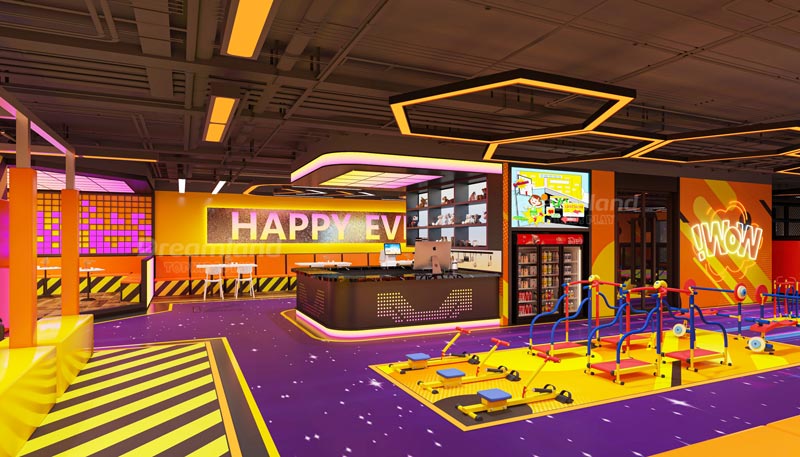
How Ninja Courses Increase Business Value
Indoor ninja courses can add considerable value to any business. Their design enables repeat visits from customers looking to improve their time, strength, balance, and skills to complete the various obstacles. Ninja courses can therefore encourage repeat participation and support memberships and loyalty schemes in addition to single visits.
A ninja course can also generate additional income through programs such as ninja skills training, ninja competitions, camps, ninja birthday parties, school programs, and corporate events that take place on the same attraction as your standard visit to the ninja course.
An indoor ninja course for an FEC has many ways to generate revenue and increase customer lifetime value. A properly programmed and priced ninja course can be a revenue-generating platform to add to your current attraction mix to increase your return on investment for your facility.
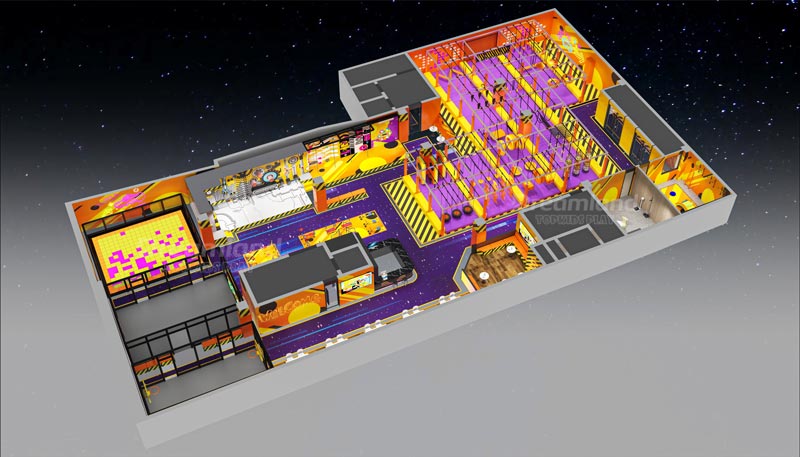
Conclusion: Build an Exciting Ninja Experience for Your Indoor Park
Creating a successful indoor ninja course requires more than simply selecting exciting obstacles to add to your playground. A quality ninja course must include reliable ninja equipment, an efficient course layout, and the right obstacles for the ages of children using the course. The course must also have adequate clearance and be designed with safety as a priority.
Dreamland Playground is here to provide you with a custom-designed ninja course for your indoor playground. Our ninja courses are created to fit your facility, target audience, space, and goals. We can assist with the selection of the obstacles, the layout of the course, the manufacturing, and the installation of the course. Contact us today to discuss your ninja course project.
FAQs About Indoor Ninja Courses
1. What equipment is needed for an indoor ninja course?
Warped walls, monkey bars, balance beams, ropes, rings, climbing walls, and padded landing areas.
2. How much space do I need for a ninja course?
It depends on the layout, number of obstacles, safety clearance, and ceiling height.
3. Can ninja course equipment be customized?
Yes. Equipment can be customized for your space, target age, branding, and difficulty level.
4. Is a ninja course suitable for FECs?
Yes. Ninja courses attract children, teens, and adults and work well alongside other FEC attractions.
5. How can ninja courses improve indoor park revenue?
They can increase repeat visits and support memberships, classes, camps, competitions, and parties.