




The 2026 Investor’s Handbook: Comparing Mall, Community, and School-Side Locations for Indoor Playgrounds
Changes can occur in any business; the equipment in an indoor play area, for example, may be upgraded. The company may either alter its pricing or change its marketing strategy. They are places that do not change with time. Once a long-term lease is signed, the site chosen becomes the most significant risk factor impacting your company's financial situation as shown on its balance sheet.
Generally, the initial costs associated with a children's indoor play centre are focused on the play equipment. This may include ball ponds, slides, and climbing frames. The key to a play centre's success is most likely to be its location. The location of a facility is crucial for its success because it provides access to the necessary equipment. No matter how good the design of a play centre is, it can struggle with a high cost of acquiring customers, little repeat business, and an unstable cash flow unless it has suitable premises.
By 2026, FECs and indoor play centres will use data analysis to inform business choices. Increasingly, house prices are rising, and competition in the job market is growing, which means parents can't afford school places anymore unless the area is suited to the child.
- Regional shopping malls
- Residential communities
- School-side and education cluster locations
Indoor playgrounds possess a number of distinct business models. Financial returns and types of clients are crucial considerations when setting up a play centre. Also worth thinking about are the potential sources of revenue and any difficulties that may arise. Although the indoor trampoline park business model is expanding rapidly, it is quite obscure; we will be focusing our research on these establishments.
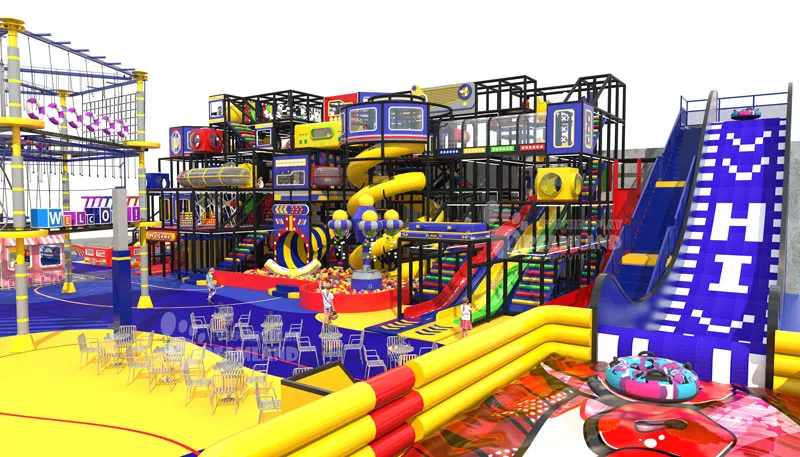
II. The Three Primary Models: Comparative ROI Analysis
1. Regional Shopping Malls – The Traffic Magnet
The Strategy: Leveraging Organic Foot Traffic
First-time operators often find a regional shopping centre to be an ideal location for their business of operating an indoor play centre. The indoor play centre is ideally placed in a shopping centre because this is a place where parents take their children. Many parents are constantly seeking ways to keep their children entertained, whether they are at the shops, eating out, or taking refuge from the rain.
In this retail development, a destination store will be used as the anchor, with an indoor play centre for kids also available to customers. Customers visiting the play centre will also be shopping elsewhere in the centre. Using the land the school occupies can be very advantageous for its owners. The fact that these buildings can enhance the value of the land upon which they are situated typically has a bearing on the reason why developers construct them.
Advantages
- People usually visit the shops in their masses on weekends and on public holidays.
- Strong visibility and brand exposure
- Easier impulse visits and walk-in sales
- Potential for co-marketing with retailers and food courts
Challenges
Although a mall location does come with some structural advantages, they are countered by structural disadvantages that directly affect the return on investment.
- Currently, the rental costs of stores in high-profile shopping centres are high. This is especially true for the premier class of shopping centres, known as tier one malls.
- Sensitivity of traffic to anchor stores, with the potential for a swift downturn in mall traffic if anchor stores vacate the premises.
- Many tourist spots are far more popular at the weekends, leading to increased weekly takings.
- Limited weekday utilization
To maintain their competitiveness, children's indoor centres need to ensure they have an optimal income per square metre. This is achieved by making the most of the available space. From a business point of view, one method is the maximisation of.
1. Space usage through multi-purpose rooms
2. Utilisation of extra space through clubs and classes
3. Hiring out of extra space to other organisations
In the United States, the average earnings per square meter for indoor playgrounds where children play is $56,000. In Australia, the equivalent salary is £45,000, while in the UK it is £26,000.
- Premium pricing
- Party package
- Time-based pay systems
- High-capacity equipment layouts
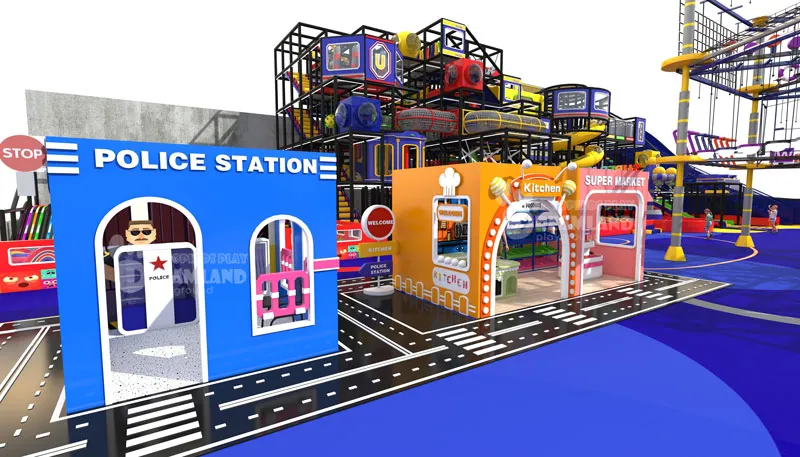
2.The Strategy: Retention Over Volume
They operate their indoor playgrounds on a community basis. Their main goal is to establish long-term relationships with families in the area via repeat visits, membership, and repeat custom.
Shopping centers located in residential districts or mixed development projects become familiar fixtures in the daily lives of families. Families are increasingly using restaurants as a location to make social connections and nurture child development.
Advantages
- Lower rent compared to malls
- Strong membership and subscription potential
- High birthday party conversion rates
- Stable, predictable cash flow
A significant proportion of the annual turnover of playcentres comes from children's birthday parties, which are often held at these facilities. Since the company's expansion is largely organic, it is not required to invest as much in attracting new clients. The nursery has experienced organic growth largely as a result of recommendations and the involvement of its parents.
Challenges
- Slower initial traffic build-up
- Limited visibility without targeted marketing
- Smaller catchment area
In community-based locations, the lifetime value of a customer has a greater effect on return on investment than the number of customers visiting the site each day. Investors who understand the theory behind retention economics are in a position to reap long-term, consistent profits.
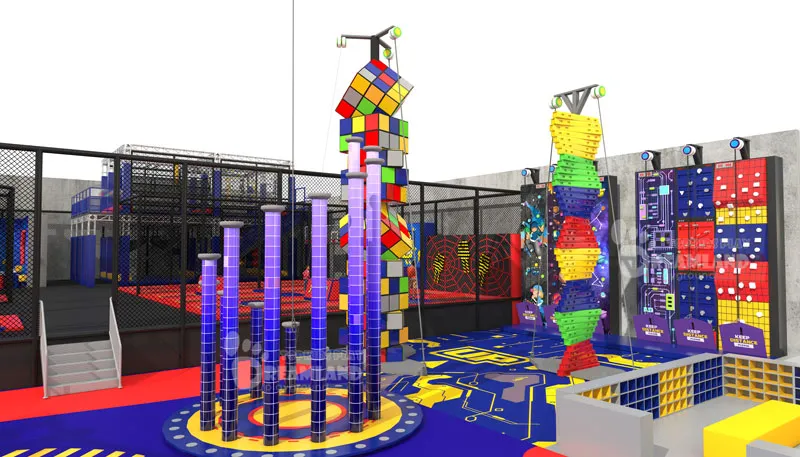
3. Near Schools & Education Clusters – The Targeted Niche
Few 2026 marketing opportunities can compare with the strategic value of the underappreciated school-side indoor playplace.
Why School-Side Locations Are Gaining Momentum
Modern parents face two major pain points:
- Weekday childcare gaps
- Excessive screen time
Playgrounds situated in or near schools, nurseries, tutoring centres, and educational centres are in a perfect position to address this issue.
School Trip Synergy: Monetizing Weekday Mornings
A major drawback of shopping malls and community playgrounds is the fact that they are underutilized on weekdays. In this instance, school-based locations reverse the equation.
- By partnering with:
- Kindergartens
- Primary schools
- International schools
- Learning centers
During weekdays, schools can use the facility in the morning for educational activities such as school trips or physical education lessons.
Institutional partnerships offer:
- Guaranteed volume
- Predictable scheduling
- Lower marketing costs
- Bulk pricing with strong margins
By improving cash flow, they are able to operate their business on a five-day-a-week basis.
After-School & Edutainment Programs
Outside of regular school hours, the school can be used to the greatest advantage.
Instead of competing with screens, successful operators integrate “active play as education”, combining:
- Ninja obstacle courses
- Climbing walls
- Balance and coordination challenges
- Team-based physical games
Such play spaces position their indoor playgrounds as educational entertainment for children. Parents are prepared to pay extra for activities after school that are structured and will boost:
Both the self-esteem of their children and their chances of getting into a good university are affected.
- Physical fitness
- Confidence
- Social skills
The increased average revenue per user is another result of this model, and in addition, it generates long-term income from student enrollments.
The Biggest Challenge: Traffic Is Invisible
School-based locations, unlike shopping centres, do not profit from random passing trade. Success depends on:
- Strong school partnerships
- Clear brand positioning
- Operational excellence
Once established, petrol stations in these areas usually make higher profits than other sites, largely because they are cheaper to rent and have more customers on weekdays.
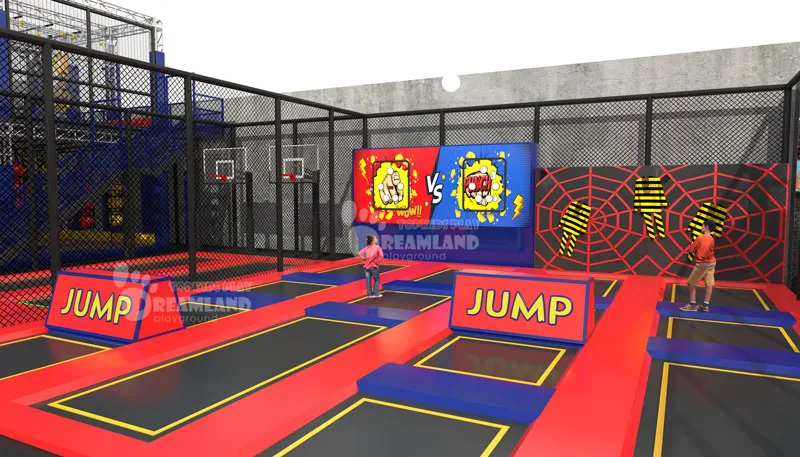
III. The Technical Due Diligence: What Landlords Won’t Tell You
Ceiling Height: The Hidden Revenue Multiplier
A building's ceiling height is a key factor in determining its earnings potential.
- Equipment should be positioned a minimum of 4.5 to 5 metres away from any potentially hazardous equipment.
- Multi-level adventure play: 5–6 meters
- The urban park offers 1 tennis court, 2 multi-purpose sports fields, a jogging track, and, for more adrenaline, a 6 metre climbing wall and ninja course.
Higher ceilings allow:
- Vertical play elements
- Multi-level structures
- Increased capacity without expanding floor area
Rental properties sometimes have ceilings described inaccurately by the owners. It is essential to check the free height rather than the overall height of a structure.
Safety Compliance as a Financial Tool
Many see the requirement to adhere to standards such as those from ASTM (USA) and EN (Europe) as an administrative and paperwork burden. They prove to be a financial benefit.
Approved equipment:
- Lowers insurance premiums
- Reduces liability exposure
- Increases trust with schools and parents
- Enables institutional partnerships
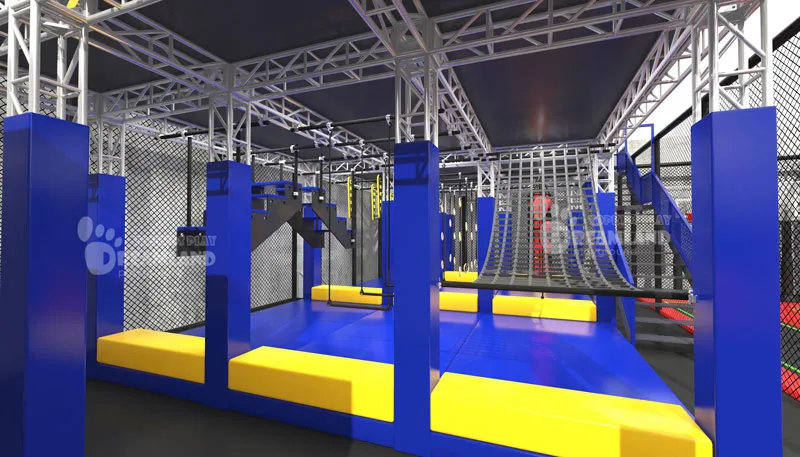
As the indoor playground market continues to grow, the most successful operators will not be those with the biggest, most elaborate play equipment, but rather those who select the most advantageous and smartest location. For the sustainable success of an indoor playground, which could be on a community, mall, or school side, it is crucial to grasp the economics behind such a business. When selecting an indoor play centre, it is wise to carry out some research. We conduct a complimentary site feasibility study to enable developers and investors to assess the viability of their site before signing a lease. To facilitate a comprehensive site evaluation, please send us your building's floor plans, CAD drawings, and photographs taken on site. We will inspect these and assess the premises in relation to safety standards and market conditions in your area, checking for conformity to EN/ASTM and assessing the layout for maximum space usage. Prior to costly decisions being made, this analysis will assist in uncovering hidden technical risks and determining revenue potential. It will also help determine whether your site would be best suited to an indoor playground model in a school, community, or shopping mall setting.
V. Frequently Asked Questions (FAQ)
Q: What is the ideal ceiling height for an indoor playground?
Ceiling height should be considered carefully as it can greatly affect the operation of your business. For an average soft play area, a room size of 4.5 to 5 square meters is required. Investing in high-margin activities such as a climbing wall or an assault course can lead to a significant increase in revenue per square metre when the height of the building is 6 to 8 metres.
Q: How do I evaluate the traffic potential of a community site?
Focus on residential density, number of children aged 2–10, nearby schools, and competing play centers. It appears to be more beneficial for a business to have a high volume of clients who regularly visit, rather than to have a large number of people walking through the premises.
Q: Why must my site comply with ASTM or EN standards?
Adherence to these regulations lessens the risk of legal action, decreases the cost of liability insurance, and is required to establish partnerships with schools and institutions. Parents feel safer when they can learn about the people and processes behind the products they buy for their children. This approach also builds trust with parents and enhances a brand's reputation.
Q: What is the biggest challenge of a school-side location?
The biggest challenge of a school-side location is finding a time when all the children are not there. This can be a problem because parents work during the day, and after-school activities also have to be accommodated.
Q: How can I increase revenue per square meter in high-rent malls?
In order to maximise facility usage and throughput, consider employing space-saving techniques, time-based pricing, luxury private party rooms, and advanced technical equipment layouts.