

Inclusive Indoor Playgrounds: The New Gold Standard for FEC Investors
The Market Reality: Why Traditional FEC Models Are Stalling: Breaking the "Glass Ceiling" of Traditional FECs
The Family Entertainment Centers have long relied on the same formula to draw guests: trampolines, soft play area for young children with foam forms to climb on, arcades, and birthday celebrations; the most alluring features are the facility's size and cost. The demonstration is being used a lot right now. Due to intense cost competition, typical open play spaces in established countries are experiencing extreme homogenization, rising client security expenses, and declining profit margins. Because there are so many similar urban entertainment hubs, there is intense rivalry to set them apart, which forces operators to lower their rates.
Instead of being an uncommon addition to community structures, these open play spaces are quickly becoming a typical facility. Diversity in the workplace today extends beyond the legal compliance required to meet the fundamental physical needs of individuals with disabilities. It redefines both the definition of a play area and its intended audience in a crucial step. Large play areas allow children of different skill levels to interact with one another. These environments allow kids of all skill levels to play in a courteous, safe, and comfortable manner. Businesses that offer these locations have the opportunity to enter a market that is unfilled by competitors and where cost competitiveness is challenging. Customers are incredibly devoted, and this presentation is quite high-end. More and more, stakeholders view a variety of traits as growth-promoting factors.
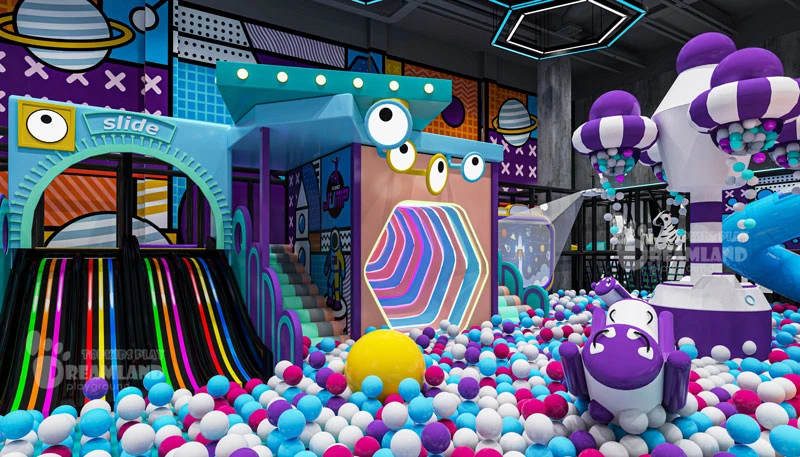
The Core Logic: Inclusivity as a Strategic Business Upgrade
The fee imposed by FECs from their indoor play facility fluctuates when a play area is fully occupied by children. Any area can be made accessible to everyone by mixing a variety of highlights. This entails considering slope, creating an emergency exit, and enlarging entrances. In the play area, every kid should have the chance to interact, play, and make friends with their peers. Since the government will grant assessment exemptions to any company that allocates a percentage of its revenues to its employees, such initiatives will be viewed as business decisions.
It is better to strive for a showcase that is much more secure, solid, and well-designed. There is still much to learn about the concept of the "Blue Ocean Strategy." Consumer preference for a company's products is not increased by customary nutrition, vitality, or customer service. Conversely, comprehensive play equipment increases brand loyalty. By promoting better quality, more notable value, and cheaper costs, businesses can generate fresh demand and client loyalty.
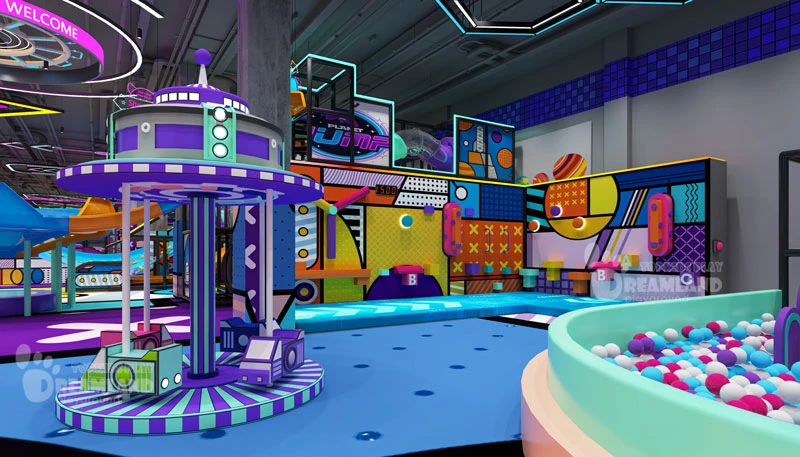
Industry Trends: From "ADA Compliance" to "Social Inclusion."
The Landmark Case: Complete Playground, Manhattan
One example is the Complete Indoor Playground in Manhattan, New York, founded by Alex Reznik. At Complete Playground, children with and without disabilities play together on the same playground. The goal of the playground was to bring people together. Changing the product's positioning transformed it from a mere rule-follower to a community hub that is important to people's culture.
The Most Impactful Change: Accessibility is No Longer the Objective
To lead businesses well, one must now do more than just comply with the regulations. The emphasis is shifting from merely following ADA laws to actively encouraging everyone to feel included in society. Physical accessibility refers to features such as ramps and big doors that make it simple for anybody to enter a facility. People generally seek experiences that appeal to their senses, make them feel secure, and allow them to socialize and connect with others. More and more, investors understand that simply fulfilling essential criteria does not distinguish one location from another. However, the emphasis on creating shared experiences is what distinguishes it.
Trend Definition: From Equipment Purchases to Community-Based Solutions
There is a significant shift occurring, since investors are increasingly interested in projects that provide community-based and inclusive solutions. The facilities are accessible to families, schools, community organizations, and therapists. This helps the center become a key component of the city. This modification influences the stability of client demand and the value of client relationships over time.
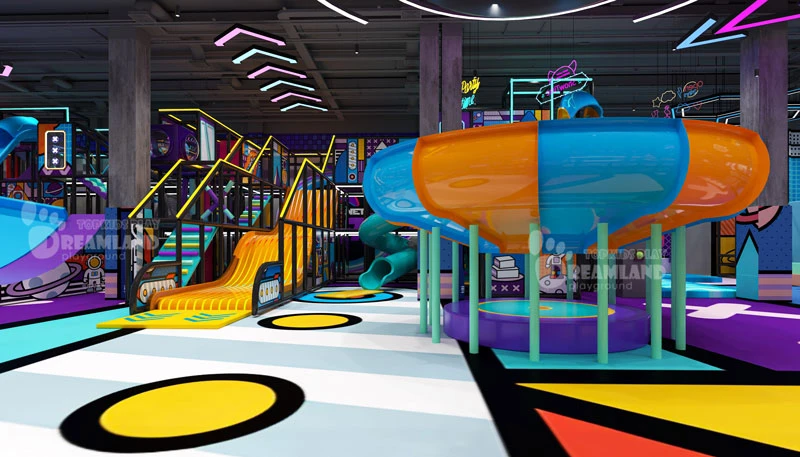
The Dual Profit Engines: Admission Yield + Targeted Programming
Engine A: Maximizing Off-Peak Occupancy and Yield
Businesses are constantly plagued by the problem of underutilisation of their facilities on weekdays. Inclusive clubs provide the facility to make bookings during the day for corporate events. Sensory-friendly environments are highly attractive to:
- Special education schools
- Therapy and rehabilitation centers
- NGOs and community organizations
These groups, who might otherwise idle away during weekdays, generally opt for off-peak time slots, thereby turning hours that historically would have been idle into a fairly steady income. This allows asset utilisation and cash flow to be stabilised without the need for additional floor space.
Engine B: High-Margin Service-Driven Programming
In addition to admissions, inclusive parks offer a range of educational activities. These include play programmes which are based on school curricula. These programmes include sessions where the senses are integrated, gymnastics which may be adapted, and social skills play groups which are structured. The move towards regular membership subscriptions is made possible by these new services, ultimately leading to customers remaining loyal to the business.
Individuals with disabilities and their families often have very few options for leisure activities and so display a remarkable devotion to the businesses they do use and visit frequently. In a relationship where trust has been established, customer sensitivity towards price is lower, and the client is more likely to retain their business with the company. This is exactly the effect investors are looking for in a business model.
Customer Lifetime Value (CLV) – The Effect of Loyalty from an Underserved Market Segment
There are a few establishments that cater to both the needs of disabled individuals and also of families. Properties that are well managed and courteous towards customers have customer loyalty, which is higher than average across the sector. Industry averages show that customer retention is significantly higher in this firm than it is elsewhere.
A strong customer relationship in a competitive urban market allows a business to increase profits from each customer in that market due to a reduction in the cost of attracting new customers, while an increase in the value to the business of each customer.
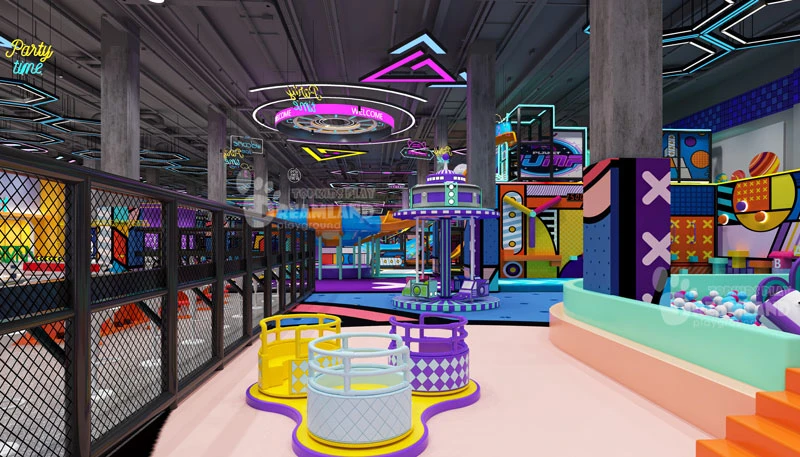
Risk Mitigation Through Manufacturing Excellence
Precision Compliance and Safety Standards
Inclusion brings advantages, but it also raises doubts in investors about potential future expenses, legal responsibilities, and the need to comply with the regulations. The manufacturing and design capabilities possessed by Dreamland Playgrounds provide it with a strong competitive advantage.
Operational Risk Mitigation through Strategic Sensory Zoning
The precision components are manufactured by Dreamland Playground using a three-dimensional laser beam cutter. This is a laser beam cutting machine that is capable of achieving a precision of one millimetre across structural components. All ramps, sloping areas, and elevated locations must exceed accessibility standards. The company integrates compliance into the manufacturing process, so instead of introducing compliance after the fact, this risk is eliminated.
Asset Protection and Operating Expense Decrease
Effective inclusive design involves more than just accommodating users with disabilities through adequate dimensions. It needs careful planning of space. The complex has a variety of distinct areas, some more relaxed in nature, others more stimulating. Implementing the procedures outlined above minimizes the possibility of overloading the senses of the visitors, enhances the movement of the guests, and reduces the risk of accidents and associated legal claims.
Children's playgrounds nowadays are designed to accommodate heavy usage by many different children. The company uses industrial-strength sewing and anti-microbial materials in the construction of Dreamland Playground. Soft surfacing products featuring impact-absorbing infill materials reduce wear and tear and reduce maintenance requirements. This results in lower operational expenditure for facilities throughout their lifespan.
Bespoke Solutions: From Vision to 3D Reality (OEM/ODM)
Design as a Competitive Edge:
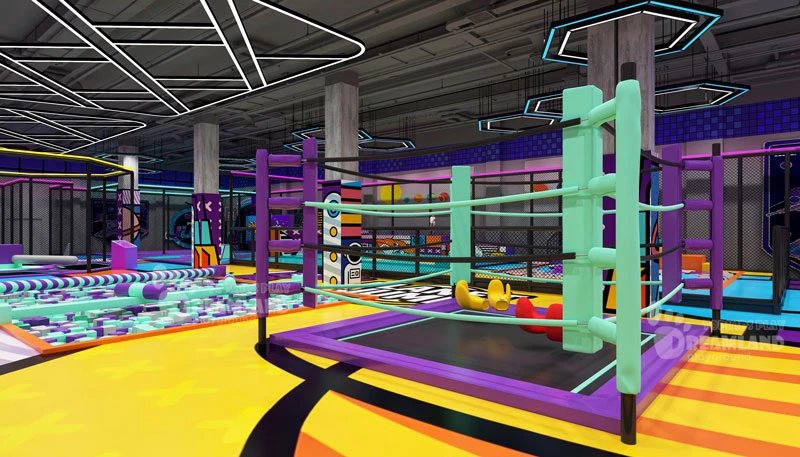
It is difficult to standardize inclusivity. Dreamland Playground can offer customized production by acting as the Original Equipment Manufacturer (OEM) or Original Design Manufacturer (ODM). As such, it creates 3D designs that are functional to the requirements of the client. When adopting an approach centred on design, inclusivity is in harmony with business objectives, the product's market, and how a company wishes to be seen by the public.
The creation of Unreplicable Barriers
Visitors to Dreamland Playground can custom-build their very own playground by incorporating the features Quiet Areas, a sensory wall, and multi-level climbing structures into their unique design. These engineered products are designed to fit specific operator goals within available space.
Dreamland Playground works' bespoke technology enables operators to create unique experiences that their customers will find hard to find elsewhere, such as:
- Customised events
- Events with certain themes
- Personalised rides and other attractions
- Bespoke food and drink outlets.
- Purpose-built Quiet Zones
- Interactive sensory walls
- Multi-level, inclusive challenge structures
The uniqueness of a brand's characteristics makes it difficult for competitors to imitate its overall impression, and so aids long-term market position and differentiation.
Conclusion
Operators now realize that an inclusive indoor play centre is a necessity rather than an optional extra to ensure long-term viability of their business in the indoor amusement park market. New business models tackle key structural flaws found in the traditional models; meanwhile, they introduce new revenue streams via loyalty, community, and premium services.
Partner with Dreamland Playground if you are eager to design a fun park that brings both business success and benefits to the community. We would like a custom three-dimensional design proposal tailored to our particular marketplace. We also require a comprehensive return on investment assessment.
FAQ
Q1: How do I balance the initial CAPEX with long-term ROI in an inclusive park?
Higher revenues from larger group bookings of weekday services at inclusive playgrounds are one reason why such facilities are worth extra expenditure and increased weekday groups. When the total costs of ownership are considered, the return on investment in other equipment tends to be lower.
of ownership are considered, the return on investment in other equipment tends to be lower.
Q2: How can I find qualified instructors for specialized inclusive programming?
We recommend a "Venue + Partnership" model. Partner with local pediatric therapy clinics or independent therapists. They provide the expertise and a built-in client base, while you provide the professional Dreamland facility. This minimizes your labor overhead and professional risk.
Q3: How does Dreamland ensure compliance in different regions (USA, EU, Middle East)?
Dreamland Playground sells to more than 100 countries, so they are used to meeting the needs of different parts of the world. This is a chance to improve compliance with ASTM/TUV/CE, and so on.
Q4: Can a high-standard inclusive experience be achieved in a small footprint (<500 sqm)?
Of course. With the right vertical design methods and modular sensory equipment, even small venues can offer experiences that are distinctly different and of high quality.
Q5: Does inclusive equipment require more complex maintenance?
No. Because of this, inclusive equipment on site is better maintained in terms of structure and materials. This makes it last longer and means that core parts don't need to be replaced as often.