



How Much to Build a Trampoline Park in 2026? Hidden Costs, Tariffs, and ROI Analysis
Introduction: Is a Trampoline Park Still a Profitable Venture?
The "Adventure Park" Shift
The pandemic has caused the proportion of teenagers nationwide participating in sports to drop to 49%, a figure that has concerned the government and prompted the introduction of corresponding measures. In the 2025 《PROJECT PLAY 63X30 2025 IMPACT REPORT》 released by the Aspen Institute, it is stated: "The Aspen Institute’s Project Play developed the 63X30 initiative to drive action toward the Healthy People target of getting 63 percent of youth involved in sports by 2030."
As a form of recreational activity that can increase the frequency of physical exercise among teenagers and support their healthy growth, jumping is driving the development of the trampoline park market.
High-Level Estimate
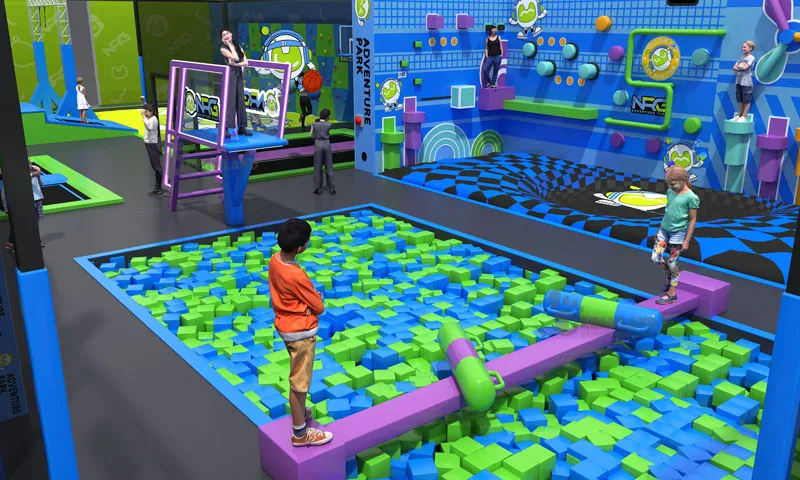
A standard-sized trampoline park, with its high-standard venue planning and high-quality amusement equipment, is more likely to achieve long-term and stable capital recovery and possesses significant long-term investment value. A standard-sized trampoline park covers approximately 25,000 to 40,000 square feet, and investors initially need to prepare around $1.5 million to $3 million in initial capital, which covers venue leasing, venue design, equipment procurement, license application, and insurance costs.
Pre-Opening Capital Expenditures (CapEx Breakdown)
Real Estate & Leasehold Improvements (LHI):
For a typical Family Entertainment Center, the height of the venue directly determines the main projects it can operate. FEC venues with standard height have relatively low rental costs, while higher ceilings are more suitable for venue renovation, equipment installation, and accommodating more facilities, resulting in higher rents.
Jumping offered by trampoline parks is a project with special height requirements. The clear height of a trampoline park needs to be at least 18 feet or above. Investors usually prefer warehouses, as warehouses can meet this height requirement while offering relatively low rents. Taking the rental rates of high-clear warehouses in the GTA industry as a reference, for a clear height of over 18 feet, the rent is approximately between $18 and $22 per square foot.
When customers engage in jumping activities inside the venue, a cool and well-ventilated environment is crucial given their high calorie consumption. Investors need to upgrade the HVAC system within the park to ensure air quality, and installing the HVAC system will cost approximately $150,000. In addition, essential padding and netting installation must be completed to ensure environmental safety, including lighting and fire sprinkler systems, with this part costing around $50,000.
Equipment Sourcing (The Core Investment):
Another core investment of CapEx is the cost of purchasing equipment. Based on a standard layout, the cost is approximately $9 per square foot, while a higher-standard layout requires $11 per square foot. For an area of around 10,763 square feet, equipment costs typically range from $60,000 to $90,000, translating to roughly $5.5 to $8.4 per square foot.
Main trampoline area equipment that meets ASTM F2970 safety standards is crucial for future capital recovery. If you purchase equipment from a local reseller, the cost will be $1.6 to $2.2 per square foot. If you choose direct supply from manufacturers, you will need to spend $9 to $13 per square foot.
Dreamland Playground, located in Wenzhou, known as the "Toy City of China", has years of rich experience in direct factory supply. Relying on the highly mature industrial chain clusters and agglomeration industrial advantages of the region, the company can achieve efficient cost control in the procurement of raw materials.
Meanwhile, the complete maritime export logistics system of Wenzhou Port further significantly reduces cross-border transportation costs for goods. By optimizing the supply chain from the source and realizing dual cost intensification, Dreamland is able to adjust its product pricing to the optimal range. Therefore, we can continuously maintain a highly competitive advantage for manufacturer-direct trampoline equipment pricing.
Landed Costs (Shipping & Tariffs):
If you choose factory-direct supplied equipment, landed cost is one of the essential expenses. According to the case, introduced on Dreamland Playground's official website, if equipment is to be transported from Wenzhou Port to Los Angeles, USA, the commonly used full-container shipping method is usually adopted. A 20-foot GP container costs approximately $1,200, while a 40-foot HQ container costs about $2,000.
Since the United States imposes Section 301 Tariffs on China, customs clearance is required after the equipment arrives at the destination port. In this regard, the U.S. import tariffs for customs clearance include a 5% most-favored-nation tax rate and a 25% tariff.
The "Hidden" Costs: Safety, Legal, and Compliance
Insurance Premiums
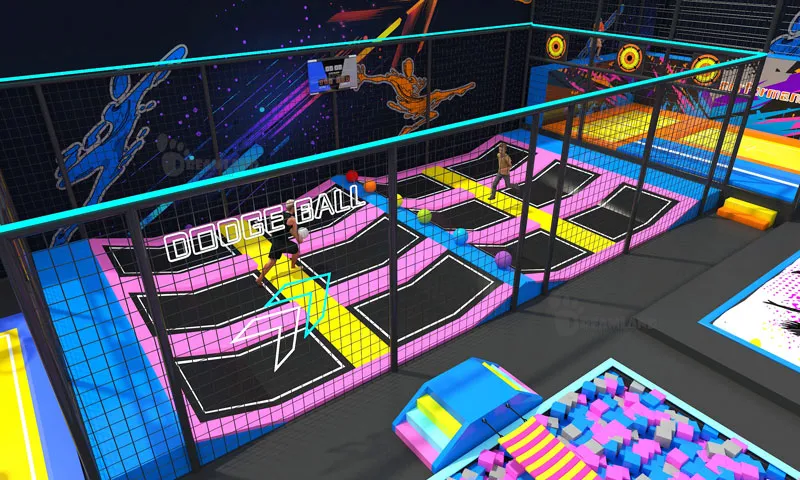
If you want to operate a trampoline park for the long term, safety issues are of paramount importance. The ASTM F2970 safety standard serves as an authoritative guideline for inspecting the safety performance of products. If you take a long-term view of your investment in a trampoline park, choosing products that comply with this standard is the only way to ensure safety. In other words, using equipment that meets the ASTM F2970 safety standard can reduce the trampoline park liability insurance costs.
Under normal circumstances, operators need to buy liability insurance costing approximately $30,000 to $80,000 per year, property insurance around $5,000 to $15,000 per year, in addition to some legal fees, roughly $5,000 to $20,000. If your trampoline park has poor safety performance, it means you will have to purchase more types of insurance and pay higher insurance premiums.
Permits & Professional Fees
Jumping activities in trampoline parks are high-safety-risk scenarios. Therefore, equipment design must ensure that the steel structures of trampolines are sufficiently stable to bear the movement and jumping of people on them. Only when these trampoline structures are safe and have excellent load-bearing capacity can the construction team proceed with construction, while also avoiding failed final inspections and legal risks. For this reason, design drawings must be reviewed, signed and sealed by a Professional Engineer.
For standard-scale designs, this process costs between $5,000 and over $30,000. For trampoline parks that focus mainly on vertical projects, the more complex the high-altitude structures are, the higher the cost will be. Beyond safety concerns, operating in full compliance also requires obtaining necessary permits, such as a basic business license, costing approximately $50 to $500 per year; a fire department permit, costing roughly $100 to over $1,000; and an amusement permit, also around $100 to over $1,000.
Operating Capital
Initial operations require advance preparation of a contingency buffer, which serves as a cash cushion to sustain operations for six months after opening. This fund is included in the trampoline park startup costs.
For a standard-scale trampoline park, this cost includes fixed rent of $25,000, pre-opening wages of approximately $53,000, and fixed expenses of about $78,000, bringing the total required fund to roughly $460,000.
Franchise vs. Independent Brand: A Cost Comparison
The Franchise Trap
Many novice trampoline park investors consider franchising, as the traffic brought by the brand makes it easier to get the park up and running. However, franchising also involves considerable costs.
First, an initial investment of $30,000 to $60,000 is required to purchase the rights to the brand name. Next, 6% of Local Marketing Expenditure must be allocated to advertising and promotion. To cover necessary operational expenses during business, a liquid budget of approximately $750,000 is also needed. Finally, 6% to 8% of gross revenue must be paid to the brand as royalties from operating profits.
Franchising with the well-known US chain Altitude Trampoline Park requires an investment of $2.2 million to $3.3 million, with a total operating revenue of $2.1 million. Under the profit-sharing model, the payback period for franchising investments is actually longer.
The Independent Path
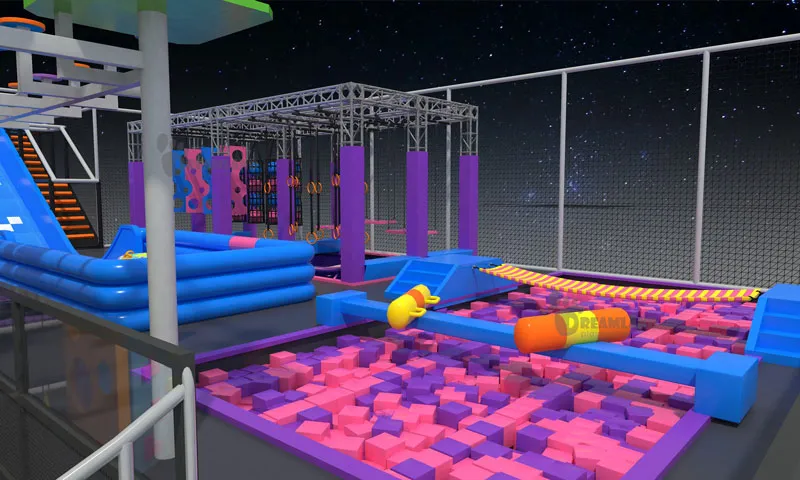
If investors operate their own independent brand, they can save on initial franchise fees and royalty fees, with 100% of all profits belonging to themselves. Once investors have selected a location for the venue, the next step is to find a professional amusement equipment manufacturer such as Dreamland Playground for construction.
In the past, investors had to spend manpower and funds overseeing each step of the process, but Dreamland Playground's turnkey solution provides a one-stop package service covering venue layout planning, product design, production, and installation. This not only saves you time on project construction but also ensures consistent quality control of the equipment inside the venue, and even helps you cut down on considerable costs to build a trampoline park.
ROI Analysis: Maximizing Revenue in 2026
Diversified Revenue
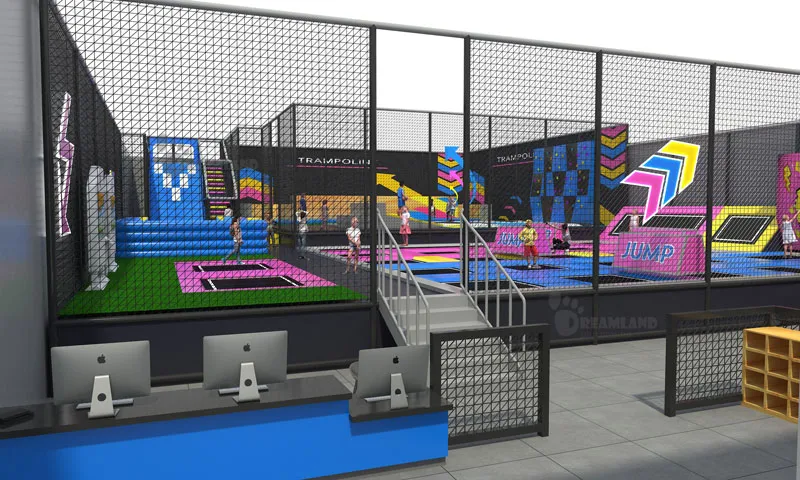
To achieve a steady increase in commercial trampoline park investment return, operators need not only to control operating costs but also to maximize profits through a diversified revenue structure.
Amid the current trend of consumption upgrading, consumers' acceptance and willingness to pay for membership-based services have increased significantly. Venues can launch value-added products such as session passes, monthly cards, and annual memberships to expand stable and sustainable income.
In addition, operators can develop customized service packages based on scene value, such as themed birthday parties and corporate team-building activities. If the venue's core customer base consists of parent-child families, a leisure café for parents can also be added to enhance scene value. By continuously innovating operation models and diversifying revenue structures, a profit system with growth potential can be effectively established.
Dwell Time:
The immersive interactive jumping experience created with AR/VR technology enables a differentiated breakthrough from traditional trampoline parks. Relying on the iterative upgrading of intelligent technology, interactive jumping games feature customizable content and the capability for continuous updates.
Through innovative gameplay such as point rankings, level-based recharges, and challenge tickets, interactive digital games can create dynamic and diverse immersive amusement scenarios. This innovative experience model not only provides consumers with a more immersive and fresh playing experience but also effectively extends customer stay time, deeply stimulates consumption potential, and further expands broader profit growth space for the venue.
The Timeline
The trampoline park break-even timeline varies due to the difference of indoor adventure park business plan. This depends not only on the size of the trampoline park but also on its local operating expenses, ticket prices and labor costs.
If a trampoline park is located in a busy area with high foot traffic, faces little local competition and achieves outstanding marketing results, it may reach break-even in a short period of time. Taking a trampoline park with an area of 500 to 1,000 square meters as an example, under the premise of sound management and operation, the actual break-even point should be between 12 and 18 months.
Smart Budgeting Tips for New Owners
Phase-based Installation
For novice investors in the trampoline park startup, a phased implementation approach can be adopted during the venue planning and construction stage to effectively control trial-and-error costs.
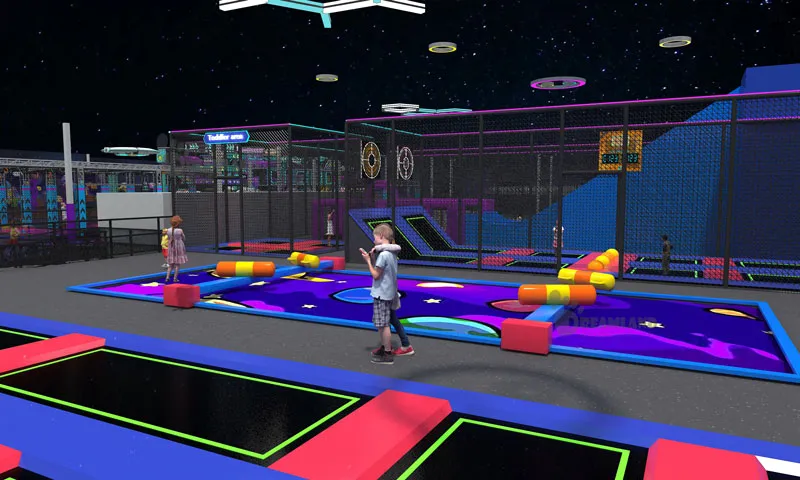
It is recommended to prioritize projects with simple construction procedures, high approval pass rates and outstanding profit potential. After official operation, dynamically optimize the overall layout of the venue based on real-time revenue data and market feedback, so as to optimize multi-attraction trampoline park layout, avoid idle resource waste, and significantly reduce later operation and renovation costs.
Modular Design
If a phased installation mode is adopted, modular equipment can significantly shorten the on-site construction period and reduce labor input costs. Thanks to unified dimensional standards and structural design, the equipment can be efficiently and directly installed within the venue, greatly improving deployment efficiency.
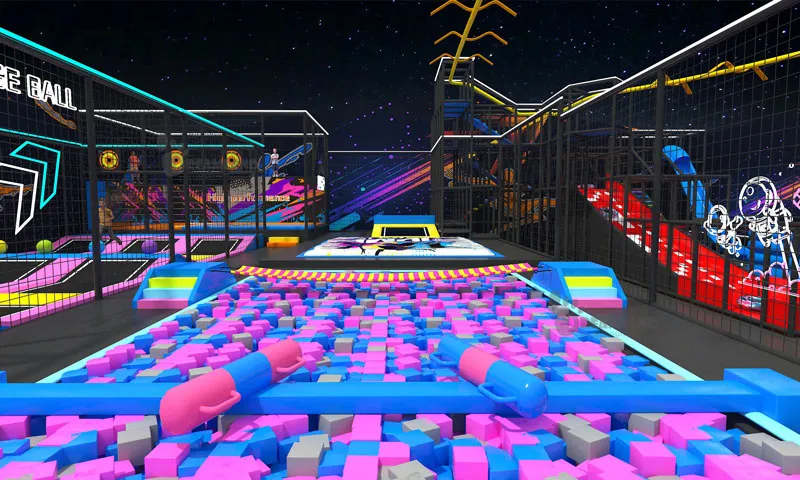
Meanwhile, each module adopts an independent design, independent installation and independent billing model. During the initial operation stage, if investors find that the profit performance of some modules falls short of expectations, they can flexibly replace and upgrade such modules, effectively enhancing the overall operational flexibility.
Conclusion & Call to Action
The Dreamland Playground Advantage
Dreamland Playground has accumulated mature and extensive industry experience in the field of amusement equipment manufacturing. We have always adhered to the ultimate pursuit of product quality and safety, focusing on commercial trampoline park investment return.
Committed to helping customers expand their commercial presence, we base ourselves on customers' actual needs, provide tailored manufacturer-direct trampoline equipment pricing plans that are both competitive and reasonable.
If you are interested in our products and services, we sincerely invite you to visit our official website to get in touch with Dreamland Playground. We will immediately arrange a free budget planning consultation for you and customize a professional 3D layout plan tailored to your needs.
FAQs
Q: What is the average cost per square foot to build a trampoline park in 2026?
The cost is approximately $5.50 to $8.40 per square foot.
Q: Do I need a special insurance policy for a trampoline park?
In addition to basic liability insurance and property insurance, participant accident insurance should also be purchased when necessary.
Q:What are the most common "Hidden Costs" that park owners overlook?
"Hidden costs" include insurance premiums, license approval fees and contingency buffer.
Q: Is a $250,000 budget enough to start a profitable trampoline park?
To build a profitable trampoline park, the budget is approximately $400,000 to over $1.5 million, so $250,000 is relatively insufficient.
Q:How can ASTM compliance significantly lower my long-term costs?
Equipment compliant with ASTM standards offers higher safety and better quality. In the long run, it can reduce maintenance costs, lower the risk of accidents, and thereby cut down on insurance expenses.