

Why a Family Entertainment Center Equipment Checklist Matters Before You Buy
You want to open a Family Entertainment Center (FEC). You search for kids' play equipment for indoor playgrounds, trampolines, arcades, or other fun games. And then you find a supplier for the equipment that will fill your FEC. You think you have found the solution to opening your very own Family Entertainment Center. But wait… There is more to opening an FEC than just buying some fun equipment. A full project consists of the layout of your facility, safety aspects, utility installations, guest facilities (bathrooms, snack and beverage bars, ball pits, etc.), operating systems (cash registers, ticket dispensers, point-of-sale systems, etc.), and equipment storage and maintenance. Failure to consider these key elements could result in higher-than-necessary costs to get your FEC up and running, as well as potential problems in terms of guest experience and safety.
When selecting equipment for your family entertainment center, whether it is a family fun center, an indoor playground, or a multi-attraction venue, it is very important to plan your chosen family entertainment center’s equipment as a total system. In other words, do not just look at a list of individual pieces of entertainment equipment, such as commercial indoor playgrounds for kids and trampolines. Also consider the many supporting facilities and operating systems that are required to ensure that the system operates safely and profitably for the owner and guests.
However, before selecting any commercial indoor playground equipment and other amusements for your future family entertainment center, it is best to first outline customer profiles, business revenue models, possible uses for the indoor facility, center goals, etc. The entertainment equipment necessary to open an FEC, the FEC layout, and a suitable supplier that can offer the right combination of play equipment and other features, plus the necessary technical assistance and project guidance over time, can all be determined on the basis of these factors.
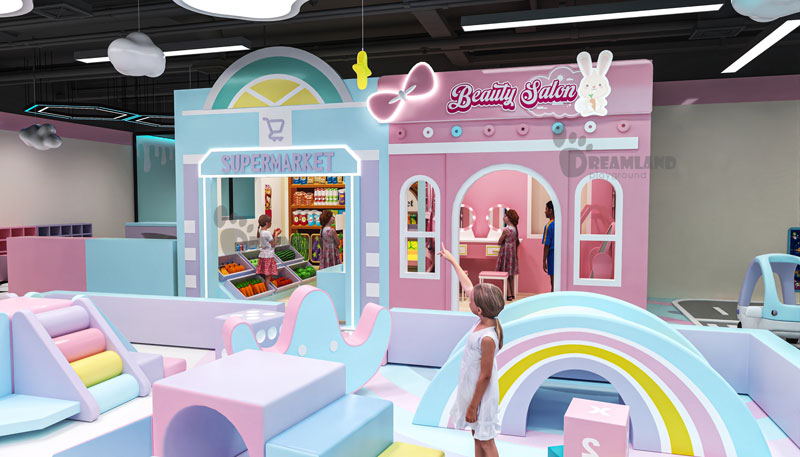
What Equipment Does a Family Entertainment Center Need?
A Family Entertainment Center (FEC) is more than just play equipment. Yes, play equipment is the main part of the guests’ experience at an FEC, but there are also many revenue-supporting components, as well as safety and guest-service components, in the FEC model. All of these components work together to create a great experience for guests and allow the FEC staff to efficiently manage the center.
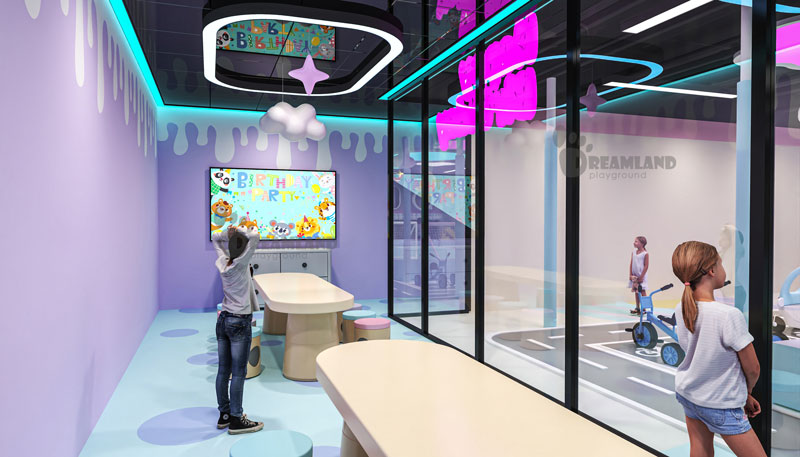
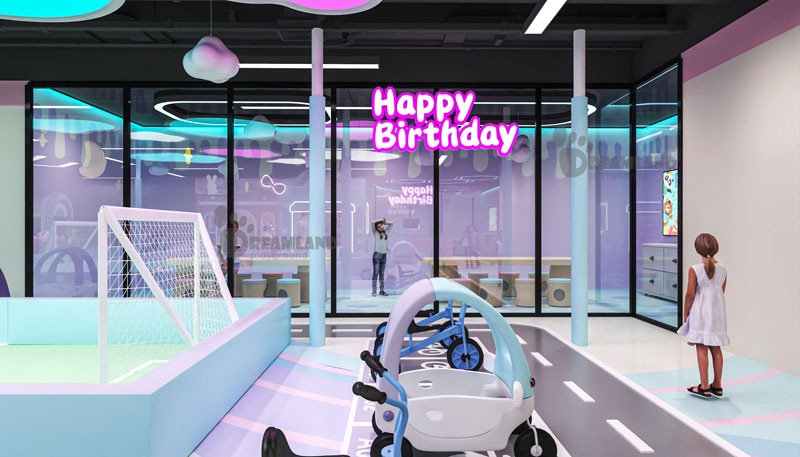
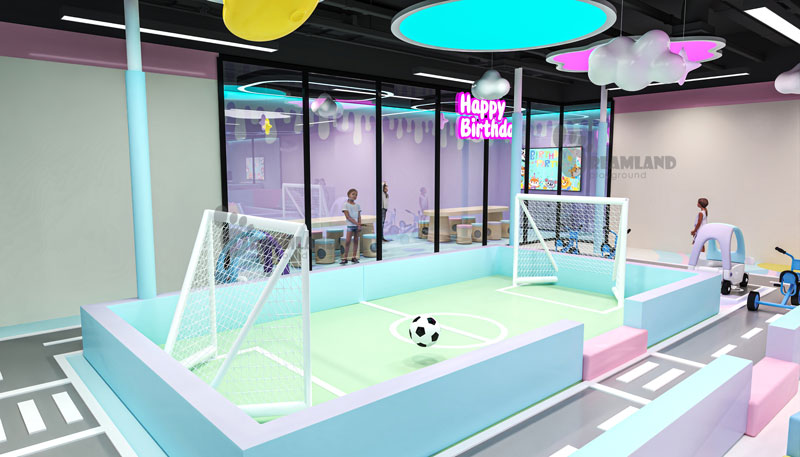
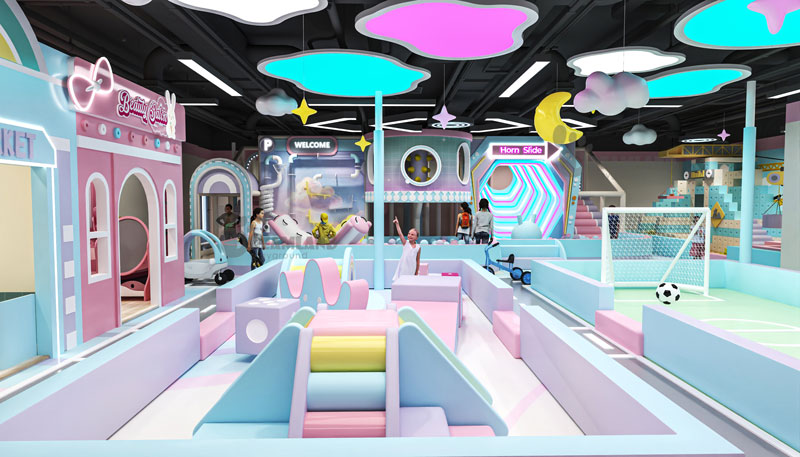
A Family Entertainment Center is more than just a place of business with play equipment. Yes, the centerpieces of an FEC are its "attractions," where most of the revenue is generated, but to operate an FEC effectively, support systems, guest amenities, safety features, and even facility infrastructure all have to be considered as well. In addition to attractions such as indoor playgrounds for kids of all ages, trampoline parks, ninja courses, climbing walls, soft play areas for toddlers, arcade games, virtual reality experiences, laser tag, mini-bowling, escape rooms, and much more, most FECs also rely on a large number of revenue-support systems and guest amenities. For example, these include admission and POS systems, as well as membership management for frequent visitors. Party rooms for birthday celebrations, food and beverage areas, and separately ticketed attractions such as virtual reality experiences and escape rooms all help increase the average ticket price and create repeat business by providing a high level of convenience to guests. Lockers, seating areas, restrooms, and customer service-related areas such as information desks and reservation centers can also increase guest satisfaction and provide reasons for longer stays.
Most important to the safe, efficient, and effective operation of an FEC are well-planned, functioning infrastructure and support equipment. These include storage for supply inventories, maintenance tools and equipment, sanitation and cleaning equipment and supplies, staff workspaces and break rooms, and other functional aspects of an FEC that are typically not seen by guests. They do, however, affect the operation of the attractions and the overall guest experience. Items such as a properly functioning HVAC system, reliable utilities, proper electrical connections, a good security system, and safety features to protect guests and staff from injury are typical examples of support equipment.
Many buyers make the mistake of treating the different pieces of FEC equipment to be purchased as separate projects. They design and purchase the main attractions, then later design and purchase the various support facilities to accommodate them. The various guest services, such as party rooms, food and beverage areas, lockers, seating, restrooms, etc., are treated as separate projects as well. Instead, buyers should treat the various pieces of FEC equipment to be purchased as parts of a single operating system. That system should be designed to support the flow of guests, create opportunities to generate additional revenue, make the best use of staff time, and provide a safe and fun experience for every guest.
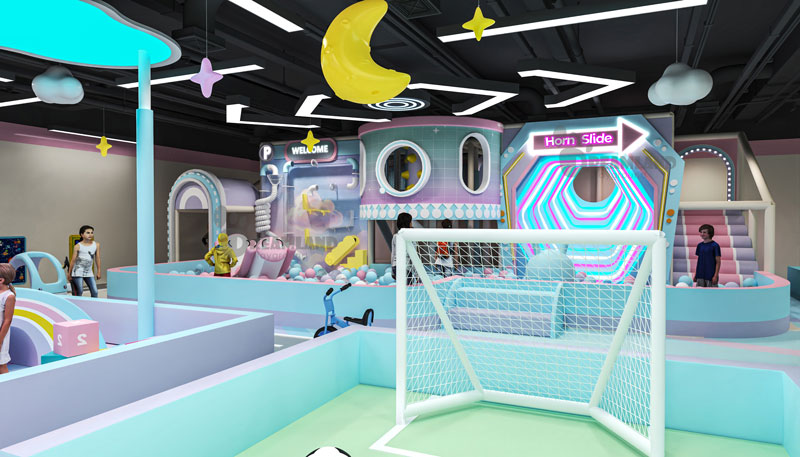
How to Build a Balanced Mix of FEC Attractions
Choosing the correct mix of FEC equipment depends on your target customers and the way you intend to generate most of your revenue. Take into consideration the average age of customers, family makeup, visit frequency, competition, and the overall business model.
For venues that primarily serve very young children, items that encourage exploration, interactive play, and family play are typically the core of the business. Centers that cater to slightly older children (8 and up) often emphasize challenge, competition, and skill-based play. Repeat visits by these children can be encouraged by the inclusion of certain items and by the creation of a fun atmosphere that they can return to again and again. The majority of FECs serve a mixed-age crowd, including siblings of different ages. Items must appeal to a range of ages so that while one child is on an activity, a brother or sister of a different age can be playing or looking at something else nearby.
Another consideration when deciding on an FEC equipment mix is the visit frequency of your customers. If you are attempting to become a regular family destination, then an equipment mix that has a lot of repeat-play value would be in order. On the other hand, if you are a typical FEC and rely heavily on birthday parties, group events, and tourism, then your equipment mix should be focused on capacity, party support, and making your FEC operate as efficiently as possible.
Consider how your different attractions can work together as a whole to generate revenue from ticket sales, memberships, food and beverage sales, party business, arcade spending, and more. Also, think about how your guests will move through your facility and where additional spending opportunities can be created along the way.
Consider including parents and accompanying adults in your planning, as they should feel comfortable remaining at your FEC for an extended period of time. Seating areas for adults, adequate views of your attractions, food and beverage locations, and rest areas for parents all make for a positive FEC experience. Also consider including charging stations and other convenience items to make parents’ lives easier while allowing them to relax at your FEC. In the end, this will translate into extended visits, return trips, and referrals.
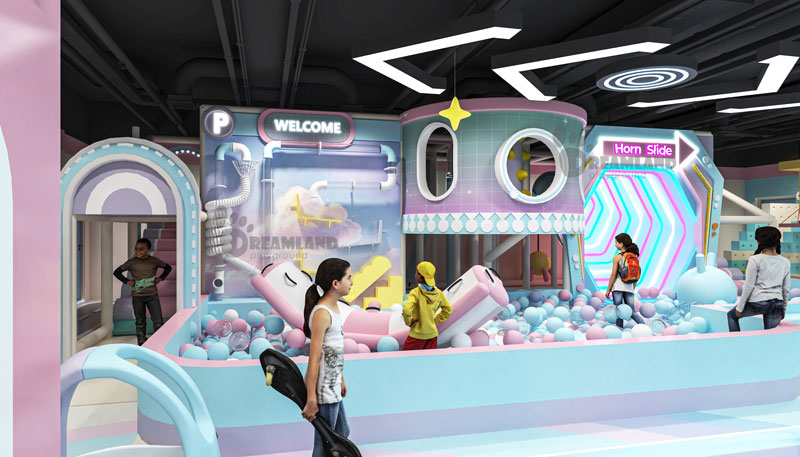
How Do Space, Ceiling Height, and Layout Affect FEC Equipment Planning?
The available building space will determine the type, size, and positioning of the equipment for a Family Entertainment Center. The usable floor space, the clear height in the building, columns, emergency exits, climate control (HVAC), electrical and other utility connections, loading, and visitor circulation all determine how the attractions can be positioned in the best possible way and how visitors can safely move through the facility. A good FEC layout will make optimal use of the available space. It will be efficient, facilitate visitor flow, and remain safe without being too crowded.
Important information for a layout design or equipment proposal includes an accurate description of the building site. Suppliers would like to know the building floor plan and dimensions, ceiling height to the top of structural components, photos of the space, details about the location of all utilities, a description of each entrance/loading area, and any structural or building constraints that may affect the installation of specific amusement equipment. With a thorough description of the site at the outset of planning, the supplier can design an optimal equipment layout, minimize revisions, and avoid unforeseen problems during installation.
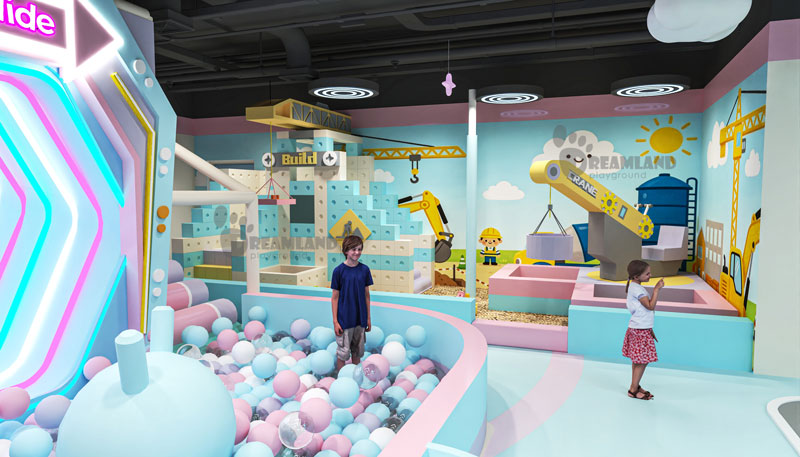
What Revenue-Support and Guest Experience Equipment Should Be Included?
A Family Entertainment Center can be so much more than just a selection of play equipment to attract customers to the venue. Supporting systems enable the center to manage its operations efficiently and create additional revenue streams by prolonging customers’ visits. In fact, these systems should be planned alongside the Family Entertainment Center equipment and not as an afterthought, as they are a major component of the overall guest experience.
The guest experience at a Family Entertainment Center starts at the front desk and typically passes through a series of attractions, followed by party rooms for birthday celebrations with family and friends of the birthday child or adult; food and beverage areas that offer a snack or full meal while visiting the center; arcade game areas where guests can play games using a card to register plays and keep track of points; and lockers, seating areas, and other rest zones where family members and guests of players can relax while others play.
When these systems are integrated, they can function as part of an FEC’s overall revenue model. For example, a family can pay to enter the facility, have a party in one of the celebration rooms, eat in the restaurant or food service area, play arcade games using a card, and then spend more time in the facility because the experience is convenient and enjoyable. Also, the management systems that operate these various systems allow the facility operator to monitor admissions, memberships, sales, and customer flow. This allows the operator to efficiently manage the facility and make good, timely decisions.
When selecting the best equipment for your family entertainment center, it is crucial to remember that all of the different aspects of your facility need to work in tandem to achieve optimal results. The various systems, such as guest admission processes, food and beverage services, and arcade and other game systems, are typically in place to ensure that your visitors have the best possible time while they are at your facility, which allows for optimal returns.
What Safety, Accessibility, and Maintenance Systems Does an FEC Need?
Safety, accessibility, cleaning, inspection, and maintenance have to be planned and operated as permanent operating systems, in addition to selecting high-quality family entertainment center equipment. The safety of guests and employees, as well as the cleanliness of a facility, can be compromised in a very short time if regular inspections are not conducted and scheduled maintenance is not performed. Thus, operating a successful facility for many years requires establishing and operating these important elements on an ongoing basis, in addition to selecting the right equipment for your facility.
Start with a good safety strategy. That includes a good floor, safety features on the equipment, barriers, safety signs, and emergency equipment, to name a few. Also think about accessible circulation throughout the facility so that visitors of all ages and abilities can travel between the various attractions, services, and amenities. Plan your layout around these aspects of your FEC to incorporate them into your design, rather than having to retrofit after installation.
The long-term success of any family entertainment center depends upon the proper maintenance of its equipment. This is why the equipment buyer must consider maintenance access, as well as storage for items such as cleaning equipment, maintenance tools, and spare parts, when developing a plan. A regular schedule of cleaning, inspection, and preventive maintenance will keep a facility’s attractions up and running and ensure that the facility offers its customers the same experience with each visit.
A buyer of family entertainment center equipment must develop safety, accessibility, and maintenance plans in close cooperation with a qualified supplier for their type of facility. The safety, accessibility, and maintenance plans have to be geared toward the specific needs of the buyer’s facility and must align with the corresponding areas of the buyer’s plan (e.g., layout and operating concept). They have to be in line with local legal requirements. The plans will help protect guests, support effective operation, and protect the long-term value of the investment.
What Should You Confirm with an FEC Equipment Supplier Before Ordering?
One thing to keep in mind before ordering is to compare suppliers based on the complete project scope rather than just the price of individual pieces of equipment. The lowest-priced offer may lack important services or deliverables needed to keep extra costs at bay during the manufacturing, shipping, installation, and operation of the equipment. In addition, the supplier may add hidden costs during the project for things such as commissioning and operator training that are not usually included. By comparing each supplier’s total package, you can help ensure a high-quality, successful project.
Read through the supplier’s quotation completely to check what is included. Check whether the supplier’s scope of work includes equipment manufacturing, as well as layout and/or design support. Check whether the supplier includes shipping, installation, commissioning, and operator training. Check whether any optional services that you may need in the future are included. Understanding each supplier’s scope of work from the start of manufacturing right through to the end of the project will highlight potential problems that could cost more in the long run.
Also verify the technical and quality documents that the supplier provides for the project. Check whether the supplier delivers all necessary documents for verifying the equipment used, as well as for implementing and operating the project. These documents can include technical drawings, installation instructions, product specifications, quality controls and tests, operation manuals, and maintenance instructions.
If the necessary warranty and spare parts are supplied, maintenance contracts are available, and you can contact the supplier for after-sales technical assistance, then your family entertainment center will be better supported for long-term operation.
An experienced Family Entertainment Center equipment supplier can provide you with more than high-quality equipment. They should be able to support you through all stages of project planning and installation, as well as operator training and post-sales service. Selecting a supplier who can provide a complete project solution will minimize risks, support the long-term success of your center, and help provide a positive guest experience.
Final Family Entertainment Center Equipment Checklist Before You Buy
Check each step of the project before ordering. A successful Family Entertainment Center is built step by step, and a lot of careful planning is involved. Purchasing attractions is a small part of creating an FEC. The entire project needs to be reviewed to ensure that all parts fit together and to prevent costly changes, installation delays, or problems for guests and staff.
Stage 1: Confirm Your Business Goals and Target Customers
Before proceeding with an order for various pieces of FEC equipment, it is very important to review every stage of a project to ensure that it is relevant to your business objectives. This includes not only the various attractions to be found in your FEC, but also related equipment and facilities such as an admission system, POS terminals for processing payments, and seating areas. Also, make sure that the planned family entertainment center equipment is suited to your expected customers and able to support your long-term strategy for running a successful business.
Stage 2: Verify Your Site Conditions
Look over your floor plan, available space, ceiling height, structural supports, utilities, exits, and other building characteristics to ensure that they can be used in your planned layout to best facilitate the intended Family Entertainment Center activities.
Stage 3: Finalize Your Equipment Mix
Make sure that the family entertainment center equipment offers the right mix of attractions and corresponding facilities to maximize uptime, as well as actively engage visitors and encourage repeat visits.
Stage 4: Review Revenue and Guest Support Systems
Are your admission systems, POS software, memberships, kids’ birthday party facilities, food service, lockers, guest seating, and other similar guest systems and amenities included in your overall project plan so that you can efficiently run your facility and generate income for your business?
Stage 5: Evaluate Safety and Maintenance Planning
Safety features, access to all areas of the facility, maintenance, cleaning, regular inspections, and a supply of spare parts should be designed into the center from the outset.
Stage 6: Confirm Supplier Responsibilities
Ensure that the supplier provides the correct design support, together with technical drawings and manufacturing information, installation, employee training, a warranty, spare parts, and after-sales service. Verify that the quotation includes all the elements listed above, and confirm them with the supplier prior to placing the order.
Stage 7: Verify Installation and Project Timeline
Confirm the production schedule for your equipment and shipping details, then review the installation plan and set up a project timeline with defined milestones. This ensures your project stays on track until opening day.
Stage 8: Calculate the Total Project Investment
Do not confuse the price of the equipment with the cost of the project. In addition to the price of the equipment, you must also consider installation, shipping, site preparation, operating systems, maintenance, and, most importantly, future operating costs.
A detailed look at all of the steps involved in planning an FEC will give you a clear understanding of how each step will help you plan your family entertainment center, ensuring that your attractions will serve your market and operate in the best possible manner within the available space. As always, our goal at Dreamland Playground is to help reduce the risks involved in planning your project and help you develop a Family Entertainment Center that is fun, efficient, and highly profitable.
Conclusion
Family Entertainment Centers (FECs) are more likely to thrive when properly planned. Planning an FEC means more than picking some cool attractions to set up in a building. Proper planning of a family entertainment center includes determining the best mix of attractions to bring in the right mix of customers, putting the right revenue-supporting, safety, and maintenance systems in place, and choosing the right supplier to provide the necessary FEC equipment so that the center can operate as an integrated system. This helps create the best possible guest experience and helps ensure that the center operates efficiently to support the long-term profitability of the business.
Ready to Start Planning Your FEC?
If you are planning to open an FEC, we would be happy to help. We will review your floor plan, required clear ceiling heights, and any photos of your proposed site. We would also like to know about your target market and the range of attractions that you are interested in offering your guests. A preliminary budget for your proposed facility would also be helpful. Our experienced FEC project team will draw up an initial layout proposal for your proposed FEC. We will also recommend the various pieces of equipment that will be required to create a successful facility. Our team can work with you to design a new FEC from scratch or create an extension to an already established facility. We will assist you in developing your new facility from concept to completion.
FAQ
What equipment is essential for an FEC?
An FEC typically requires attractions, admission and POS systems, party facilities, guest amenities, safety features, and maintenance equipment to support daily operations.
What information does an FEC supplier need?
Most suppliers need your floor plan, ceiling height, site photos, target customers, preferred attractions, and preliminary budget to recommend a suitable solution.
Should equipment be selected before signing a lease?
It's best to evaluate the site first. Building size, ceiling height, utilities, and layout can all affect equipment selection and project feasibility.
How should buyers compare FEC quotations?
Compare the complete project scope, including design support, installation, documentation, warranty, after-sales service, and total project cost—not just the equipment price.
How far in advance should FEC equipment planning begin?
Start planning 3–6 months before your target opening date to allow time for design, manufacturing, shipping, and installation.