

Soft Play Equipment Buyer’s Guide for Commercial Venues
Commercial soft play equipment is used in indoor playgrounds for kids, family entertainment centers, day care centers and other venues where children play. All equipment is used frequently and needs to be safe for kids, accessible for children of different ages and abilities, easy to clean and maintain, and able to withstand frequent use.
When selecting soft play equipment for your indoor playground or play area, it is important to consider more than just the color and design of the equipment. You must look at the materials used, the structural design, the amount of padding, the age-appropriate features and the level of supervision from adults. Also consider the cleaning of the equipment, the availability of spare parts and the expected lifespan of the soft play components. The way the soft play is laid out is also very important; it must support the flow of customers through the play area, allow staff to supervise children easily, be of the correct size to cater for the correct number of children and support the venue's business model.
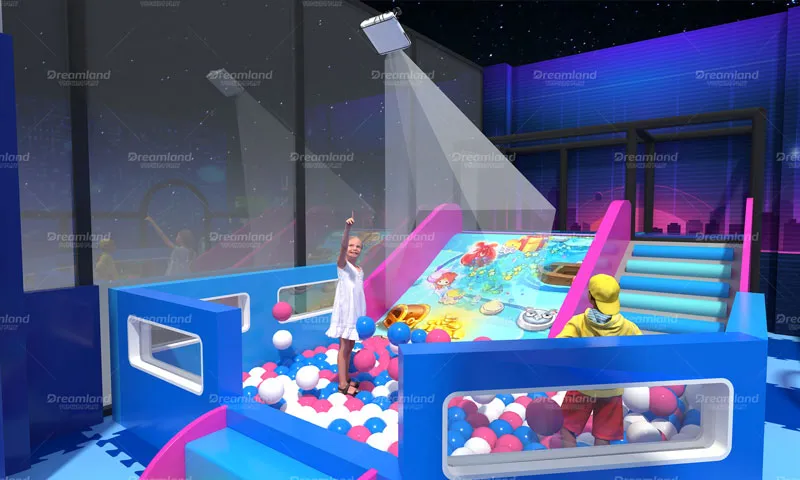
How to Choose Soft Play Equipment for Your Commercial Venue
Commercial soft play equipment for sale can vary across play cafes, FECs, restaurants, indoor play centers and hotels. The key is to consider the correct age group, venue type, expected visitor numbers, amount of adult supervision, space available and business model of the buyer. What works well in a large indoor play center may not be suitable for a play area in a restaurant, play cafe or hotel.
Match Equipment to the Target Age Group
The age of children using the soft play will determine the height of platforms, the degree of difficulty of climbing and sliding around the soft play, the size of soft play obstacles and how the soft play is divided into zones that can be easily supervised by parents of young children.
Dividing areas up by age/ability will mean less conflict between younger children and more active older children, and will make supervision easier.
Consider the Type of Commercial Venue
The venue (mall, restaurant etc.) will also have a big impact on how you want the soft play to work within the customers’ experience of your venue. While a smaller play area in a mall needs to be safe and esthetically pleasing and fit in a specific location, a large FEC might feature multi-level play sections with slides, climbing walls, lots of interactive elements, and themed play spaces.
Compact installations are preferred by dining venues because they keep guardians close at hand. Many people believe that having fathers and mothers close to young people is beneficial.
Flexible activity areas that enhance other family offers may be chosen by hotels and vacation destinations. Age-appropriate equipment is typically needed in child care facilities and educational institutions because it facilitates mobility in a regulated environment.
Define Capacity and Operational Requirements
The number of young people who will use the activity zone during peak hours must be estimated by the owners. According to experts, how staff members manage the activity zone is crucial. The owners are required to inspect the entry and exit points, movement room, sightlines, washing access, maintenance locations, and the length of the visit.
Good soft play equipment for commercial spaces is more than just the largest or most functional model. For commercial venues, soft play equipment must match the needs of the patrons, the available space, the volume requirements, the company model, and the financial goals. It is frequently stated that the proper selection of soft play equipment for business settings creates a safe and simple interaction for visitors.
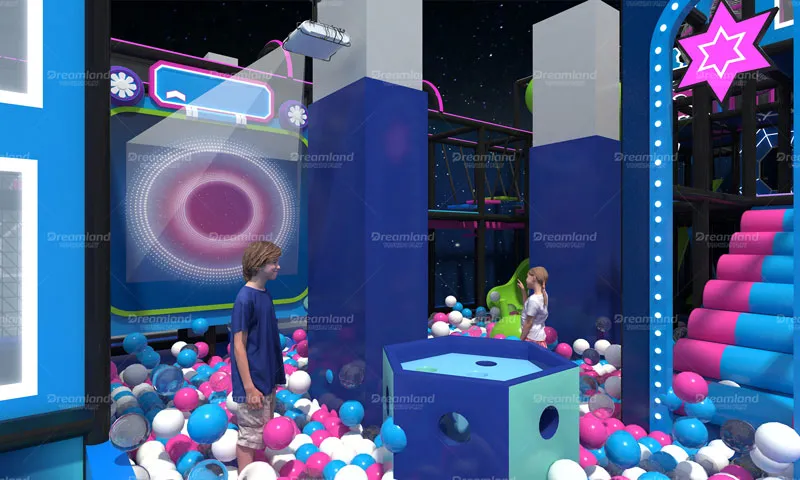
What Types of Commercial Soft Play Equipment Should You Consider?
The size of the space, the age range of the children, the overall capacity, and the objectives for visitor happiness all influence the kinds of soft play equipment that are suitable for commercial settings. Because this equipment mix supports how the commercial venue operates, owners should design a set of tools that make good use of the space. It has been proposed that a well-thought-out strategy is more beneficial than selecting every feature.
Multi-Level Soft Play Structures
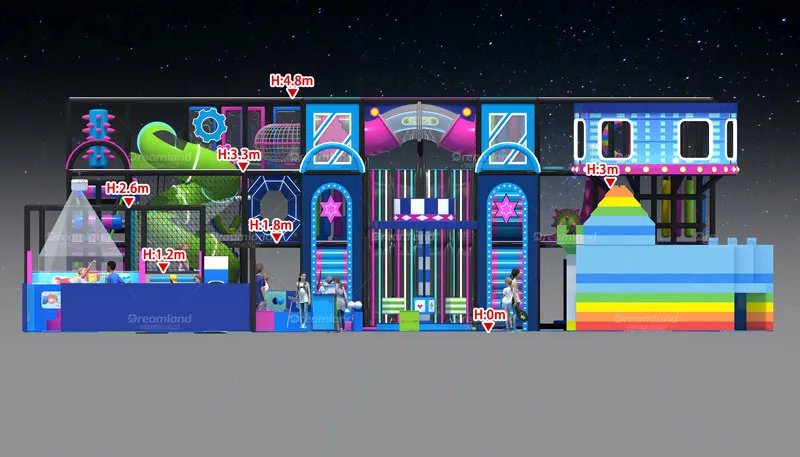
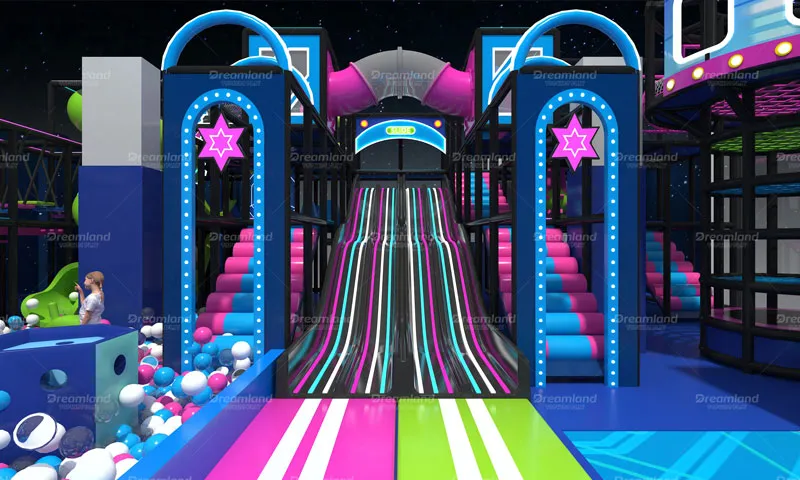
Large family entertainment centers, indoor playgrounds, and places with lots of visitors that need to accommodate a lot of kids in a small space are good places for multi-tiered frameworks. To increase playtime, these frameworks can connect scaling zones, tubes, chutes, walkways, and hurdles. Many people think that these characteristics promote exploration. The users' ages and the distance from the ceiling must be taken into account while determining the vertical height, difficulty, and capacity.
Toddler Soft Play Equipment
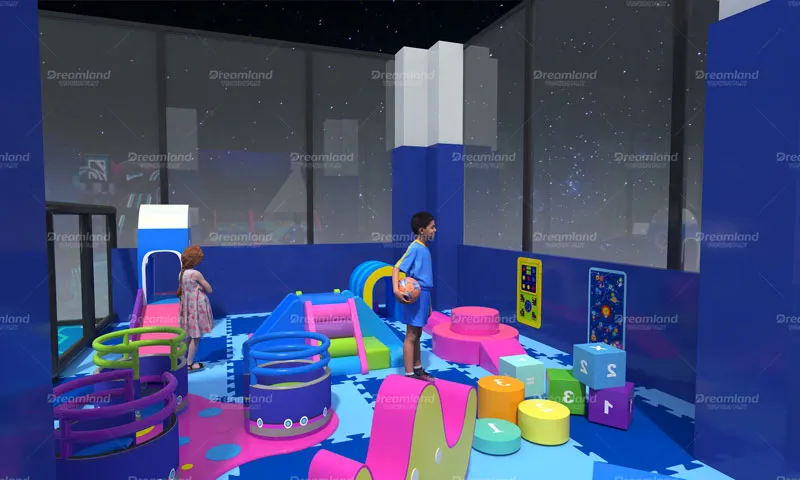
Toddler soft play equipment is designed for young children who need low platforms, small obstacles, soft slides, and simple climbing activities. Certain areas for young children have been found to be beneficial in family entertainment venues, shopping malls, coffee shops, and other family-friendly establishments. A clear boundary reduces contact between kids with different physical abilities, which enhances supervision.
Slides, Tunnels, Climbers, and Soft Obstacles
Large structures contain these components, or the components can be used as standalone play features. Movement and investigation are provided by tunnels and sliding units, while climbers and barriers increase the bodily tests for youth. Professionals claim that the significance of pieces depends on their role in the overall play path rather than the count of items existing. These pieces must join in a sensible manner because the play path defines the level of excellence.
Ball Pits and Interactive Play Equipment
Little kids discover reachable tasks inside ball pits which work well within a large structure. Frequent visits from patrons are encouraged by interactive play equipment, and interactive play equipment increases the diversity of the area. Various individuals believe that FECs and commercial venues need these parts to make sure guests stay for a longer duration. Usage, supervision needs, cleaning needs, and space should guide how owners select these parts.
Modular Soft Play Systems
Company leaders modify or expand Modular Soft Play Systems while the business develops. Because money needs shift frequently, small locations and play cafés use Modular Soft Play Systems. Observation shows that custom-built systems offer better versatility for the organization. Unique sizes or specific brand markers are handled through custom-built systems when the plan for the attraction is complicated.
Choosing a steady equipment mix is better than having many separate items in business projects. Every attraction impacts the number of visitors and the movement of guests, as experts argue. Before a purchase is completed, the business model and upkeep must be examined by the buyers. The equipment mix must be varied for the growth of the business because keeping different age groups separate is very important.
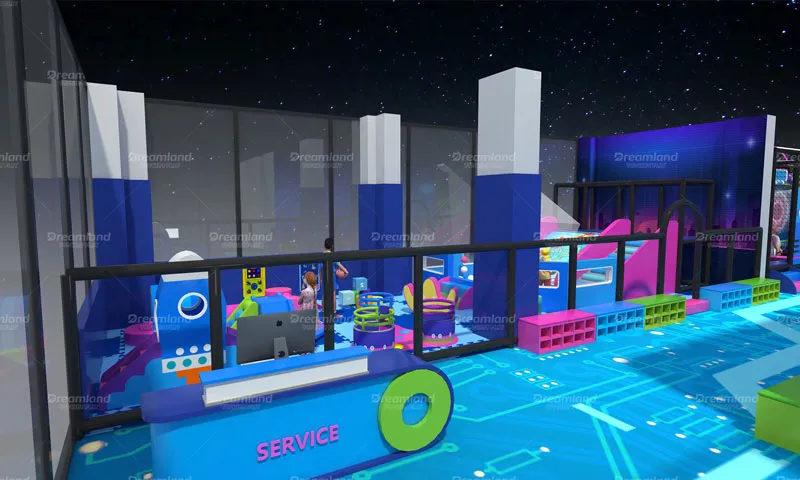
What Safety Standards Apply to Commercial Soft Play Equipment?
Safety requirements of commercial soft play equipment have to be verified before purchase and not after installation. These requirements depend on various parameters, i.e. on the kind of equipment, on the location of the project, on the type of venue where the equipment will be installed and last but not least on local requirements and regulations. Therefore, the buyer has to ask the supplier for the applicable standards for the proposed soft play system and for the related documentation that can be checked by the buyer.
Identify the Standards Required for the Project
ASTM F1918-21. This Specification for Soft Contained Play Equipment was developed by ASTM Subcommittee F15.36 on Soft-Contained Play Systems under Committee F15 on Consumer Products. The Specification covers the requirements for Soft Contained Play Equipment, including materials and manufacture, performance, access and egress, structural integrity, maintenance, fire safety and evacuation for children.
Standards for soft play to be used in European projects could include parts of the EN 1176 series (e.g. EN 1176-1:2017+A1:2023 as listed in the 2026 NEN publication). The relevant current edition(s) for your project must be identified via the appropriate national standards body.
There is no guarantee that ASTM F1918 or EN 1176 will cover all of the components needed for a commercial indoor playground. Identify the scope of the required standards for your project and verify that the current edition of each standard is being met.
Review Test Reports and Compliance Documents
Confirm manufacturer documentation for specific playground components. For example, request:
- Relevant test reports and compliance documentation.
- Material and flame-performance documentation where applicable.
- Engineering and structural drawings.
- Equipment dimensions and safety clearances.
- Installation drawings and instructions.
- Inspection procedures and acceptance information.
- Cleaning, maintenance, and replacement instructions.
When verifying test reports, check that they clearly state which specific soft play item or soft play area configuration has been tested, and by which organization the testing was carried out. A single component having been tested does not mean that the whole of the playground installation complies with safety regulations.
Check Venue-Level Safety Requirements
The buyer must also verify the general safety requirements for the complete venue (building, structure, other equipment, facilities) and any local requirements or approval that must be obtained prior to the supply and installation of the soft play equipment.
Do these additional requirements need to be met by the equipment and the soft play area? Ask the supplier what information you will be provided with to support your applications for approval.
When asking suppliers for information regarding soft play equipment, remember to ask more than just whether or not the supplier’s equipment is certified. Ask for the applicable standards, the edition used for the soft play equipment being proposed for sale to the buyer, what testing was conducted to verify compliance with the appropriate standards, and a review of the documents to verify compliance for the buyer’s project.
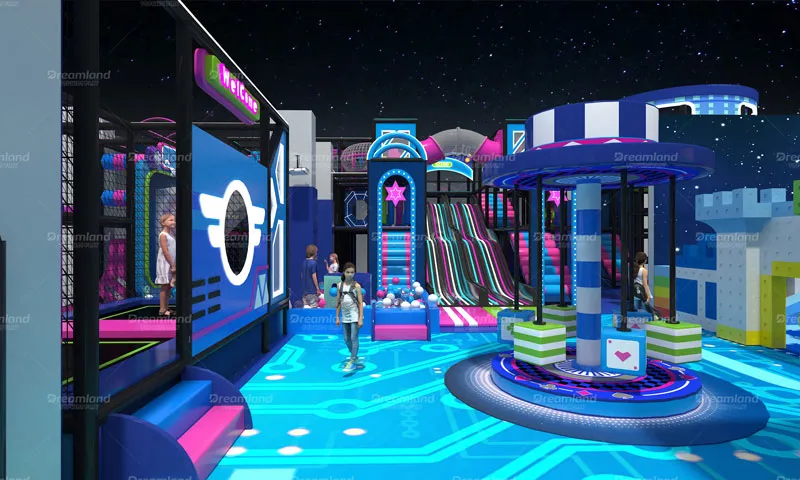
How to Evaluate Soft Play Equipment Materials and Build Quality
Recreational soft play equipment must endure constant climbing, leaping, crawling, and daily handling. While many people believe that colors and finishes indicate quality, buyers should examine the technical details of the equipment. Technical descriptions and construction information should be requested by the purchaser because these details allow a comparison of durability and the operating lifespan. Experts claim that soft play equipment needs high quality so that the soft play equipment stays safe for long durations. Soft play equipment is built to handle heavy impact even though the external appearance of the soft play equipment might look simple.
Structural Frames
Buyers should inquire about which materials comprise the main skeletal structure and how these parts are joined. It has been observed that the protective coating applied to the metal affects how the soft play equipment resists wear. Structural drawings and engineering documents must be analyzed before a purchase is made. Structural frames should not be evaluated by visual aesthetics alone because the construction technique and component sizes determine the long-term strength. Professionals suggest that installation quality and surface protection are the factors that change the performance of structural frames over time.
Foam and Protective Padding
Make sure that the padding will provide sufficient protection but is also durable. Inquire about the type of foam, the necessary performance data, dimensions, construction and how it will be replaced.
No single foam density or thickness is best for all applications. A number of factors such as the specific application, the design of the piece of equipment, location, intended use and relevant safety requirements must be taken into account.
PVC / Vinyl Coverings
A commercial covering has to withstand a lot of traffic. That is why you have to choose a suitable covering, depending on the use of the mat, the cleaning up of it and the contact with users. The supplier has to state the material of the covering, the thickness or grade where relevant, the surface treatment, the seam construction and the cleaning instructions.
Also inquire about whether the worn covers can be repaired or replaced without having to replace the underlying padding.
Safety Netting and Connectors
Netting should also be compared for material, construction, attachments, wear, and repeated use. Check how the nets are attached to the frame and whether individual sections of the net can be replaced.
Also, inspect connectors, fasteners, brackets, etc., as these components are subjected to wear and stress during normal operation of the equipment.
Wear Parts and Expected Service Life
Please identify which of the equipment parts are considered wear parts. How often would these parts need to be inspected and possibly replaced? Are foam, coverings, netting, fasteners, frame connectors, etc. considered wear parts and possibly subject to replacement?
Also ask for the recommended inspection intervals and the corresponding replacement criteria of all wear parts as well as for their spare parts availability and the corresponding lead times.
Set up a checklist when comparing offers, such as for frames, foams, covers, netting, connections, wear parts, maintenance and spare parts. In this way you can more easily see the real differences in quality between the various offers than when only comparing price and look.
How to Plan Soft Play Equipment for Space, Capacity, and Customer Flow
By establishing the operational needs of the proposed play space before selecting any play equipment, you can design it to make highly effective use of the available floor space. Establishing the operational needs of the proposed space is key, including the ceiling height and how the space interacts with any columns, entrances and exits, services etc. This will also establish the staff who will be responsible for overseeing play within the space and how customers are expected to move around the space during peak periods with the expected number of children in the space.
Check Floor Area and Ceiling Height
This will form the basis of your soft play layout and include all of the fixed features within the commercial soft play area such as doors, emergency exits, sprinklers, vents, air conditioning units, lights and power points etc.
Leave room for sufficient width of walkways, access routes, service visits, reception area and parent seating areas where required.
Determine User Capacity
Peak child numbers – the most important factor for determining the capacity of your soft play. This will be based on the expected flow of children and parents around the facility and will relate to different times of the day. Consider children attending soft play as part of a ticketed session, children attending as part of a birthday party or even just dropping in with parents and visiting in large numbers.
A higher child capacity in your soft play enables more revenue but may compromise customer experience as children and parents start to feel that the space is too crowded. Ask the supplier to detail how the child capacity of the soft play has been calculated and the assumptions that the supplier has used to arrive at the figure.
Plan Staff and Parent Sightlines
Staff visibility of key areas of the soft play area is important, and staff should be able to see toddler activity areas, slides, ball pits, climbing walls and main entrance/exit points.
Parent seating areas should enable parents to see children playing in the area. Also consider how staff can see into any enclosed tunnels, separate levels or isolated play areas within the design of the soft play.
Design Customer Circulation and Access
Customers should be able to move through the space without being blocked by children playing on the soft play equipment. Provide separate entry and exit points where practical and indicate how customers are going to queue up during peak periods to access soft play features.
In addition to a fantastic play space, customers need to be able to navigate through the space, and staff need to be able to get to the play equipment to clean and inspect it, and possibly provide first aid.
What to Consider for Soft Play Equipment Cleaning and Maintenance
When selecting equipment for a soft play area it is worth remembering that commercial play equipment is subjected to constant use, occasional spills and general wear and tear. As a result it is crucial that the design of your play area allows for easy cleaning, inspection and repair of the areas that are used the most.
Design for Easy Cleaning
Can staff safely access all high-touch surfaces, upper play levels, ball pits, netting and enclosed play areas for cleaning? Are all soft play materials able to be cleaned with typical venue cleaning methods and are there any specific cleaning instructions for each soft play item?
The design of ball pits and indoor play areas should allow for regular cleaning to take place when the playground is closed. Check if any parts can be removed for deep cleaning and if others can be opened up for thorough cleaning without having to take the whole feature apart.
Plan Routine Inspection and Maintenance
Ask the supplier for a list of recommended maintenance/inspections. Outline the wear points and what to look for on each (padding, coverings, netting, connectors, fasteners, etc., and the structure of the item). Provide guidance for the recognition of ruined or aged pieces and what to do with them (i.e. repair or replace).
The equipment provider must deliver guidance for the recognition of ruined or aged pieces and indicate the period within which such pieces must be repaired or replaced. Industry leaders often stress that clear documentation ensures safety. However, the damaged parts must be recognizable with the help of the manual provided by the manufacturer.
Check Spare Parts Availability
They will need to identify how spare parts are identified and can be ordered. Helpful documents would be a labelled piece, part number, drawings, photographs and instructions on how to replace the item. This documentation will help to prevent confusion and the buyer can check if spare parts for frequently worn items such as padding, soft coverings, nets, connectors and fasteners are available for individual purchase while the main structure of the playground remains intact.
Check for individual spare parts for the most frequently worn items (padding, vinyl coverings, netting, connectors, etc.) which can be bought individually and replaced as required without having to replace the whole play structure. This can often be more cost-effective than one might expect and is usually purchased in addition to the complete playground.
Understand Replacement Lead Times
Ask manufacturing companies how long it typically takes to obtain necessary soft play spare parts and whether these parts are kept in stock for immediate use. Experts say that waiting for several weeks for a replacement part greatly affects the business’s income, and that the affected play area may need to close while waiting for spare parts to arrive.
Before purchase, compare different providers of soft play equipment in terms of cost, ease of cleaning, inspection requirements, replacement terms and expert advice. From experience, simple maintenance of the equipment ensures that it is out of action for the minimum amount of time and therefore has greater value over its lifespan.
Custom vs. Standard Soft Play Equipment: Which Is Right for Your Venue?
The decision to choose soft play equipment for your business is dependent on several factors, including the location of your business, budget, time to set up and future plans. It is also very important to consider the size of the room and other factors in relation to the number of children you have, supervision, and circulation of children. There are many different ages of children that soft play equipment needs to cater for and the equipment therefore needs to be chosen with long-term business plans in mind.
When Standard or Modular Equipment Makes Sense
Modular soft play is a good option to go for in a number of situations. In an emergency situation, for example, modular soft play can be quickly set up to create a play area within a short space of time. The simple configurations of modular soft play also make it suitable for use in simply shaped rooms and can be easily relocated to a different area of a building or even to a different building altogether.
In addition to this, modular soft play is ideal for owners of soft play areas who like to make lots of changes to the layout. In many cases, owners of soft play will purchase small sections of the play equipment to start with and then gradually add more to create a larger play area as the room configuration remains the same.
Theme and Brand Customization
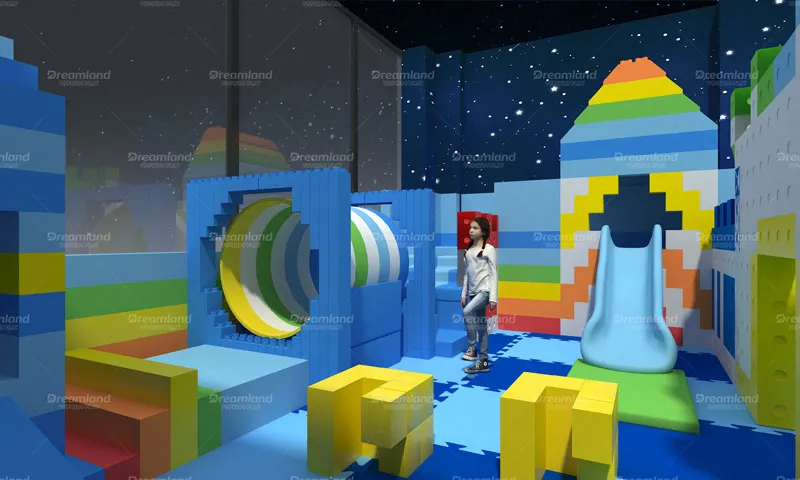
Customization extends beyond colors, logos, and themed decoration. Play shapes, features, zone configurations, graphics and architectural design all provide an opportunity to create a customized solution that delivers a unique customer experience while reinforcing your brand.
Planning for Future Expansion
Will your playground have enough space to accommodate future growth? With modular systems, you may be able to add more modules to your playground, subject to available space, system compatibility and safety requirements. A custom design can also be built in a way to reserve space for future expansions or even built in such a way to support additional structures.
Evaluating commercial soft play options includes consideration of the design, installation, maintenance and future development of the soft play area as well as the total cost versus just the cost of the initial soft play equipment.
How Much Does Commercial Soft Play Equipment Cost?
There is no set price for commercial soft play equipment as the cost to fit out an indoor playground will vary from project to project. The size and configuration of the soft play, the materials that are used to make it, any customisation that is required, the location where the equipment will be shipped to and the requirements for installation are all key factors that will affect the overall cost of the soft play.
Don’t compare suppliers on the low price of their soft play equipment but compare the full price of what is included in their quotation to arrive at the total cost of your project.
What Determines Soft Play Equipment Pricing?
The cost for playgrounds of different sizes and complexity is different as well. While smaller playgrounds are made faster and with fewer materials, bigger structures with multiple levels of soft play equipment require more materials and more work in the manufacturing process.
In addition to equipment size and configuration, the pricing of commercial soft play equipment can also be affected by the materials used, the complexity of the structure, theming and graphics, and the amount of padding and safety features included. The location of the project also creates costs and considerations related to shipping, installation, taxes and customs.
What Should Be Included in a Supplier Quote?
Look for a detailed quotation that outlines the soft play equipment specified and includes all aspects of the soft play design including design, engineering drawings, customization, manufacture, packaging, spare parts, delivery to site, installation and commissioning of the soft play equipment.
This should also highlight what is excluded, such as local construction work, the connections for any electrical equipment, flooring, any modifications to the fire system etc. Additionally, any taxes and customs duties and other site-related costs that the supplier is not responsible for should also be highlighted.
How to Compare Soft Play Equipment Quotations
For a soft play project it is best to consider the total cost of the project and not just the cost of the equipment. The total cost of a soft play project includes the cost of the playground equipment and also the design, shipping, installation of the soft play equipment and the site preparation. Additionally you need to consider the taxes and duties for importing soft play equipment. There are also the costs of spare parts for cleaning and maintenance of the soft play equipment and possible future replacement of soft play equipment.
Be aware that the lowest purchase price does not necessarily mean the lowest operating costs. Also consider the costs of possible downtime and necessary repairs, compared to a more expensive soft play structure that can be cleaned and maintained more easily.
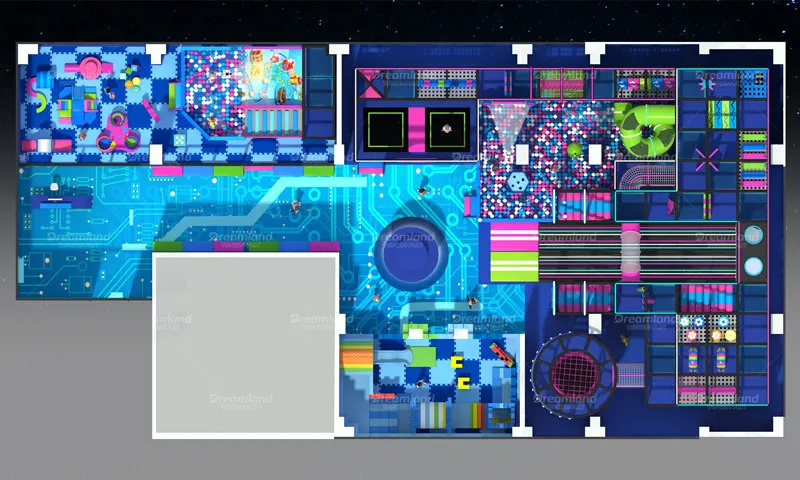
How to Choose a Commercial Soft Play Equipment Supplier
Choosing the right supplier is just as important as choosing the right play equipment. Suppliers need to be able to demonstrate not only how attractive their soft play designs are but also their manufacturing capability, quality control measures, installation support, documentation and after sales service. So check the evidence not the sales blurb.
Review Relevant Commercial Project Experience
Do they have any completed projects of a similar size and with equipment of a similar type to your venue? Ask for photos of the finished installation (don’t settle for concept renders!).
Get references to recently completed projects of similar size and application, and find out how the soft play equipment performed after it had been installed.
Verify Manufacturing and Quality-Control Capability
Further, if the supplier is also the soft play equipment manufacturer, ask about the production facilities, the type of materials used for soft play components and the manufacturing process in place. Request test reports, inspection records and other relevant documentation such as engineering drawings and product documentation to confirm quality control measures in place before shipping out components.
You need to check how the supplier checks the materials before they are dispatched as finished components and how the components are checked before they are packed and shipped out.
Compare Installation and After-Sales Support
Clarify in your supplier meetings who is responsible for the installation, the site and all the activities related to the installation, such as the commissioning of your soft play equipment. Find out what kind of technical support the supplier of your commercial soft play will offer after the soft play has been opened to the public and how you will be able to place service requests with them.
It is very important to clearly outline in the contract who is responsible for the installation of soft play equipment, the site, the commissioning of soft play equipment and for any subsequent repairs and/or service.
Review Warranty and Spare Parts Policies
Read the warranty in detail. This should provide an understanding of the length of time that cover is provided for, what is excluded, and how you would report a problem, including whether this would include labor and shipping of replacement parts.
Ask for the supplier’s policy for spare parts for wear and tear items and for how these can be ordered and delivered to you when required.
Identify Supplier Red Flags
Be very wary of a supplier who cannot provide material specifications, satisfactory references to completed projects, relevant technical documentation, a written warranty that outlines the terms and conditions and states what is covered and what is not, reasonable spare parts holding, an outline of their installation process and what is included in the price and what is not.
If a manufacturer can give you sufficient information to compare them against other potential suppliers for safety, quality, service and total cost then you have a reasonable commercial soft play manufacturer.
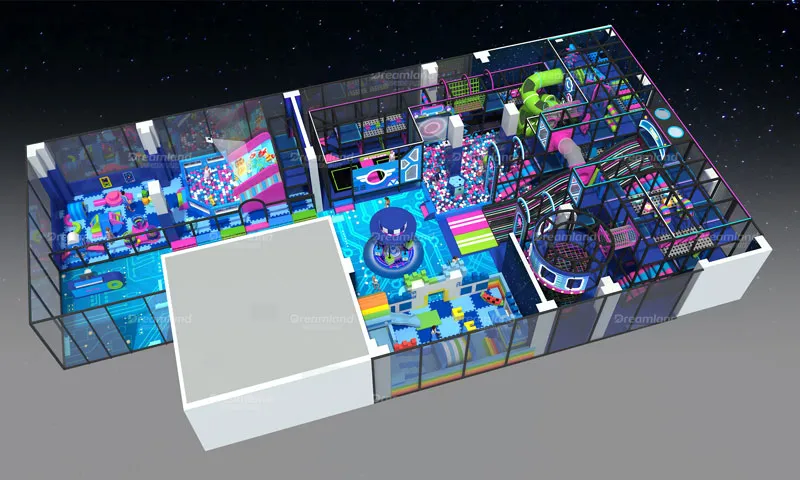
Conclusion: Choose Soft Play Equipment for Long-Term Commercial Value
Deciding on commercial soft play equipment involves weighing protection, suitability for operations, and financial worth over a long period. Safety standards must be met so that commercial soft play equipment helps reduce the risk of injury. Many people believe that commercial soft play equipment succeeds when commercial soft play equipment matches the intended youth categories and fits the building space without creating many crowds. Because commercial soft play equipment is a major asset, the selection should not cause difficulties for those watching the children.
Owners need to examine more than just the initial financial investment because the toughness and cleaning needs of commercial soft play equipment matter greatly. It has been observed that having repair components and help during the setup helps commercial soft play equipment stay in good condition. A system that is arranged with care is believed to help the customer experience because commercial soft play equipment reduces unproductive periods and expenses for new parts. Since the equipment provider must offer help, the total value of commercial soft play equipment remains tied to the service received.
Planning a Commercial Soft Play Area?
Share your floor plan, ceiling height, target age group, project location, and expected capacity with Dreamland Playground. The team can evaluate your venue requirements and develop a customized soft play solution based on your space, customer profile, operational needs, and business goals.
FAQ
What is the best soft play equipment for a commercial venue?
The best equipment depends on your target age group, venue size, capacity, customer flow, and business model.
What safety standards apply to commercial soft play equipment?
Standards vary by market, but relevant requirements may include ASTM F1918 and EN 1176, along with local building, fire, and accessibility regulations.
How much does commercial soft play equipment cost?
Cost depends on size, equipment mix, materials, customization, shipping, installation, and other project requirements.
How much space is needed for a commercial soft play area?
Space requirements depend on equipment type, ceiling height, capacity, circulation, supervision, safety clearances, and site conditions.
How do I compare soft play equipment suppliers?
Compare completed projects, safety documentation, material specifications, manufacturing quality, installation support, warranty, spare parts, and total project cost.
Can commercial soft play equipment be customized?
Yes. Commercial soft play equipment can be customized for venue layout, age groups, capacity, themes, branding, play features, and operational requirements.