

Indoor Playground Manufacturer vs Trading Company: How to Choose the Best Supplier for Your Project
When planning a commercial indoor playground, family entertainment center (FEC), trampoline park, or play café for families with children, choosing the right supplier is important. Many buyers focus first on equipment price, but supplier choice affects the entire project, including playground design, customization, project management, installation quality, safety compliance, after-sales service, and long-term maintenance.
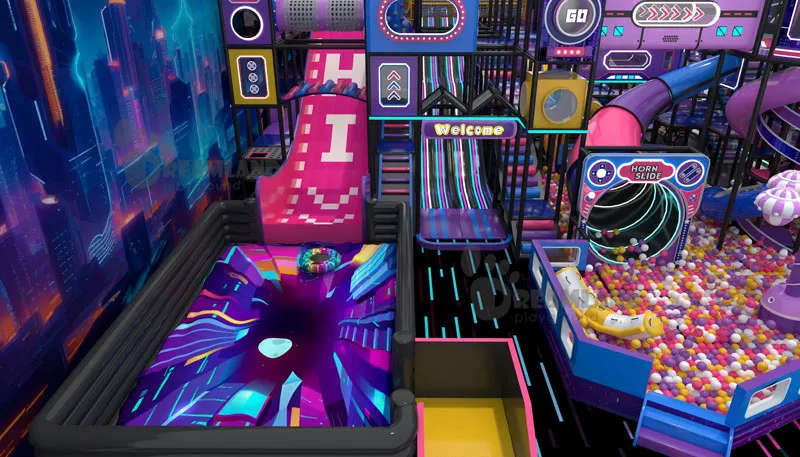
Indoor Playground Manufacturer vs Trading Company: What's the Difference?
Both manufacturers and trading companies can help you source playground equipment for your facility. But each supplies in a different way and serves a different purpose within your overall supply chain. Thus, it’s beneficial for you to know how each supplier operates before deciding which would be best for your needs.
The structure of suppliers in the marketplace for sourcing commercial indoor playground equipment generally consists of two types of businesses: manufacturers and trading companies. Both types of businesses can supply you with indoor playground equipment, but they have vastly different roles within the supply chain. The ability of a supplier to deliver the indoor playground equipment you need in terms of design, communication, quality, and delivery time is determined by the supplier's structure and how you choose to use them.
What Is an Indoor Playground Manufacturer?
For investors, FEC operators, and property developers, working with an indoor playground manufacturer can provide better control over project management, from design and production to installation and after-sales support.
It is typical for themed indoor playground manufacturers to have designers, engineers, and project managers that the buyer can work with to bring his/her project to life. Many such projects are customized, and they require unique themes and play equipment for the specific area that is to be used for play. It is very helpful to be able to communicate directly with the designers, engineers, and project managers, and then with the production department to guarantee a timely implementation of all the details of the planned project from start to finish.
What Is a Trading Company?
A trading company is a middleman between a buyer and a factory. The trading company does not manufacture any products itself, but instead buys equipment from one or more factories. The trading company is then responsible for purchasing, communicating with suppliers, managing logistics, and exporting from the country where the supplier is located. In that sense, a trading company facilitates a buyer to purchase from a factory.
Trading companies provide advantages for buyers, particularly in situations where supplier consolidation is key or there is a need for local language support. In addition, trading companies can provide their customers with access to products and equipment offered by various manufacturers in one place. Since trading companies do not directly manage production, their influence over engineering changes, production schedules, and quality control is usually more limited.
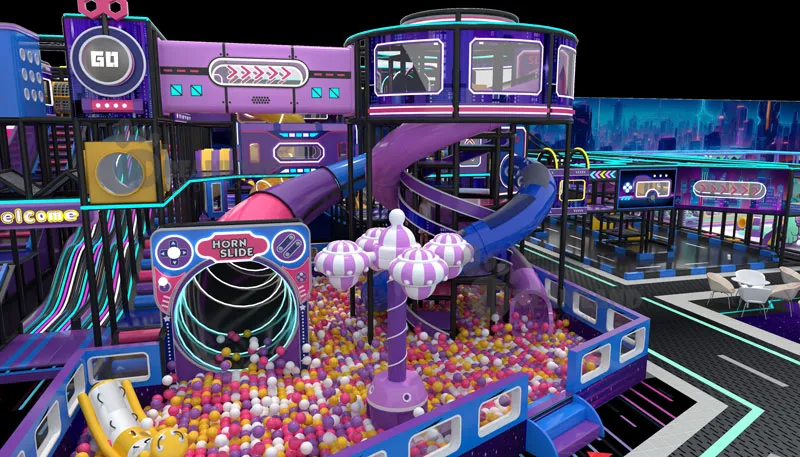
Differences Between an Indoor Playground Manufacturer and a Trading Company
Customization Capabilities
An indoor playground manufacturer typically has more flexibility when it comes to design, as the design department can directly work with the engineering department and then the production department to fulfill custom orders. Manufacturers are ideal for unique custom designs, custom themes, custom play equipment, custom branding, and more for custom indoor playgrounds for children.
Trading companies can facilitate modifications for indoor playgrounds and offer suggestions. However, in the majority of cases, the Trading Company relies on the experience of its contracted partner factories to implement design modifications for indoor playgrounds for kids. The process for trading companies and indoor playground modifications requires more communication with factories to complete the revisions and implement the changes.
Project Communication
Communication with the manufacturer generally is direct, as the buyer can communicate with design, engineering, production, and quality control staff. Typically, there is less chance of information being lost in translation.
For projects mediated by a trading company (intermediary), communication between the buyer, trader, and factory is involved. It makes simple management for the supplier, but can cause problems for technical questions and changes during project execution.
Quality Control
An indoor playground factory has the opportunity to check on quality throughout the production process. This includes material selection, cutting and folding, assembly, and inspection. Problems can often be rectified quickly before any damage is done.
Trading companies usually carry out inspections or arrange for a third party to check the quality for a trader. They rely on the quality system of a manufacturer/supplier.
Lead Times and Production Control
As the manufacturer has a better overview of the production planning, material procurement, and the workload of the factory, the lead time can be indicated more precisely. In case of changes in the project, the manufacturer can handle these better and faster than a trading company.
As a trading company, you depend on your production partner for updates on the progress of production. Often enough, you are not in control of the production and therefore also not in control of the priorities of the production. In addition, the lead time of production is not under your control.
Installation Support
Indoor playground equipment manufacturers, for the most part, can provide technical guidance to clients about the installation of their products and follow up on any issues that may arise, and will normally supply clients with a comprehensive set of installation instructions and operating manuals for all of the various pieces of play equipment that they have supplied.
Trading companies will often provide installation support through the manufacturing company, and so will rely on the manufacturer’s technical expertise for resolving any problems that may arise during installation.
After-Sales Service
While trading companies may also offer customer service and may, in turn, also contact the original manufacturer for any technical issues (and resolve them), the primary and ongoing point of contact for after-sales service will be the manufacturer of the Indoor Playground equipment.
Trading companies can also provide customer service, but this would often require referring back to the original equipment manufacturer in order to resolve technical problems to be solved.
Accountability and Responsibility
Working directly with a manufacturer allows for one party to be accountable and responsible for the design of a product, the quality of production, and the performance of the end product through the whole lifecycle of the project.
A trading company acts as both a trader and a liaison to the factory, sharing responsibility. Many of these trading companies provide a good service to their customers, but it should be clearly defined who is responsible for quality issues, warranty claims, and corrective actions. This is especially important when buying something to use for a long time, like an indoor playground.
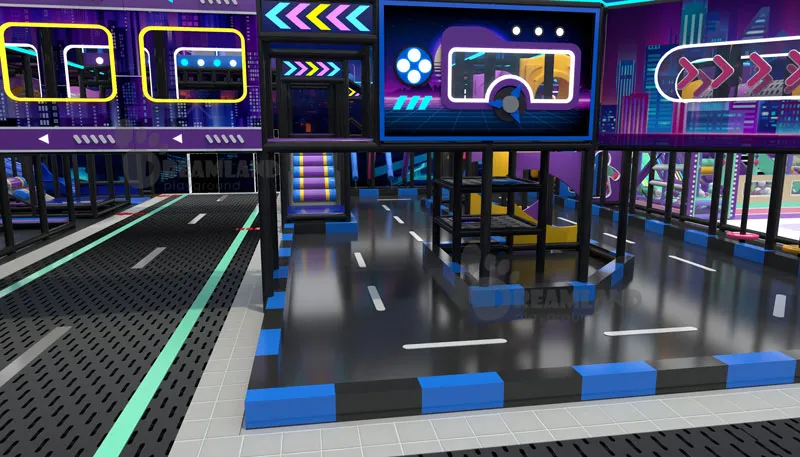
Indoor Playground Manufacturer vs Trading Company: A Practical Comparison
The indoor playground manufacturer vs trading company comparison looks beyond simple equipment pricing. As a buyer, you should be aware that many manufacturers within the indoor playground industry specialize in offering customized products. As manufacturers, they are in control of the design, engineering, and production phases. This means that the buyer has direct contact with the technical department of the company and has the fastest communication channel.
A Trading Company acts as an intermediary between a buyer and a factory. Such companies can make sourcing for an indoor playground very easy for buyers. They can also supply products from several different suppliers and thereby offer a wide choice to potential buyers. However, a Trading Company has less direct influence on a factory’s engineering, production, lead time, and after-sales service than a manufacturer would have. A comparison table is below to help differentiate between Manufacturers and Trading Companies.
Indoor Playground Manufacturer vs Trading Company Comparison Table
|
Factor |
Indoor Playground Manufacturer |
Trading Company |
|
Customization |
High flexibility and direct design involvement |
Depends on factory capabilities |
|
Communication |
Direct access to project teams |
Communication passes through an intermediary |
|
Engineering Support |
In-house engineering expertise |
Factory-dependent |
|
Quality Control |
Direct production oversight |
Relies on factory inspections |
|
Lead Times |
Better production visibility and control |
Limited control over manufacturing schedules |
|
Installation Support |
Direct technical guidance available |
Usually coordinated through the factory |
|
After-Sales Service |
Direct support and spare parts access |
May require factory involvement |
|
Accountability |
Single-source responsibility |
Shared between the trader and factory |
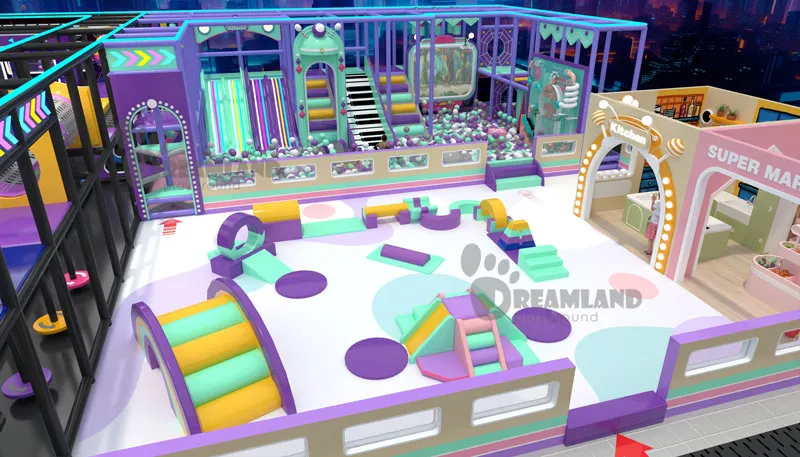
Why Customized Indoor Playground Projects Often Require Direct Manufacturer Support
Faster Communication and Project Coordination
Every design change affects engineering, materials, production schedules, and installation planning. Only by direct communication with the manufacturer of a custom indoor playground can the necessary persons be addressed immediately. By avoiding unnecessary intermediaries, the risk of miscommunication is prevented, and the project team can react quickly to changes.
Improved Accuracy Throughout Production
Once the plans are approved and a project is ready to go into production, it is vital to have the manufacturer on board to ensure that all production personnel are working from the most up-to-date drawings and plans.
Better Installation Planning and Technical Support
Custom playgrounds are made of complex structures, which require precise and detailed installation instructions. The manufacturer of your playground has the necessary technical knowledge to provide the installation team with the correct support, to answer any questions that may arise at the site, and to solve any problems that may occur during the assembly of the playground equipment.
Greater Long-Term Accountability
A custom indoor playground manufacturer is typically involved with a project for a long time after the playground has been installed. A number of months or even years after the initial installation, a buyer may need modifications, replacement parts, repair work, warranty work, or even upgrades to the playground. The buyer can easily contact the manufacturer who designed and produced the playground as needed.
Logistics Coordination and Shipping Efficiency
Many suppliers fail to include the costs of transport and export in their quotes. They are often underestimated and can lead to delays, damage, or even extra costs for freight. Suppliers with experience in implementing complete indoor playgrounds will also take care of optimal packaging, efficient loading of the container, and the best shipping schedule.
Installation Support and On-Site Challenges
The installation phase is often underestimated and contains a lot of hidden costs. In order to avoid any problems with the assembly of the indoor playground, it is important that the supplier provides the necessary technical guidance to the on-site staff. In addition to detailed installation manuals and technical drawings, the supplier should also be available for remote support or even on-site.
Spare Parts Availability and Maintenance Costs
Supplies of spare parts are crucial for the long-term operating costs of an indoor playground. Only a supplier with its own production is in a position to deliver spare parts quickly and on a consistent basis. The procurement of required spare parts from third parties via other suppliers can result in higher costs and a longer delivery time.
Project Delays and Opportunity Costs
Indirect costs can also result from a supplier’s inability to manage delivery or installation time frames. A shopping mall or a family entertainment center with many outlets may suffer serious financial loss if a single play area is not ready for opening on time. Other expenses, like extended rental or construction periods, could also arise. A supplier’s ability to stick to agreed time frames, therefore, has to be considered when evaluating the total cost of a project.
Long-Term Maintenance and Operational Stability
A major factor to be taken into account when determining the long-term operational costs of an indoor playground is the required maintenance after it has been put into operation. Suppliers who have developed a production system and offer after-sales service, spare parts, and upgrades to existing playgrounds can contribute to lower long-term costs. Suppliers without after-sales support increase the maintenance costs over time.
Quality Control and Safety Compliance: Who Takes Responsibility?
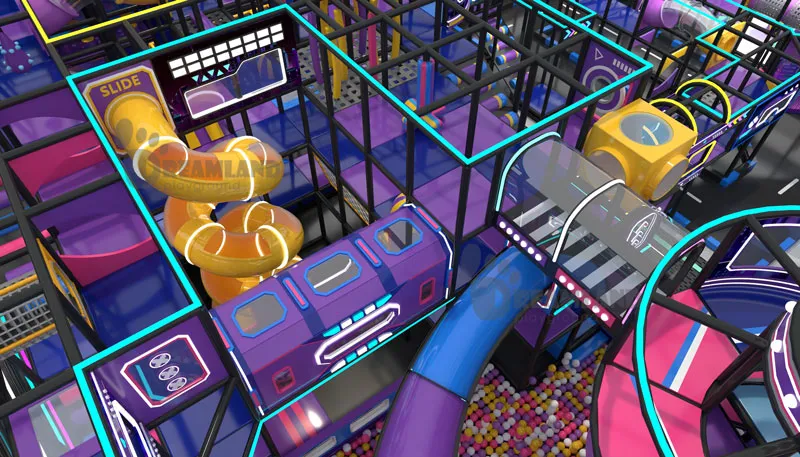
Safety compliance is one of the most important factors in commercial indoor playground projects. A manufacturer is typically responsible for the indoor playground equipment from the selection of raw materials right through to the final finishing of the product. Many manufacturers also have quality control procedures in place to monitor production and have staff on site to conduct regular quality checks throughout the production process.
Further, it is required that the supplier is in possession of all the required compliance documents for the indoor playground equipment, such as ASTM for indoor play equipment in the USA or European standard EN1176 for such play equipment in Europe. By purchasing directly from the manufacturer, you have better visibility into the production process and its corresponding records, into the testing procedures, and any necessary corrections.
Trading companies are often able to provide the relevant compliance documentation as well as coordinate with independent third-party inspectors, but they will rely on information provided by the factory for traceability, production process, and any testing, etc. For buyers who give safety, traceability, and compliance with regulations top priority, it is important to know who is taking responsibility for all these aspects.
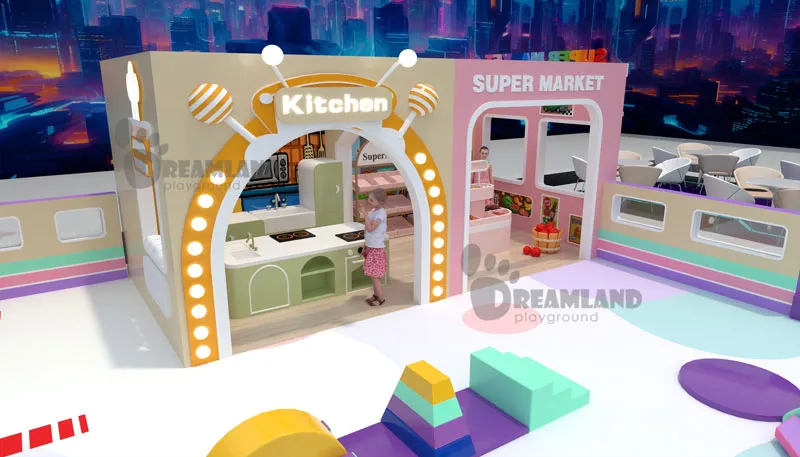
How to Verify Whether a Supplier Is a Real Indoor Playground Manufacturer
Buyers should carry out thorough supplier verification before making a purchase.
Use the following Indoor Playground Manufacturer checklist when evaluating potential partners:
- Does the company own or operate its own factory?
- Can they provide factory photos, videos, or virtual tours?
- Do they employ in-house designers and engineers?
- Are production facilities clearly documented?
- Can they explain their manufacturing process in detail?
- Do they hold relevant certifications and compliance records?
- Can they provide project references and customer case studies?
- Do they have proven export experience in your target market?
- Can they demonstrate previous installation projects?
- Are factory visits available for qualified buyers?
- Can they provide quality inspection procedures and reports?
- Do they maintain a dedicated after-sales support team?
While there are a number of advantages that a manufacturer brings to the indoor playground buyer, there are instances where the trading company is better.
For smaller projects with limited product varieties, trading companies are more efficient. A project with a few different components means less of a hassle for the buyer to manage and, as with previous points, for the trading company as well. A buyer may be looking to procure many different types of products, and so a trading company can act as a ‘conglomerate’ bringing together various suppliers, all of whom have been identified and sourced by the trading company itself.
Key Takeaway: Ultimately, the decision between going with a manufacturer or a trading company will depend upon the specifics of a project in terms of its complexity, your purchasing strategy, and the resources you have at your disposal to deal with suppliers.
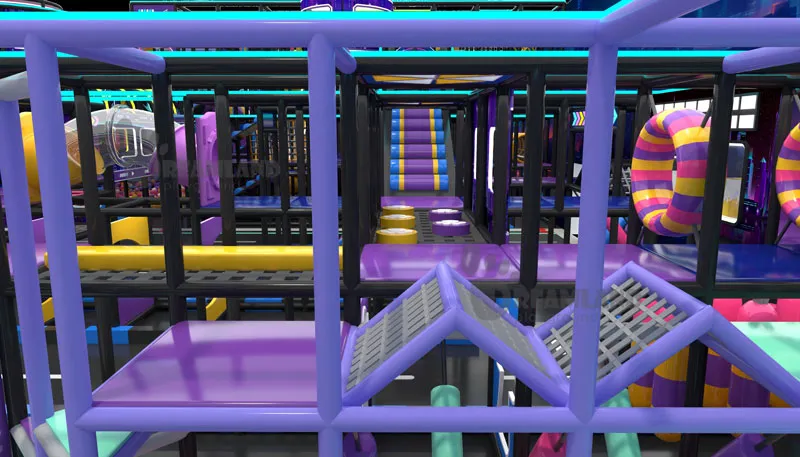
Which Option Is Best for Your Indoor Playground Project?
One size doesn’t fit all. The right choice depends on several factors:
- Choose an Indoor Playground Manufacturer If:
- Your project requires significant customization.
- You need direct access to engineers and designers.
- Long-term support is a high priority.
- You want greater control over quality and production.
- The project involves a large investment.
- Brand differentiation is important.
Choose a Trading Company If:
- Your project is relatively simple.
- You require products from multiple industries.
- You prefer consolidated supplier management.
- Local sourcing assistance is valuable.
- Customization requirements are limited.
Key Takeaway: The supplier you choose to work with should help to achieve your business objectives. The entertainment industry for indoor activities is shifting towards turnkey projects.

Why More Investors Are Choosing Turnkey Indoor Playground Manufacturers
Investors in the indoor entertainment industry prefer turnkey indoor playground projects.
Instead of coordinating multiple vendors for design, engineering, manufacturing, logistics, installation, and after-sales service, they rely on a single supplier to handle all aspects of the project.
Because a turnkey manufacturer integrates design, engineering, production, logistics, installation support, and after-sales service, the project can usually be managed more efficiently. This is because there are not as many “hands” involved in completing each individual phase of a project. In addition, when you deal with a single point of contact, you can rest assured that there is only one person to call if anything goes wrong. This individual will be able to determine the cause of the problem and then see to it that the matter is rectified in the shortest possible time.
Many family entertainment centers have found that the best sourcing decision for them is to focus on the factors of expertise, accountability, safety, and total project cost and value, as opposed to the low up-front cost of the equipment that they are purchasing.
There are also situations where buying direct from the manufacturer can help save on intermediary costs. And just because something may cost the least does not mean it is the best value for the total cost of the project. The buyer should also look at the design support, logistics, installation support, maintenance, and after-sales service provided by the total cost of the project.
Conclusion
Choosing between an indoor playground manufacturer and a trading company is about much more than just comparing prices of different pieces of equipment for your indoor playground.
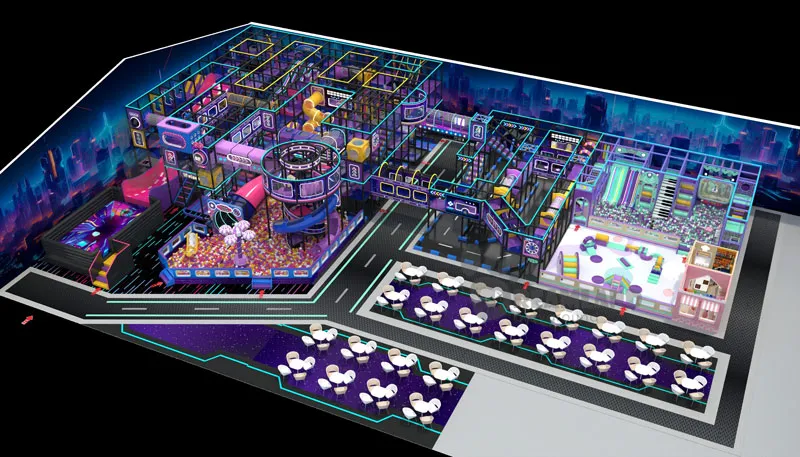
Indoor Playground Manufacturers offer their customers control over the sourcing of an indoor playground, complete control over the design, the engineering, the production of the playground equipment, the quality control, the installation, and the after-sales service. Trading Companies, on the other hand, can be very helpful in the sourcing of an indoor playground for customers. They can offer their customers a large variety of different playgrounds from different factories. They can also consolidate the offers from different suppliers for their customers, which can make the purchasing process a lot easier.
If you are planning a custom indoor playground, trampoline park, or family entertainment center, Dreamland Playground can provide design, manufacturing, installation guidance, and long-term support for your project.
FAQ
Is it cheaper to buy indoor playground equipment directly from a manufacturer?
It may not always be cheaper. Manufacturers may save on intermediary costs, but the total cost depends on project size, customization, and long-term support.
How can I tell if a supplier is a manufacturer or a trading company?
Request information about the engineering team, production images, certifications, project references, opportunities for factory visitation, and information on the factory. Legitimate manufacturers can typically prove ownership or direct control of production facilities.
Can trading companies provide customized indoor playground designs?
Some trading companies may organize customized projects through partner factories, but the manufacturer will typically handle the engineering and design work.
Which one provides better after-sales service?
Manufacturers, as the equipment creators and producers, tend to provide more direct technical support, whereas trading companies may offer customer service assistance and may have to rely on factory cooperation to resolve technical issues.
Why do large indoor playground projects often work directly with manufacturers?
Large projects usually require customization, engineering review, safety compliance, installation planning, and long-term maintenance support. Direct manufacturer cooperation makes these steps easier to coordinate.