

How to Evaluate Commercial Playground Quality Before You Buy: A Practical 10-Point Checklist
When selecting to purchase commercial playground equipment, it is more than just looking at how the equipment looks, the cost of the playground, and the salesperson's marketing materials. The buyer must consider several factors to determine the best-quality equipment for their application. These factors include safety compliance, product-specific test reports, material specifications, workmanship, surfacing, operational layout, manufacturing quality control, installation responsibilities, and warranty support. The buyer must also take into consideration the total cost of ownership for the life of the product.
Buying playground equipment for schools, recreation facilities, municipalities, EDC investors, and FEC operators will save them from all sorts of safety-related problems, huge maintenance bills, and reduce their costs and help maximize their return on investment if they purchase the correct commercial play equipment following a sensible buying strategy.
The safety compliance and quality items that are hidden within commercial playground equipment marketing images and catalogs will be described by this practical 10-point playground quality checklist for use by facility managers, operators, and investors to assure themselves and others that the playground is safe and of quality to help protect against unsafe products and operational risks and lower life cycle costs.
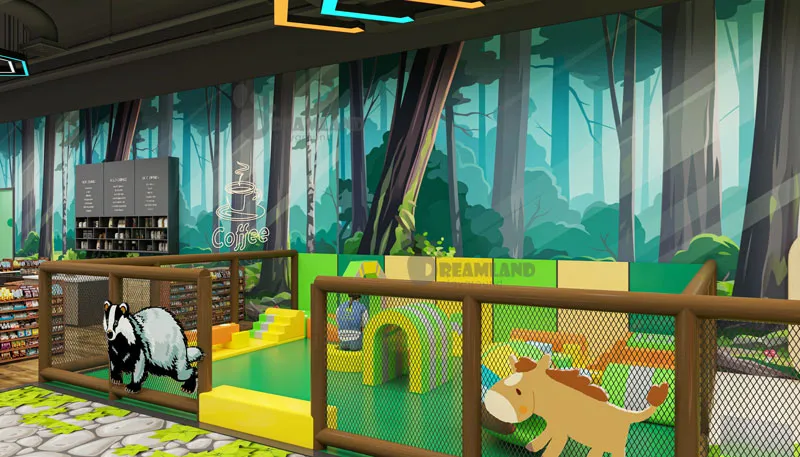
What Is the Most Important Factor in Commercial Playground Equipment Quality?
The most reliable evaluation combines:
- Safety compliance
- Material specifications
- Manufacturing quality
- Installation
- Maintenance requirements
A playground may look fantastic in drawings, but be flawed in its structural materials, in its surfacing, in its quality control, or in the support it will receive after the sale has been made. When looking for a supplier of playground equipment, the buyer needs to look at the complete system, not just the individual piece of equipment.
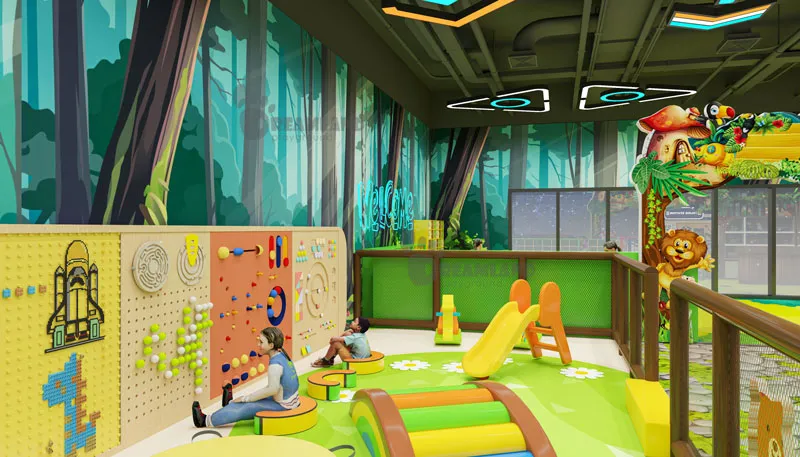
Verify ASTM and ADA Compliance Before Comparing Suppliers
Which ASTM Standards Apply to Commercial Playground Equipment?
ASTM F1918
Soft contained play equipment and indoor playground systems, such as those found in play centers, Family Entertainment Centers (FECs), children’s museums, and other recreation facilities, are covered by ASTM F1918. This standard specifies the safety and performance requirements for such equipment.
ASTM F1487
ASTM F1487 – Public Use Playground Equipment for Children When Used by Children ages 2 to 12 years. Covers items such as: entrapment prevention, protective barriers, guardrails, component spacing, and playground safety.
ASTM F1292
ASTM F1292: Impact Attenuation of Surfacing Materials. This standard helps to determine whether or not a playground surface will decrease the potential for injury due to falls on the play equipment and surface.
ADA Accessibility Requirements
An ADA accessible playground is designed to have accessible routes, surfaces, transfer components, and play components that allow users with physical disabilities to use and enjoy the same components as other children in the playground.
Compliance Goes Beyond ASTM and ADA
Commercial playground projects should also comply with:
- Local building codes
- Fire safety regulations
- Occupancy requirements
- Municipal approvals
- Insurance carrier requirements
- Accessibility regulations applicable to the project location
ASTM compliance alone does not guarantee project approval.
Below is a comparison table
|
Evaluation Area |
What to Verify |
|
Compliance |
ASTM F1918, F1487, F1292, ADA |
|
Materials |
Steel thickness, foam density, PVC quality |
|
Surfacing |
Fall height rating, thickness |
|
Manufacturing |
QC procedures, trial assembly |
|
Installation |
Site prep, assembly, inspection |
|
Support |
Warranty, maintenance, spare parts |
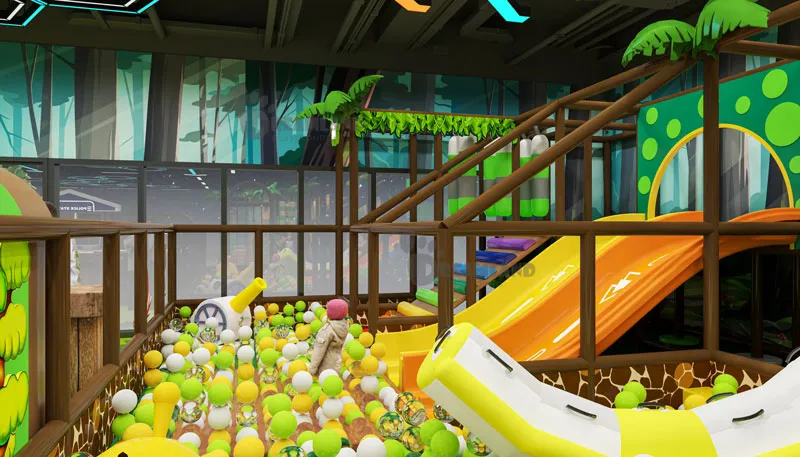
Request Product-Specific Test Reports
Why Generic Certificates Are Not Enough
Many suppliers issue general certificates rather than a clear identification of the products that they are selling.
Instead, request laboratory reports that include:
- Product model numbers
- Equipment descriptions
- Materials tested
- Test dates
- Laboratory information
- Test methods
- Results and conclusions
- Questions Buyers Should Ask
- Does the report match the quoted equipment?
- Which laboratory conducted the testing?
- When was the testing completed?
- Are all major components covered?
Product-specific documentation is much more verifiable than generic claims of compliance.
Quality requirements should be measurable and verifiable.
1. Structural Steel
Specify:
- Tube diameter
- Wall thickness
- Steel grade
- Coating requirements
- Corrosion protection system
- Plastic Components
2. Plastic Components
Specify:
- Material type
- UV resistance
- Impact resistance
- Thickness
- Foam and Padding
3. Foam and Padding
Specify:
- Foam density
- Padding thickness
- Fire-retardant performance
- Protective covering requirements
- Fasteners and Hardware
4. Fasteners and Hardware
Specify:
Stainless steel grade
Corrosion resistance
Tamper-resistant features
Surfacing
5. Surfacing
Specify:
- Thickness
- Impact absorption and safety requirements
- Accessibility performance
Detailed specifications will aid in future inspections as well as provide a basis for planning maintenance and for filing warranty claims.
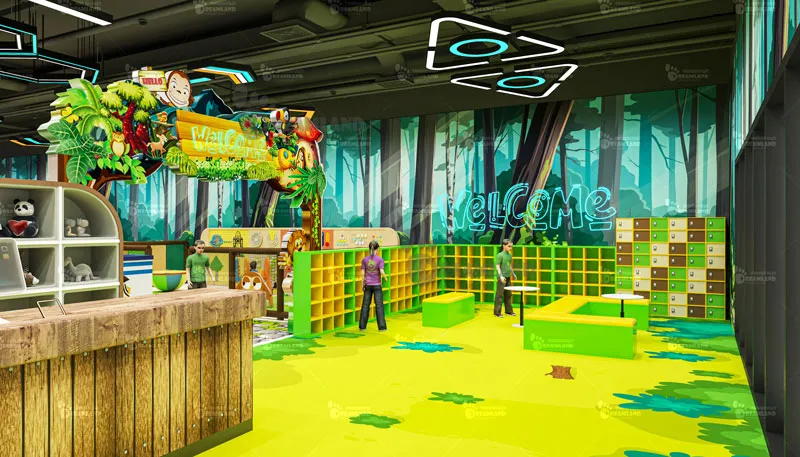
Inspect Workmanship and Hidden Construction Details
Where Quality Differences Often Appear
Two playgrounds can look virtually the same in pictures but have an entirely different manufacturing quality.
1. Welds
Look for:
- Consistent weld beads
- Smooth finishing
- No cracks or visible defects
2. Hardware
Verify:
- Secure bolt engagement
- Protective caps
- Corrosion-resistant materials
- Padding
3. Padding
Check:
- Coverage of impact zones
- Secure attachment
- Uniform thickness
- Nets and Ropes
4. Nets and Ropes
Review:
- Tension consistency
- Connection quality
- Wear resistance
5. Platform Connections
Confirm:
- Structural stability
- Alignment accuracy
- Secure fastening
Indoor vs. Outdoor Quality Considerations
The need to pay special attention to the density of the foam, to the padding system, to the PVC covering, and to the nets and ropes is especially pertinent in the case of indoor playgrounds.
Outdoor playgrounds are to be focused on for UV resistance, weather protection, drainage, and corrosion resistance. Even finer quality items have hidden details that cannot be seen in the pictures of an item provided in marketing renderings.
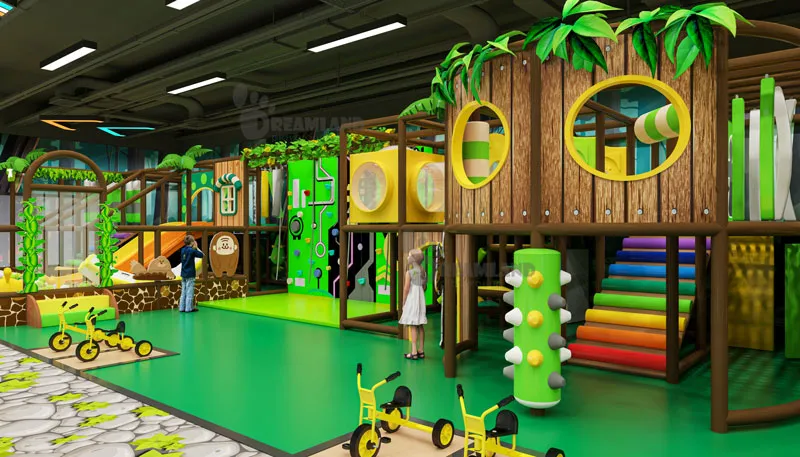
Evaluate Surfacing as Part of the Overall Safety System
Why Surfacing Is Critical
Playground surfacing is so much more than just another item to add to your playground when purchasing high-quality commercial playground equipment. Playgrounds require adequate surfacing to protect children from injury, and even the best playground can cause serious harm if the surfacing is not good enough.
Critical Fall Height
Check that the playground surface has been rated for the highest fall from any piece of equipment on the playground and meets the minimum performance requirements of ASTM F1292.
Thickness and Impact Protection
Thickness is critical to ensure adequate impact attenuation. Verify that the specified thickness of the surfacing is suitable for the intended use and equipment.
Accessibility Requirements
Playground surface materials must support ADA accessibility through stable and accessible routes to and throughout play areas.
Installation Quality
Even the best flooring can fail if there is poor site preparation, if it does not have adequate drainage, or if it is not installed correctly. Check that the flooring has been installed in accordance with the manufacturer’s specifications.
Maintenance Considerations
Check out playground equipment inspection schedules, repair information, surface cleaning requirements, materials, and replacement schedules to ensure the safety and durability of playgrounds.
Regardless of the quality of the playground equipment, inadequate playground surfacing can negate children’s safe play.
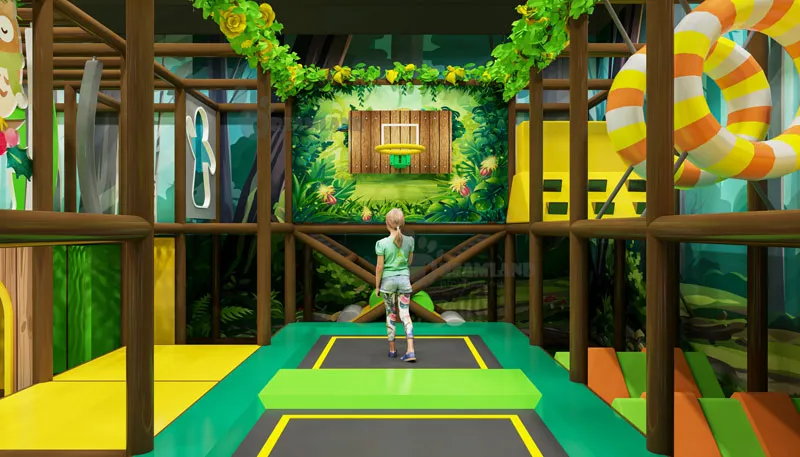
Review Playground Layout for Daily Operations
What Makes a Playground Operationally Efficient? An adequate playground design consists of safe play, adequate supervision, and hassle-free work for playground staff and service technicians. This aspect of a playground is judged beyond mere color and aesthetic value. It has to function.
Age Zoning
Age zoning refers to play areas that are zoned for children of a specific age so that preschoolers are not playing on equipment that older children are using. Also, children of different ages can play together on different equipment that is appropriate for their developmental age.
Circulation and Traffic Flow
Clear access routes and a well-thought-out flow of traffic through the playground to minimize congestion, aid safety, and enhance users' experience of play.
Sightlines and Supervision
A playground layout will enable supervisors to have a clear view of all play areas and thus be able to monitor children and intervene as needed in order to ensure that children are playing safely.
Emergency and Maintenance Access
All pathways must provide sufficient and safe access to perform routine inspections, maintenance, cleaning, and emergency response.
Accessibility
Accessible routes and play areas must be designed and included throughout the playground to ensure children of all abilities can play together on equal terms and that the playground complies with the requirements of the ADA and is usable by children with disabilities.
A successful playground design aims to provide safe play, accessible play, great play, and efficient play operation.

Audit the Manufacturer's Quality Control Process
How to Conduct a Manufacturer Quality Audit
The quality control system of a manufacturer of commercial playground equipment needs to guarantee the safety, consistency, and durability of its products. Instead of checking product samples and the corresponding certificates, it is more important for buyers to find out how the manufacturer controls quality during the production process.
Incoming Material Inspection
We inspect all the raw materials we use, such as steel, plastics, foam, and all hardware parts. All the production stages are inspected too, so any possible defect can be found and fixed before it becomes a big problem.
In-Process Quality Checks
Manufacturers perform quality checks during the various stages of the production of a playground. These are designed to help identify possible errors or damage to individual components very early on. In the course of the production process, the manufacturer checks whether individual components correspond to the stipulated design requirements for safety.
Trial Assembly
It’s also recommended that a trial assembly be conducted for larger projects or custom-made equipment to test fitting, alignment, etc.
Pre-Shipment Inspection
Check the final Pre-Shipment Inspection to confirm that the playground being sent has been produced in accordance with exact precision to your approved plans, specifications, and quality criteria.
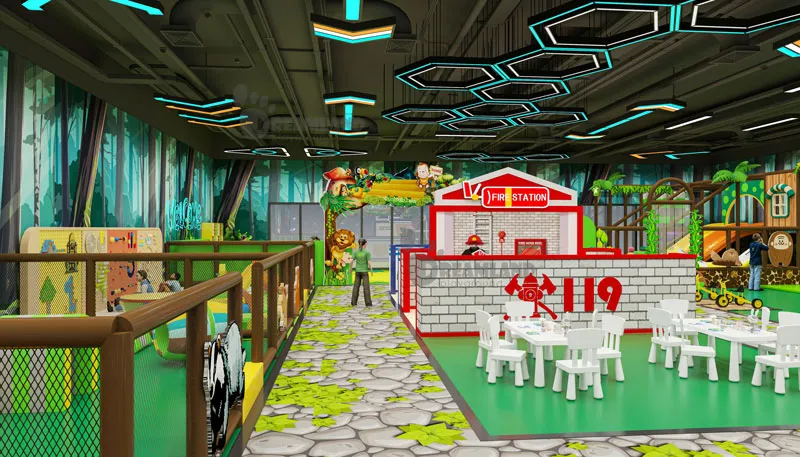
Confirm Installation Scope and Final Inspection Requirements
What Should the Installation Contract Include?
Responsibilities should be clearly defined for:
- Site preparation
- Foundations
- Equipment fixing
- Equipment assembly
- Surfacing installation
- Safety testing
- Commissioning
- Final acceptance
Why Final Inspection Matters
Before handover, conduct a documented inspection verifying:
- Structural assembly
- Safety clearances
- Surfacing installation
- Accessibility requirements
- Contract compliance
Final inspection helps ensure the playground performs as intended from day one.
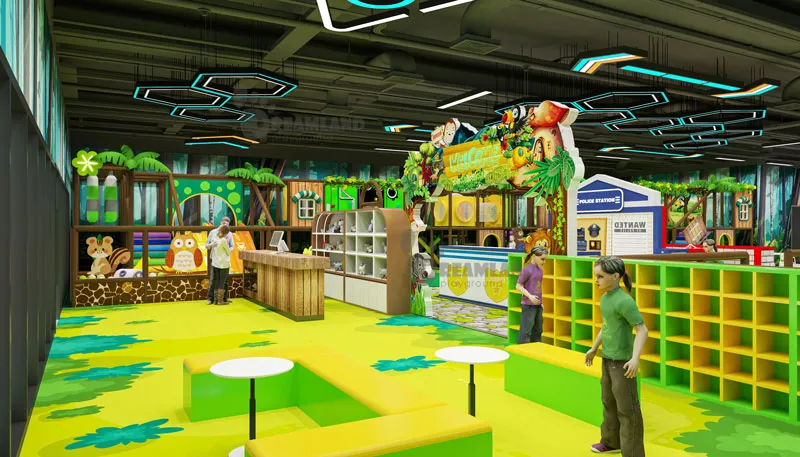
Compare Warranty, Maintenance, and Spare-Part Support
What Matters More Than Warranty Length?
A manufacturer who maintains production records and can show off corresponding completed products from previous projects is, in many cases, also able to deliver high-quality products for larger orders as well as for single pieces.
Warranty Coverage
A manufacturer who operates a quality control process that is organized is less likely to produce defective articles and to be a cause of risk to a project. His equipment will perform well in the long term.
Warranty and after-sales service support, like any other component of the playground, have a direct impact on the long-term value of the product. Most importantly, a warranty period is not everything; one must also look into the quality of service that the manufacturer will provide after the warranty period has expired.
Look into the details of the warranty: What does it cover? What are the excluded parts? And what is the process for filing a claim? Most important is the coverage, not the length of time it is offered.
Spare-Part Availability
Are spare parts available in time and in sufficient quantities? Also, are they of equal quality to the original parts?
Maintenance Support
Are maintenance guidelines, regular inspections, and technical assistance provided to ensure the safe long-term use of the equipment?
Response and Service Process
Ask the manufacturer how they manage service requests, repairs, or replacement of parts. This includes the time frame in which you would expect them to return your call and how you would be kept informed of any progress. A good warranty, adequate supply of spare parts, and good service all count and can even save a lot in the long-term costs of owning a product and the associated risks of defects.
Calculate Total Cost of Ownership (TCO)
Why the Purchase Price Can Be Misleading
Calculate total cost of ownership by including:
- Equipment purchase
- Shipping and logistics
- Installation
- Surfacing
- Inspections
- Maintenance
- Spare parts
- Repairs
- Downtime
- Future upgrades
Many buyers are surprised to learn that the more cost-effective solutions to purchase have lower lifecycle costs.
Commercial Playground Quality Evaluation Checklist
Use this quick evaluation checklist when comparing suppliers:
|
Evaluation Area |
Verify Before Purchase |
|
Compliance |
ASTM F1918, ASTM F1487, ASTM F1292, ADA |
|
Documentation |
Product-specific test reports |
|
Materials |
Steel, plastics, foam, and hardware specifications |
|
Workmanship |
Welds, padding, nets, connections |
|
Surfacing |
Fall height rating, thickness, accessibility |
|
Layout |
Safety, supervision, circulation |
|
Manufacturing |
Quality control procedures |
|
Installation |
Scope, responsibilities, testing |
|
Support |
Warranty, maintenance, spare parts |
|
Financial Review |
Total cost of ownership |
Why Leading Operators Use Structured Evaluation Processes
Experienced buyers of playground equipment for Family Entertainment Centers (FECs), Educational Discovery Centers (EDCs), schools, and municipalities include recreation centers and indoor play facilities.
Instead, they evaluate:
- Compliance
- Materials
- Manufacturing processes
- Operational requirements
- Long-term support
Experienced buyers of commercial indoor playgrounds use more than price to select a supplier for their playground. Safety, playground quality to guarantee the lowest lifecycle costs, workmanship to guarantee a long life, and operating costs to achieve the highest value must all be considered.
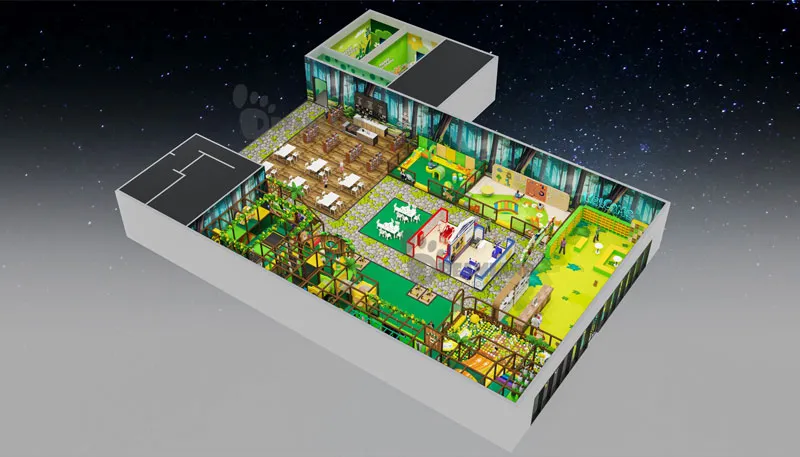
Request a Customized Evaluation and Checklist: Dreamland Playground
Dreamland Playground specializes in Commercial Indoor Playgrounds for Family Entertainment Centers (FECs), Educational Play Facilities, Schools, Recreation Centers & Malls, and children's entertainment venues.
Our team supports clients throughout the project lifecycle, including design review, manufacturing oversight, quality control, installation coordination, safety compliance, and long-term maintenance planning. Request a Customized Playground Quality Evaluation.
Planning a new playground project?
Submit your:
- Floor plan
- Site dimensions
- Project goals
- Capacity requirements
- Budget range
We will review your floor plan and offer a Customized Playground Quality Evaluation and suggestions, including safety and operational efficiency for compliance with local building codes and for the best long-term life and lowest life cycle cost for your facility.
Download the 10-Point Commercial Playground Buyer Checklist PDF or contact us for a discussion of your project needs.
Frequently Asked Questions
What is the most important factor in assessing playground equipment quality?
The best approach to a playground evaluation would be to analyse the entire scope to measure, including whether or not the playground in question meets all safety standards, as well as the material used, workmanship, how the playground is to be installed, how it will be maintained, and after-sales service and support.
Are ASTM certificates alone sufficient to approve a supplier?
No. Verify the lab reports relate to the specific products you are purchasing and also that the playground equipment will comply with the local building codes, accessibility needs, fire regulations, and also gain insurance quotes as required.
Should I conduct a pre-shipment inspection for commercial playgrounds?
Yes. Pre-shipment inspections are recommended for large projects (especially customized ones or those of high value), in order to verify that the production corresponds to the contract, the drawings, and the specified materials.
How do warranty terms affect long-term playground costs?
Warranty terms and conditions, availability of spare parts, support for maintenance, and timely responses are all key factors to consider when evaluating the total cost of ownership of a commercial indoor playground. As for warranty terms and conditions, it is more important to have the right warranty terms and conditions in place rather than focusing on the duration of the warranty.
Why can two similar-looking playgrounds have very different prices?
Price differences are due to differences in steel thickness, coating, foam density, PVC quality, hardware, playground surfacing, quality during manufacturing, test reports, installation, warranty, and spare parts.