

Commercial Indoor Playground Equipment for Restaurants, Malls, and FECs: A Complete Planning Guide
Restaurants, shopping malls, and FECs are increasingly adding indoor playground areas to create family-friendly spaces and improve the customer experience. Choosing commercial indoor playground equipment requires more than selecting attractive structures. You need to consider available space, target age groups, safety requirements, layout, maintenance, and long-term operating goals. Working with an experienced indoor playground manufacturer can help you select suitable equipment and create a practical, engaging play environment.
Why Are More Businesses Adding Indoor Playgrounds to Commercial Spaces?
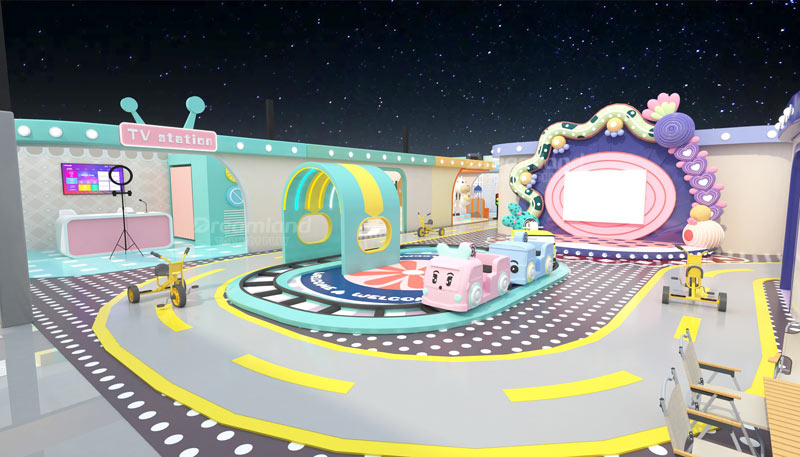
Commercial entities install indoor playgrounds because these spaces establish family-friendly atmospheres where young individuals stay occupied while guardians consume meals, purchase goods, or participate in different tasks. The visitor experience is improved by a well-designed play area, which makes a commercial space more attractive to families. Indoor playgrounds provide significant value to these locations.
The presence of commercial indoor playground equipment assists commercial entities in distinguishing themselves from rivals. Customers are encouraged by commercial indoor playground equipment to remain at the location for longer durations. A dedicated play area serves as an extra component for restaurants, malls, and FECs to strengthen customer engagement and return visits.
Choosing the Right Indoor Playground Equipment for Different Business Types
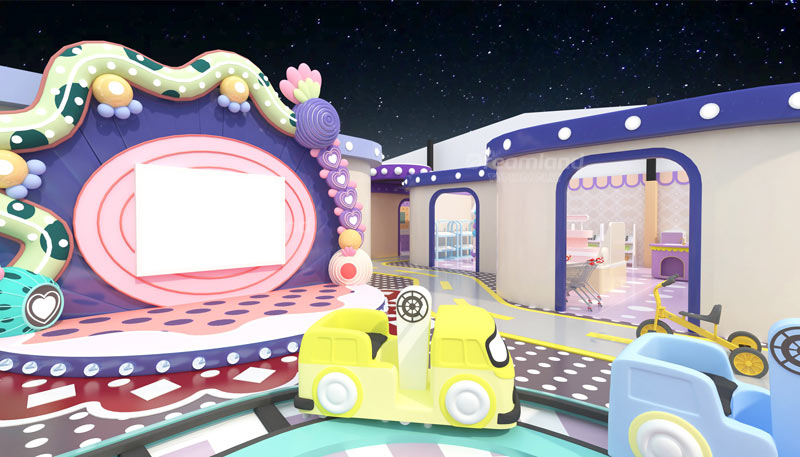
Selection of the appropriate indoor playground equipment relies on the working position category, the physical area available, the movement of visitors, specific age groups, and management targets. Restaurants typically require compact commercial soft play equipment, while malls frequently demand larger structures that support a higher number of guests. Indoor playground equipment is chosen based on these specific needs.
Typically, Family Entertainment Centers (FECs) need a more diverse set of family entertainment center equipment to service a variety of different ages and longer-term guests. In selecting the correct entertainment center equipment, the layout, the capacity, ceiling height, and safety requirements, as well as the business objectives of the entertainment center owner, are all important factors to consider, as opposed to simply choosing a standard playground for a family entertainment center.
Indoor Playground Equipment by Business Type
|
Business Type |
Key Requirements |
Suitable Equipment |
Main Planning Focus |
|
Restaurants |
Limited space, younger children, easy supervision |
Compact soft play, slides, climbing elements, ball pits |
Space efficiency, visibility, easy cleaning |
|
Shopping Malls |
Higher foot traffic, wider age range, larger play zones |
Multi-level play structures, slides, climbing areas, interactive features |
Capacity, customer flow, safety, accessibility |
|
FECs |
Diverse age groups, longer visits, multiple attractions |
Large soft play structures, obstacle courses, interactive play, themed equipment |
Attraction mix, capacity, circulation, revenue potential |
|
Small Commercial Spaces |
Restricted floor area and simple operations |
Modular soft play, compact climbing structures, toddler play equipment |
Flexible layout, installation, maintenance |
|
Large Commercial Venues |
High capacity and continuous visitor use |
Multi-level structures, custom play systems, themed playgrounds |
Durability, traffic management, customization, long-term operation |
How to Select Indoor Playground Equipment Based on Space and Layout
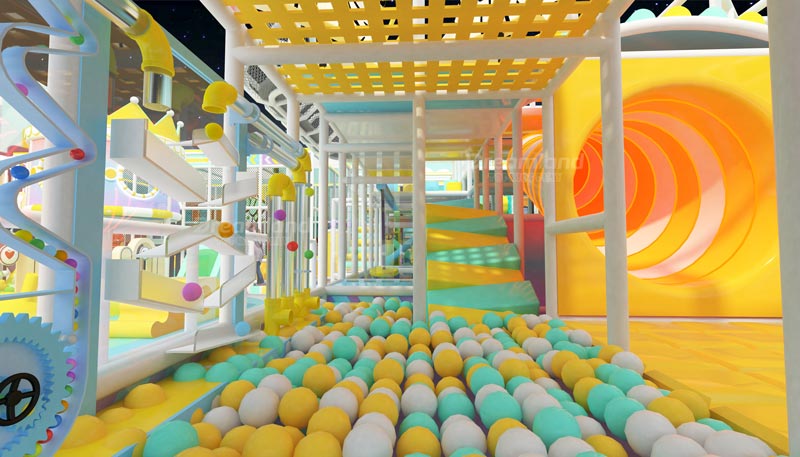
Indoor playground equipment can fit in your space if you plan carefully. The room where your playground will reside has a number of dimensions and constraints that affect what types of equipment can fit comfortably. In order to choose a configuration for your soft play structures, begin by taking the measurements of the floor area, ceiling height, and all of the walls, columns, and other features of the room. These are known as the site dimensions.
Be aware of the customer flow when setting up the indoor playground equipment. In addition to the play area, guests will also need space for sitting and for reception. Ensure there is enough space for emergency exits and for people to move around.
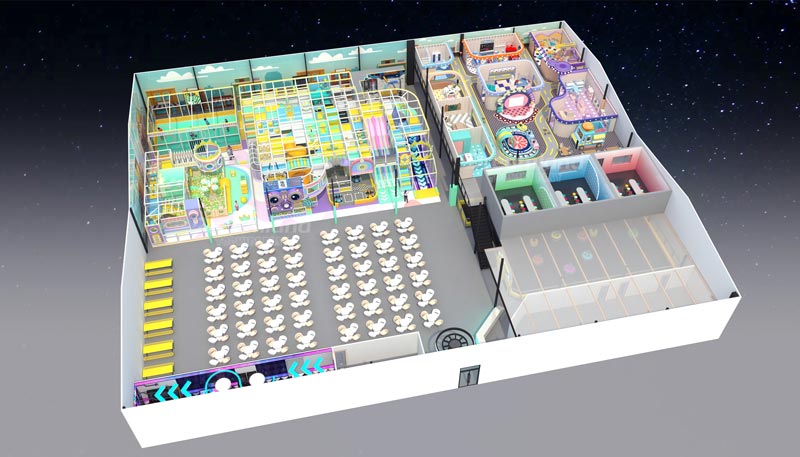
Within your family entertainment center, you can choose a playground configuration that corresponds with the shape of your space, be it small or irregularly formed. The indoor playground structures are often designed as so-called modular systems, which can be extended or joined as desired. In larger buildings, children can even climb through multiple levels of play. Your indoor playground manufacturer will work with you to develop a suitable setup for your space.
Popular Types of Commercial Indoor Playground Equipment
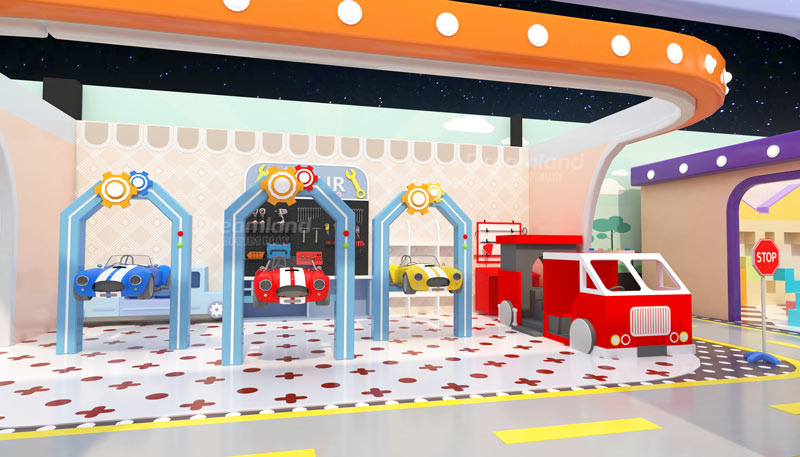
Soft play structures such as platforms, tunnels, bridges, etc. make up a large portion of commercial playgrounds as they allow for different types of activities, climbing, crawling, balancing, and exploring. These structures can be set up in different configurations to create separate play zones for different ages.
Sliding, climbing, and playing with balls are just a few of the ways that children can be encouraged to be physically active when they are playing in a soft play structure. Climbing structures, for example, help children to develop their coordination and movement skills. Slides are also very simple to use, but are so much fun for children, and so are included in many play structures. Ball pools and other similar features are ideal for young children, providing hours of fun for them. They need to be carefully designed and managed, however, to ensure that children have a safe and enjoyable time playing in them.
Additionally, there are interactive play systems and themed playgrounds. A designated area for toddlers, equipped with soft play and age-related equipment, is also recommended.
|
Equipment Type |
Best For |
Key Features |
|
Soft Play Structures |
Young children |
Climbing, crawling, tunnels, bridges, and interactive play |
|
Climbing Elements |
Active children |
Climbing walls, nets, ropes, and agility challenges |
|
Slides |
Different age groups |
Straight, spiral, tube, and multi-lane slides |
|
Ball Pools |
Toddlers and younger children |
Colorful, low-impact sensory and physical play |
|
Interactive Play Equipment |
Children seeking active engagement |
Interactive games, digital features, and sensory activities |
|
Toddler Play Areas |
Toddlers |
Age-appropriate slides, crawlers, soft obstacles, and low platforms |
|
Themed Playgrounds |
Family venues and FECs |
Custom themes, branded designs, storytelling elements, and immersive play |
|
Multi-Level Play Systems |
Malls and FECs |
Multiple activity levels, climbing areas, slides, and varied play zones |
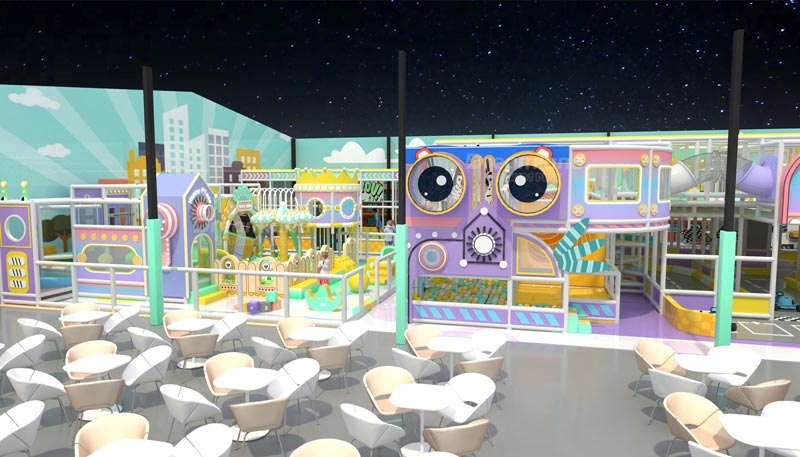
Safety and Quality Considerations for Commercial Indoor Playgrounds
Safety is the first priority when selecting commercial playground equipment. Material quality, structural strength, and floor padding all need to be evaluated before purchase. Edge protection, metal connectors, and fall zones directly affect user safety and must meet the required standards. Every component should be matched to the intended age group and the volume of daily use the equipment will handle.
Verifying that equipment meets applicable safety standards is the owner’s responsibility. Ask the manufacturer to provide test certificates, third-party lab reports, and a clear explanation of their quality control process. The frame must remain stable under continuous heavy use — this is a non-negotiable requirement for any commercial setting.
Proper installation and an ongoing maintenance routine are just as important as the equipment itself. Schedule regular inspections, clean surfaces frequently, and check small components for wear before problems develop. Replace damaged parts promptly to keep the playground safe and avoid unplanned closures. Long-term durability comes down to how consistently these checks are carried out.
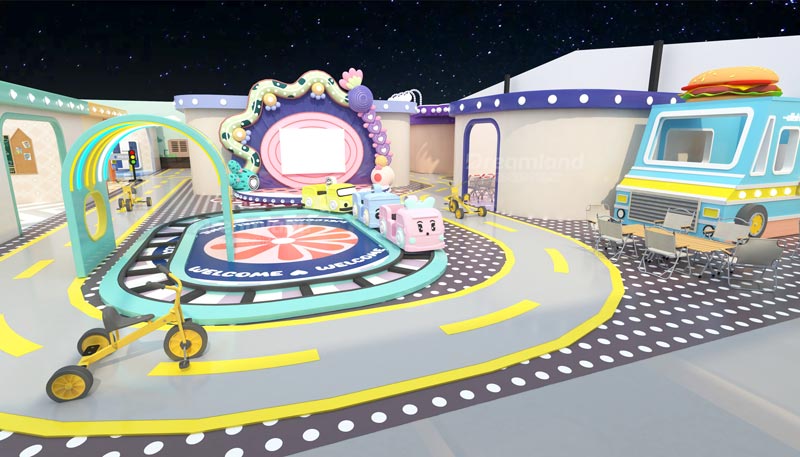
How Custom Indoor Playground Design Creates Better Commercial Value
Custom indoor playground design starts with your actual space — floor dimensions, ceiling height, column positions, and how customers move through the venue. Rather than forcing a standard structure into a room it wasn’t designed for, a custom layout uses every usable area efficiently and avoids wasted floor space.
Custom design also means your brand identity — colors, themes, and signage — can be built directly into the play structure. The result is a space that feels like it belongs in your venue, whether that’s a restaurant, a shopping mall, or an FEC. A play area that matches your brand attracts more families and reinforces the overall customer experience.
A well-planned layout keeps families on-site longer. When the play area is positioned to complement traffic flow and seating, visitor engagement increases naturally. Smart use of floor space translates directly into stronger commercial performance and higher revenue per visit.
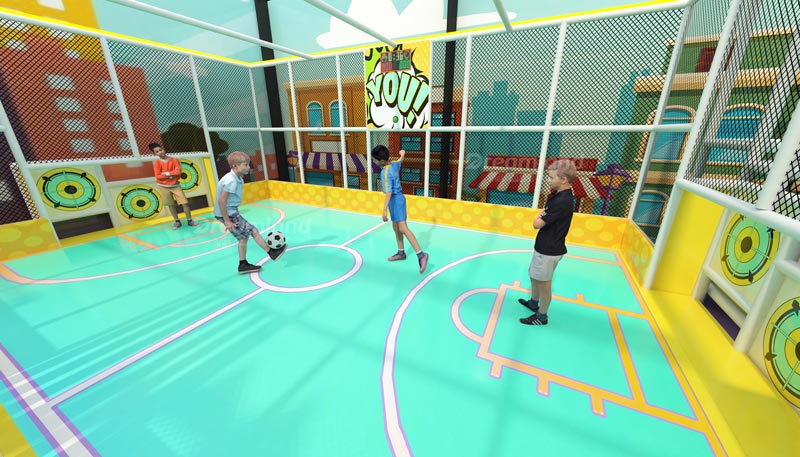
How Indoor Playgrounds Improve Customer Experience in Commercial Spaces
An indoor playground provides young individuals with a separate activity while the adult guardians are eating food or buying items in the shops. Indoor playground equipment is added to the dining rooms of the food-serving establishment so that the families feel comfortable. Large shopping centers use these play zones because the play zones make the family visit easier. When children are engaged, parents tend to stay longer and spend more.
For the FEC, the indoor playground is mixed with other types of fun activities for the guests. Different paths for the small young individuals and the older visitors are built to provide variety. The facility is visited more often because the families find many reasons to look at the different areas. Variety in attractions helps the business remain competitive.
Placing playgrounds near seating, restaurants, food and beverage outlets, and other family-friendly facilities creates a favorable environment for families to visit and return to. Parents can keep a close eye on their children while they play and enjoy the surrounding venue and facilities.
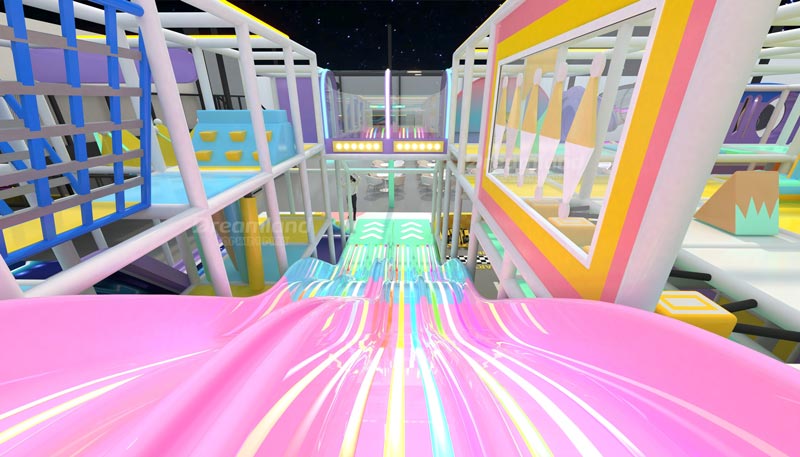
How to Choose a Reliable Commercial Indoor Playground Manufacturer
First, you have to choose a reliable indoor playground manufacturer. They should have experience with projects similar to yours. Most manufacturers for commercial indoor playgrounds present projects in their portfolio, describe their design options, list their equipment and possibilities for customization in detail. Also, they explain their way of manufacturing. Most manufacturers for indoor playgrounds for families are also able to develop solutions for places with different dimensions.
This ensures that the correct safety certifications are in place for the products that you are ordering. Also check for any relevant testing that has been carried out and view relevant certificates. Additionally, check for the quality of the materials that are used to make the soft play products and check that the manufacturer has the correct quality control measures in place. Finally, check that the manufacturer can offer the correct amount of design support, carry out a layout of the soft play for you, can customize the soft play to your requirements and can offer a professional installation service.
Support after delivery is also very important for a commercial playground. Look for a reliable playground manufacturer that can provide you with good after-sales service. This includes good installation support, good maintenance support, supply of parts for replacement, good technical support, good service support, etc.
FAQ
What Is Commercial Indoor Playground Equipment?
Commercial indoor playground equipment refers to durable play structures used in restaurants, shopping malls, entertainment centers, and other commercial venues. It includes soft play areas, slides, climbing structures, ball pools, and interactive areas for older children and separate toddler areas.
What Types of Businesses Can Use Indoor Playground Equipment?
Some examples of venues that have Indoor Playground Equipment are Restaurants, Shopping Malls, FECs, hotels, and other family-focused retail stores.
How Much Space Is Needed for a Commercial Indoor Playground?
Space for playgrounds depends on the size of the single piece of equipment and how many items you wish to include. The space also depends on the intended number of children playing in that area and will vary depending on the size of the children.
How Do I Choose Indoor Playground Equipment for a Restaurant?
Choose equipment based on your available floor area, target age group, customer flow, ceiling height, visibility, and cleaning requirements. Compact commercial soft play equipment is often suitable for restaurants where space and parental supervision are key considerations.
What Certifications Should Commercial Playground Equipment Have?
Certification requirements depend on where your playground will be installed. In the US, the key references are ASTM F1918 (soft-contained play equipment), IBC building codes, and CPSC guidelines. European projects follow EN 1176 for equipment and EN 1177 for safety surfacing. In the Middle East, requirements vary by country — some markets accept ASTM, others EN, and many require additional local approvals. Before production starts, ask your manufacturer for test reports, material certificates, and full installation documentation for your specific market.
Can Indoor Playground Equipment Be Customized?
Yes. Indoor Playground Equipment can be customized to meet customer needs regarding space, theme, branding/colors, and other requirements to best meet the needs of customers and of their businesses.