

How to Choose an Indoor Playground Manufacturer in 2026
Choosing the right indoor playground manufacturer for your Family Entertainment Center (FEC), play café, or other commercial indoor playground is a critical decision. It determines how your indoor playground is going to look, how safe it is for children to play, how it is going to be managed by staff, how much it costs for maintenance, and how children and their parents are going to have fun playing in it.
When we talk about the Indoor Entertainment industry in 2026, we’re talking about a highly competitive market, with investors from around the world demanding higher ROI from their investments in indoor play equipment for Family Entertainment Centers (FECs), play cafes, and other commercial indoor amusement centers. This is a highly competitive industry, and indoor playgrounds for kids need to not only look great and be highly engaging for children of all ages, but they also need to be extremely safe and durable, ensuring that they can withstand constant use.
What Makes a Good Indoor Playground Manufacturer?
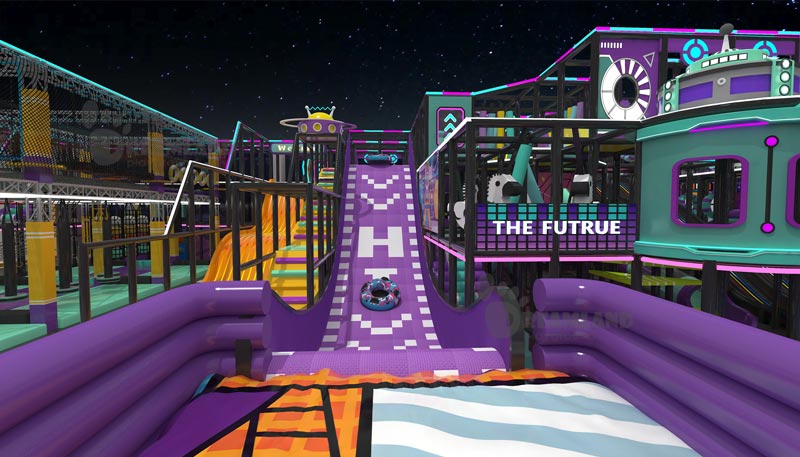
A good indoor playground manufacturer is more than just a factory that can produce playground equipment. A professional and quality manufacturer should be able to provide their clients with design, engineering, materials, and international project references, as well as installation and after-sales service.
A good manufacturer of indoor playgrounds is someone who is well-versed in the many types of venues in which an indoor play area can be installed, such as shopping malls, Family Entertainment Centers, play cafes, etc. Indoor playground manufacturers who have limited experience typically are unable to design installations that are optimized for space as well as for the flow of customers.
Why Experience Matters in Indoor Playground Projects
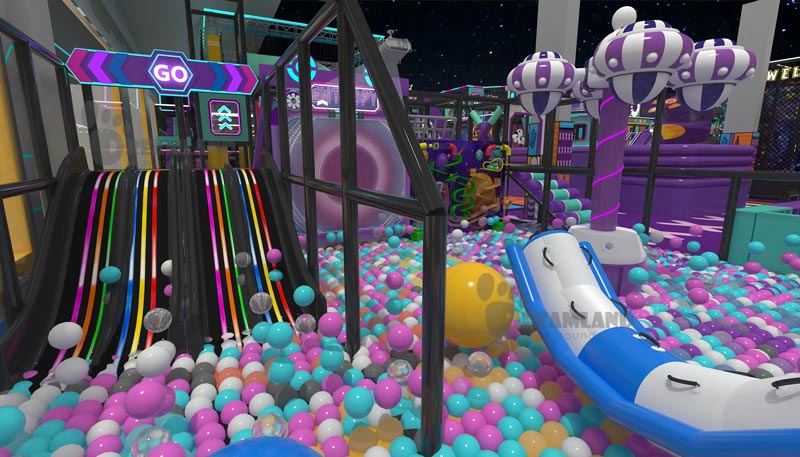
Experience is critical to the design of the most successful indoor playgrounds, which are actually complex entertainment systems that need to be filled with the highest amount of play value most efficiently and safely. In addition to experience with specific equipment and attractions, a quality indoor play area manufacturer should have significant experience designing play structures to meet the specific needs of different age groups and have the ability to maximize space in shopping mall entertainment environments, as well as free-standing FECs.
Also important for manufacturers of indoor playground equipment is their project experience. This allows them to know in advance what challenges may arise in operation. For example, high-traffic areas require stable structures. Areas for toddlers require softer play materials and lower-impact play equipment. Experienced indoor playground companies are able to plan their playground layouts based on the actual use of the play equipment and thus increase the safety of their customers as well as the revenue of the operator.
How to Check Indoor Playground Safety Standards and Certifications
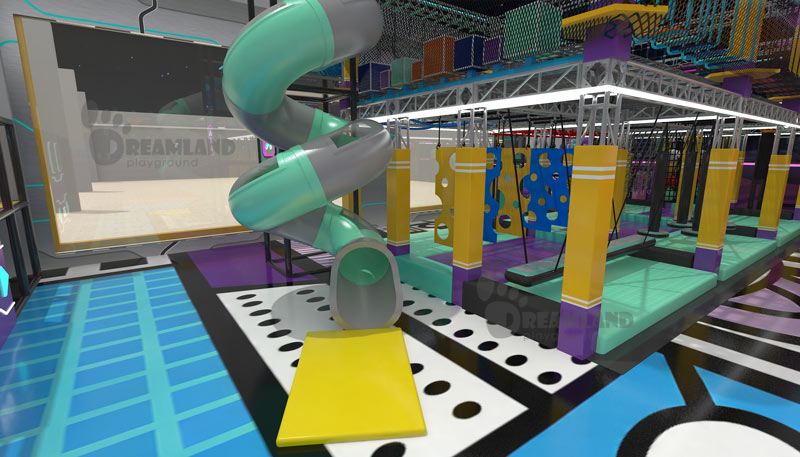
Safety standards have to be fulfilled by indoor playground equipment manufacturers. These safety standards specify the safety of structures, like trampolines or play towers, in relation to their static and dynamic loads. The most well-known safety standards for indoor play equipment are the ASTM standards from the United States and the EN1176 and EN1177 standards from Europe.
In addition to safety certifications, there are many other factors to be checked, for example, material testing reports, fire retardant certificates, design loads for structures, etc. Indoor playground equipment manufacturers should provide all documentation to prove the safety of their equipment in a transparent way and clearly explain how each component fulfills all requirements of safety regulations.
All aspects of safety should be incorporated into safety-oriented playground design. Properly designed equipment has rounded surfaces, padded structures, and non-toxic surface coatings. All components must be anchored to the floor to prevent movement and ensure the equipment remains safe throughout its useful life.
What Materials Are Best for Indoor Playground Equipment?
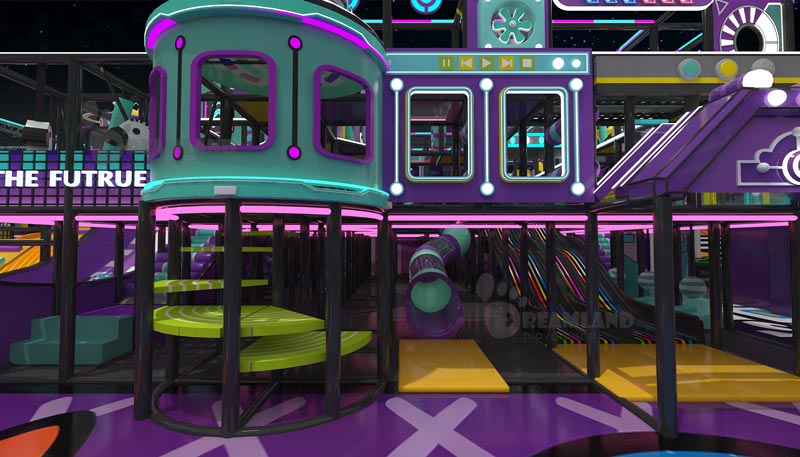
Materials for Indoor Playground Structures can last for a long time, are safe for kids, and are easy to maintain if chosen properly. Top manufacturers of commercial indoor playground equipment use galvanized steel structures for frames as they are sturdy, have great load-bearing capacity, and do not deform easily. For Soft Play Structures, they use high-density foam as the inner structure and cover it with durable PVC in various colors and designs. Wood used for children’s play structures is treated to resist insects and rot and is painted with non-toxic paints.
Soft Play Components
Soft play components are typically designed with high-density foam as the inner structure. They are then covered with durable PVC. Wooden components must be treated to ensure that they are suitable for indoor playgrounds and then finished with non-toxic paints and varnishes.
Poor materials will affect not only the safety of children at play but also the operation of your facility. Components may need frequent repairs, cause considerable downtimes, and require excessive maintenance – all factors which have a direct impact on your profit.
Custom Design
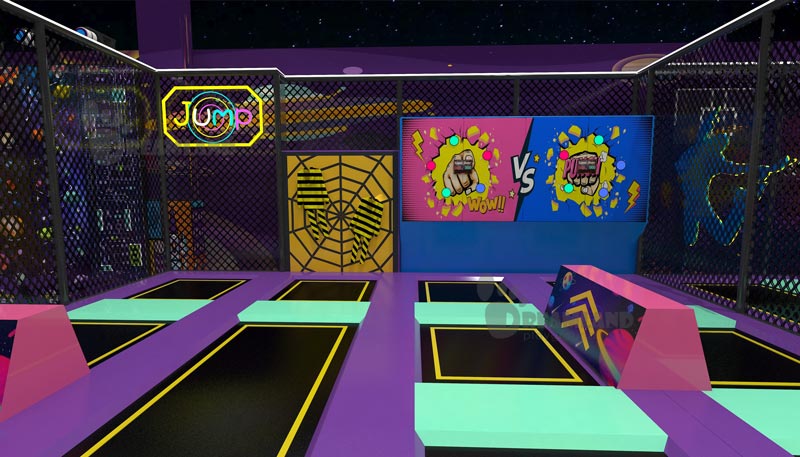
A Custom Design for your Indoor Playground is crucial in optimizing the use of the available space as well as offering a unique experience to your customers. Each space will have its constraints, such as the ceiling height and the demographic of the visitors to the space, thus a custom design is required.
Why Custom Indoor Playground Design Is Important for FECs and Play Cafes
Space Optimization and Layout Efficiency
Custom indoor playground designs are developed to guarantee that 100% of the square meters of a Facility Entertainment Center (FEC) or play café are used effectively. Unlike most of the fixed playgrounds available on the market, a Custom Indoor Playground Design is able to adapt itself to any sort of irregularly shaped areas, to different heights of the ceilings, and to the various constraints of the structures. The result is that the area of the playground is significantly increased, while at the same time the area required for the safe circulation of children and for the supervision by parents is also increased. The areas are then zoned by age to guarantee maximum fun for children and safety for parents.
Better Visitor Flow and Attraction Balance
A well-designed, custom layout of indoor play structures allows for the best flow of customers throughout the indoor playground. By effectively placing soft play structures, climbing structures, slides, etc., into the space, manufacturers can create an optimal balance of play options that encourage repeat use and higher customer satisfaction. This, in turn, will result in longer stay times and increase overall revenue for the FEC or play cafe.
Stronger Brand Identity and Market Positioning
The benefit of customized design also lies in establishing a unique brand identity of your facility, which will be more recognizable and different from others in a highly competitive mall environment. It’s the outside of your facility that initially grabs a customer’s attention and therefore needs to be visually striking and relate to the brand concept and the main target audience of the facility.
Improved Operational Efficiency and Safety Control
The biggest advantage of Custom Indoor Playground Design is the ability of the manufacturer to control the operational safety and the management of the facility. By providing a well-designed facility with clear zoning and optimal sightlines to monitor the children, the staff can more efficiently supervise children at play. Also, the risk of accidents is significantly reduced by separating the high-energy play equipment for the older children from the soft play equipment for the toddlers and younger children to create a safer facility and increase safety compliance.
Integrated Concept Design for Faster Project
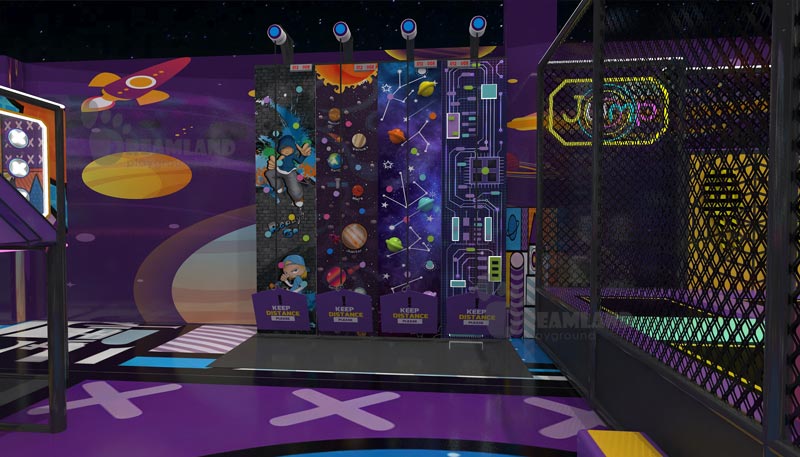
Turnkey project solutions include design concept, space design, and equipment selection within one system. This means that investors profit from one contact person, the manufacturer of the indoor playground, which facilitates the planning process greatly and decides much faster than dealing with several contractors. This also prevents delays, which can be caused by communication errors. As a result, the overall planning process is implemented much faster.
How Turnkey Indoor Playground Solutions Save Time and Reduce Risks
Integrated Concept Design for Faster Project Planning
Turnkey indoor playgrounds make planning very easy because all elements are planned within one system. The development of a concept, the planning of the area, and the necessary play equipment are all done by the indoor playground manufacturer. The investor only has to deal with one manufacturer. This prevents delays caused by communication failures and makes the planning process run a lot faster.
Manufacturing Efficiency with Controlled Quality
As part of the turnkey offer, the manufacturing of all components of the indoor playground is handled by the indoor playground manufacturer, either in-house or as part of a unified production system. This ensures the highest quality production with consistent use of materials and reduces the risk of errors. The lead time is also significantly reduced, as all components are produced according to one integrated production plan and not according to the production plans of separate vendors.
Simplified Shipping and Logistics Management
Turnkey manufacturers handle packaging, shipping, and logistics, and (if needed) international shipping of playground equipment as part of a complete package of services for the investor. This particularly helps with large indoor playground projects overseas, where otherwise managing different manufacturers could lead to an administrative and logistical nightmare. The careful organization and prompt handling of all parts and materials for the indoor playground means they arrive in the correct sequence at the time needed for assembly, thus eliminating the risk of incorrect storage or handling.
Professional Installation and On-Site Execution
The installation of an indoor playground is one of the most critical phases of the project. Our turnkey indoor playground manufacturers have experienced installation teams that know how to assemble the components of the playground. They are familiar with the structural requirements and safety regulations that need to be met in order to guarantee safe use of the playground.
After-Sales Support and Long-Term Operational Stability
A turnkey manufacturer of indoor playgrounds for indoor play also offers after-sales support, including advice on the maintenance of the playground, spare parts, and technical assistance. This allows the equipment to be used for the longest possible time and is of great value to FEC investors, as it minimizes the risks associated with the operation of the facility and ensures a stable return on investment.
What to Review Before Choosing an Indoor Playground Manufacturer
Project Portfolio and Real Case Studies
Evaluating Indoor Playground Manufacturers by their Portfolio of Completed Projects.
Installation Photos and On-Site Evidence
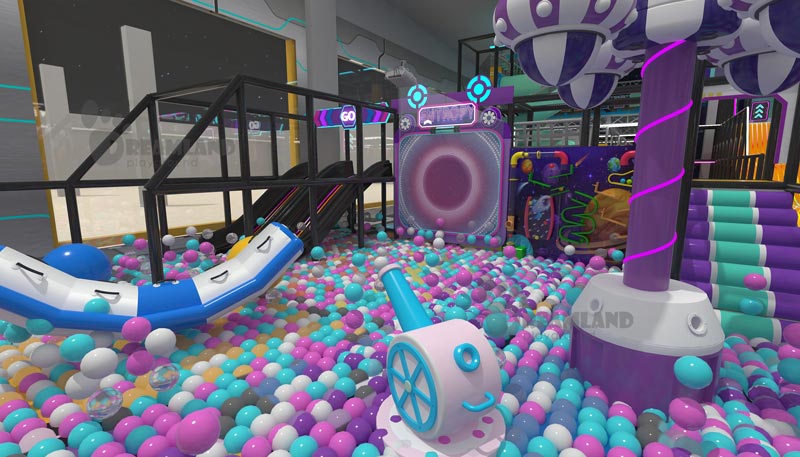
We prefer real pictures of completed projects rather than pretty design renders. They can demonstrate the high-quality construction of indoor play equipment and the fine finish of the materials used. As a reputable indoor playground equipment manufacturer, we provide quality pictures of completed projects before and after installation. These images should demonstrate what the final product will look like in reality compared to the initial design plans.
Client Feedback and Operational Experience
Looking through previous clients’ experiences of how a manufacturer performed, such as during the installation, after-sales service, and the maintenance of equipment in the long run after project completion. This will give you an idea if the manufacturer can operate as a professional business and minimize potential operational problems that may occur after the project is completed.
Global Project Experience and Market Reach
Companies with international playground experience on projects around the world will know local safety standards, market trends, different cultures, ways of life, and the various legal requirements. Therefore, it is very important to research existing references of past indoor playground projects in different parts of the world. This will give a manufacturer of indoor playground equipment an indication of whether they are able to design and supply indoor playground structures that are compliant with various International compliance requirements, such as ASTM and EN safety standards for soft play structures in indoor environments.
Factory Capability and Production Strength
Unfortunately, a common misconception in choosing an indoor playground manufacturer is to judge them by their factory and look at some generic 3D pictures and designs. What’s more important is to check if they have a large in-house production, sufficient quality control, and a capable technical department. If the manufacturer does not have in-house production of all parts of the playground, then there is no control over the quality of the final products, lead times for producing and delivering customized parts.
Cost vs Quality: How to Evaluate Indoor Playground Investment Value
Understanding the True Cost of Indoor Playground Equipment
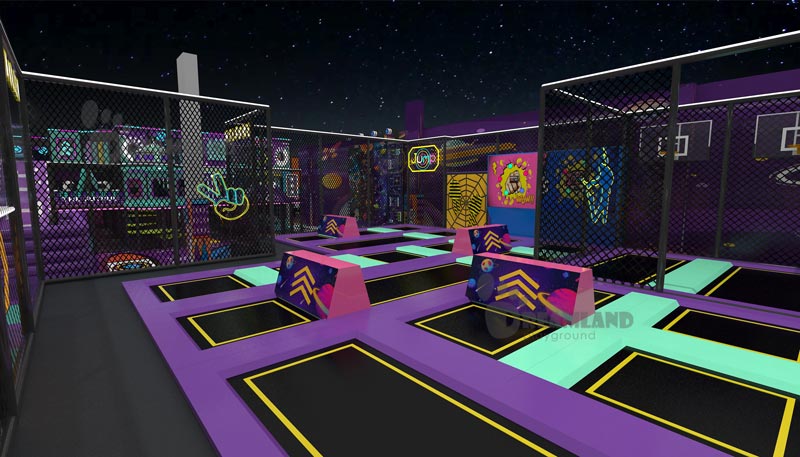
When selecting an indoor playground manufacturer to invest in, most people focus on the initial purchase price. However, the cost of the initial purchase price is not the only factor to take into consideration when trying to determine the overall value of your investment. Other factors, such as the performance of the product, how long it will last, its safety features, and how much it will cost to maintain the product over time, are all key points to consider when selecting an indoor playground manufacturer to invest in.
Why Low-Cost Equipment Can Increase Long-Term Expenses
Indoor playground equipment made at low cost is mostly produced using inferior steel structures, low-density foam, and inferior surface materials. This equipment will wear faster, deform sooner, and can pose safety risks. The operator will have to fix these issues regularly. A lot of time and money will be spent on repairs and on replacing parts. In FECs with many commercial areas, even a small standstill can cause a lot of damage to your revenue.
Quality as a Long-Term Operational Advantage
The high-quality indoor playground manufacturers focus on precision engineering, the use of certified materials, and robust structural design. The initial investment is higher, but this equipment of this kind offers many advantages in terms of long-term operational capabilities. For example, they have to be maintained less frequently, they are safer, and offer a longer useful life. Thus, investors can be sure of a stable operation of their business and good returns on their investment in the long run.
Balancing Investment Decisions for Sustainable ROI
Evaluating the total lifecycle cost of an investment is far more important than just focusing on the initial purchase price. This would also take into account the cost of installation, the ongoing maintenance, the equipment’s safety performance, and how long it lasts. By purchasing your indoor playground from a reputable manufacturer, you can ensure that your investment continues to perform well and deliver consistent results, thus helping to keep repair costs down and ensuring that your customers receive the best experience possible, allowing for long-term sustainable profit.
Questions to Ask an Indoor Playground Manufacturer Before Starting Your Project
Some important questions to ask potential indoor playground manufacturers before you make a decision would be how long it would take for them to produce play equipment and how long it would take for them to install the playground. It would also be very wise to ask about the warranty that they provide for their playgrounds. You should also ask if the indoor play equipment manufacturer can customize play equipment for your business or if they have standard designs that you can just choose from.
You should also find out how they test their indoor playground equipment for safety and what support they can offer for the installation of your playground. If they are not able to send someone to your location to install your playground, then your business may be at a disadvantage to your competitors. These questions allow us to know whether a manufacturer has true project experience.
Conclusion: Choosing the Right Indoor Playground Manufacturer for Long-Term Success
For FEC investors, play café operators, and commercial entertainment developers who are launching new projects, selecting a qualified and experienced manufacturer of indoor playground equipment is key to delivering a successful project and running it efficiently and profitably in the long term.
Frequently Asked Questions (FAQs)
How long does it take to manufacture and install an indoor playground?
On average, most playgrounds are completed within a few weeks to a couple of months, and then are installed on site by a team of professionals. The time frame for production and the installation of the playground structures can vary depending on the size and complexity of the playground, as well as any custom features that have been incorporated into the design.
What safety certifications should an indoor playground manufacturer provide?
A manufacturer who produces playground equipment should fulfill several safety criteria. This includes fulfilling the criteria of the American (ASTM), the European (EN1176 and EN1177) standards, in addition to the safety of the materials that are used, and fire resistance.
Can indoor playground equipment be fully customized?
Yes, most professional indoor playground manufacturers offer fully custom indoor play structure design.
What is included in a turnkey indoor playground solution?
A turnkey project encompasses the whole scope of a concept design, followed by engineering, manufacturing, shipping, and installation of the indoor play equipment, as well as after-sales service and support.
How do I compare different indoor playground manufacturers?
Evaluate their experience, past projects, Safety compliance to international standards (e.g., ASTM, EN1176, EN1177), and local laws and regulations they follow, Use of quality materials to provide long-lasting play equipment, Ability to offer custom designs, and a turnkey service to complete all work from design and build to installation and after-sales service.