

ASTM F1918 for Soft-Contained Play Equipment: What U.S. Buyers Should Know
This soft play equipment standard covers safety and performance requirements for soft-contained play equipment intended for use by children within the age range covered by ASTM F1918 and installed in family entertainment centers (FECs) and similar facilities. In the U.S., it is the primary safety performance standard for soft-contained play equipment used in indoor playgrounds, family entertainment centers (FECs), children’s museums, restaurants, and similar commercial play facilities. Use of this standard can help U.S. buyers assess whether selected soft play equipment has been designed to provide an appropriate play environment for children and acceptable long-term service in a commercial facility.
Whether you are opening a new family entertainment center, adding to an existing facility, or looking to replace worn-out soft play equipment, knowing how ASTM F1918 applies to your specific needs can help you evaluate and purchase safer, higher-quality soft-contained play equipment. Many playground buyers are familiar with ASTM F1918 but are unaware of the specific requirements that make up the standard and how it can be used in the buying process. The purpose of this article is to explain the specifics of ASTM F1918 and how buyers can use the standard when purchasing soft-contained play equipment.
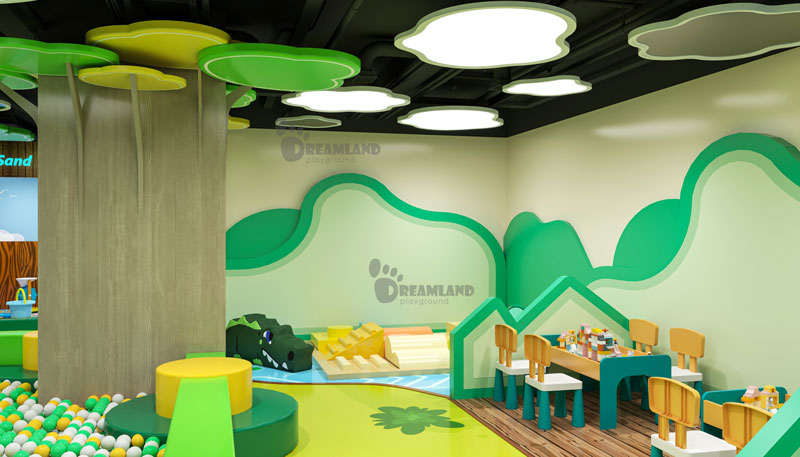
What Is ASTM F1918 for Soft-Contained Play Equipment?
ASTM F1918 is the primary U.S. safety performance standard for soft-contained play equipment (SCPE) used in indoor playgrounds, family entertainment centers (FECs), children’s museums, restaurants, and other commercial play facilities. The standard sets safety and performance requirements for SCPE, including materials and manufacture, performance, access and egress, equipment, structural integrity, maintenance, fire safety, and evacuation, with the purpose of reducing the potential for life-threatening and debilitating injuries during normal use.
For U.S. buyers, understanding the criteria for safe SCPE can be very useful. If a playground equipment supplier states that its products are designed or manufactured to meet the requirements of ASTM F1918, those products have been developed according to industry-recognized safety criteria rather than only the supplier’s internal criteria. When selecting equipment, this information can help buyers compare products from different manufacturers and support discussions with architects, inspectors, insurance companies, and facility owners.
The current published edition of ASTM F1918 is F1918-21. It is always best to confirm the applicable edition with the building authorities, review the project specifications, and check the requirements of the insurance provider and facility owner. It is also best to have the supplier identify the edition of ASTM F1918 used for the design and manufacture of the equipment to avoid potential problems later, such as having to redesign the equipment or installing equipment that is unsuitable for the application.
What Types of Indoor Playground Equipment Does ASTM F1918 Cover?
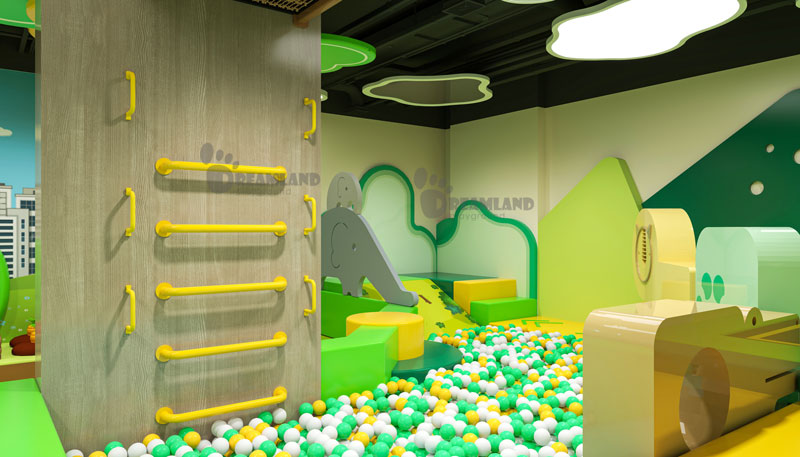
ASTM F1918 applies to soft-contained play equipment (SCPE) commonly found in commercial indoor playgrounds for children. SCPE consists of play structures designed to encourage physical activity through climbing, crawling, sliding, balancing, and interactive play. These structures are typically designed and manufactured to reduce the possibility or severity of injury through the use of appropriate protective and confining features, which may include soft materials. They are intended to provide a contained environment in which children can engage in active play while moving from one activity to another.
Examples of equipment that may fall within the scope of ASTM F1918-21 include:
- Multi-level indoor play structures
- Netted play systems and climbing frames
- Crawl tubes and tunnel systems
- Enclosed tube slides and spiral slides
- Suspension bridges, rope bridges, and connecting walkways
- Elevated platforms and play decks
- Padded obstacles, rollers, and interactive play elements
- Connected ball play areas integrated into the main play structure
- Foam- or soft-padded climbing features within the enclosed SCPE system
These components are often connected to form a single soft-contained play area where children can move from one activity to another within the enclosed SCPE environment.
In a family entertainment center, other types of soft play and attraction elements may also be available. Trampolines, amusement rides, water play, public-use playground equipment, sports and fitness equipment, and other themed play areas may be covered by other ASTM standards or additional documents issued by organizations, governing bodies, or companies that specialize in these types of play and entertainment systems. A typical indoor playground includes many different types of attractions, so it would be incorrect to assume that a single standard covers an entire project.
Because indoor playgrounds are often made up of separate play structures or units within a single facility, the buyer should ask the manufacturer what safety standards have been used for each play structure or unit. Furthermore, the buyer should request documentation describing how each play structure or unit was designed and tested to meet its intended use. This will help ensure that each major piece of play equipment was designed and tested in accordance with the proper safety standards.
What Safety Requirements Does ASTM F1918 Address?
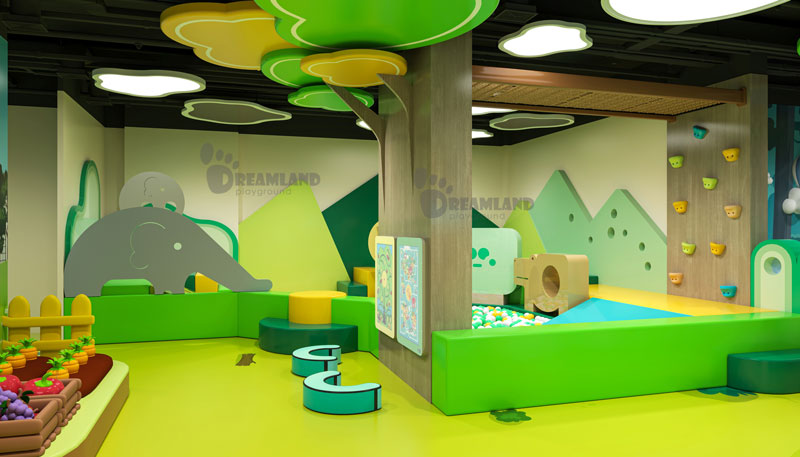
ASTM F1918 addresses safety for soft-contained play equipment from the design stage through the service life of the equipment, including use, inspection, and maintenance. It serves as a reference point for indoor playground buyers to assess whether their supplier has designed, manufactured, installed, and maintained the equipment to support safe use over time. The standard uses a holistic approach to minimize hazards throughout the equipment life cycle rather than focusing only on individual components.
Below is a list of safety aspects that should be reviewed when evaluating indoor playground suppliers' proposals.
Playground Design and Layout
The layout of the play equipment should support the safe movement of children throughout the play structure. Examine the arrangement of platforms, tunnels, slides, bridges, and climbing features to ensure that there are safe and effective means of separating areas and preventing children from entering zones that are not intended for their age group. Check that netting and other protective features are appropriately sized and installed to protect users effectively. The design should also account for the safe circulation of children around the equipment, provide age-appropriate play areas, and address foreseeable hazards.
Materials and Structural Integrity
The structural elements of the soft-contained play equipment, including frames, connectors, netting, and padding, must be made of durable materials and be able to withstand continuous use in a commercial indoor environment. Playground components must be able to perform safely and adequately over extended periods. Playground padding must cover areas where impact protection is required. The structural elements of the playground must remain securely in place during all phases of normal use.
Safe Access and Exit Routes
Children must have safe access to the play equipment, be able to move through it, and safely return to a lower level. Access points to enclosed crawl spaces, upper levels of the play equipment, and emergency exits must be designed for safe use by children and for easy access by staff who monitor children at play or provide assistance when needed. Staff access to the play equipment must also be considered in the playground design.
Proper Installation
For a play structure with soft-contained components to provide physically active play safely, it must be installed as intended. ASTM F1918 addresses the importance of proper installation and the need for the finished installation to match the approved design and intended functionality.
Inspection Before Opening
The completed installation should be inspected before the indoor playground begins operation. Major components should be checked for proper assembly, and safety features should be verified for correct function. Ask the supplier for a description of the inspection process and documentation of the final installation inspection.
Ongoing Maintenance and Operational Safety
Safety responsibilities do not end after the initial installation of play equipment. Staff must perform ongoing checks during operation and regular inspections to identify potential problems before they create hazards or cause incidents. It is crucial to check for wear or damage to components such as netting, padding, and fasteners and to replace worn items immediately. Maintenance should also ensure that all moving parts function properly. Slides and other stationary play equipment should be inspected for signs of damage or wear.
ASTM F1918 Supports the Entire Soft-Contained Play Equipment Project
Buyers need to understand that ASTM F1918 is not simply a manufacturing standard reviewed once near the end of an indoor playground project. F1918 should be used as a guiding safety standard for a soft-contained play equipment project from the initial concept through design and material selection. The standard should also be referenced during installation, inspection, routine maintenance, and the safe operation of the equipment throughout its service life. Buyers can use ASTM F1918 to help evaluate suppliers and identify potential problems that may require modification before or after installation. In addition, applying ASTM F1918 can help support a safer play environment for children.
ASTM F1918 vs. ASTM F1487: What Is the Difference?
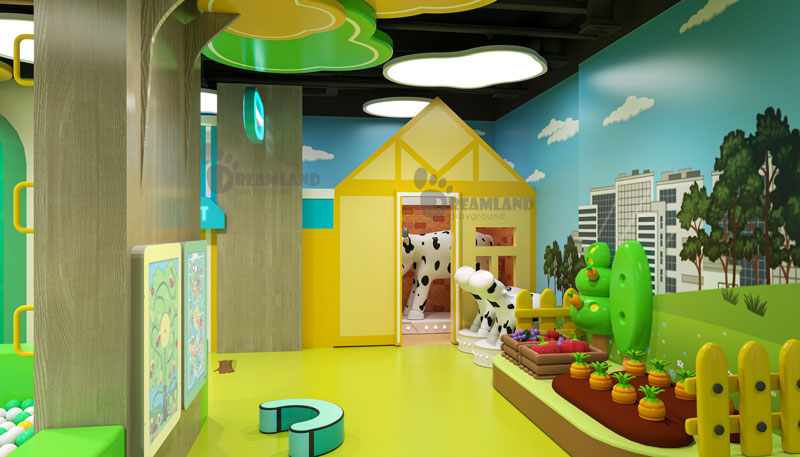
ASTM F1918 focuses on soft-contained play equipment (SCPE) used in enclosed indoor play structures found in family entertainment centers, restaurants, children’s museums, and other commercial play facilities. When an indoor play structure is contained, incorporates features such as padding and netting, and is intended for users within the standard’s covered range—from the 5th-percentile 2-year-old through the 95th-percentile 12-year-old—it may fall within the scope of SCPE. In that case, ASTM F1918 applies.
ASTM F1918 Soft-Contained Play Equipment (SCPE): As more children’s play facilities have been developed in family entertainment centers, restaurants, children’s museums, and other commercial play facilities, ASTM F1918 has established safety requirements for this type of contained play structure. SCPE is generally designed for use in indoor environments. Such play structures typically have multiple levels and use a combination of components, such as padded equipment, netting, and slides, to provide an active play environment for children. Indoor playgrounds in facility-based play locations are a common application of SCPE.
ASTM F1487 is the standard for public-use playground equipment commonly installed in parks, child-care centers, schools, community centers, restaurants, and other public-use settings. U.S. Consumer Product Safety Commission (CPSC) staff participates in voluntary standards activities for ASTM F1487 and also publishes guidance for public playground safety.
Because many facilities contain a variety of play equipment, it is very important that the buyer or specifier first identify the appropriate category or categories for the equipment for which specifications are being developed or reviewed. More than one ASTM standard may apply to a given project.
|
Feature |
ASTM F1918 |
ASTM F1487 |
|
Primary Equipment |
Soft-contained play equipment (SCPE) |
Public-use playground equipment |
|
Typical Location |
Indoor playgrounds, FECs, children's museums, restaurants |
Public parks, schools, childcare centers, community playgrounds, restaurants, and other public-use settings |
|
Play Structure Type |
Contained play systems, often with netting, platforms, tunnels, slides, and padded components |
Typically open playground structures with swings, climbers, slides, and other public-use play equipment |
|
Main Focus |
Materials and manufacture, performance, access and egress, equipment, structural integrity, maintenance, fire safety, and evacuation |
Safety requirements for public-use playground equipment |
|
Common Users |
Commercial indoor playground operators and equipment manufacturers |
Municipalities, schools, parks departments, landscape architects, and playground manufacturers |
|
Project Selection |
Usually applies to commercial indoor soft play systems |
Usually applies to public playground installations |
Is ASTM F1918 a Certificate? What Documents Should Buyers Request?
No. ASTM F1918, the Standard Safety Performance Specification for Soft Contained Play Equipment, is not a certificate issued to an indoor playground. Rather, it sets safety and performance criteria and outlines specific requirements for SCPE within its scope.
Evidence supporting compliance with ASTM F1918 is typically provided through a collection of documents generated throughout the project, such as engineering records, test reports, installation documentation, and inspection reports. Therefore, it is not sufficient to rely on a single document to confirm compliance for an entire playground.
Understanding the Different Types of Project Documents
Each document serves a specific function within the overall design, manufacturing, and installation process of the indoor playground.
|
Document |
Purpose |
What It Demonstrates |
|
ASTM F1918 Standard |
Defines the safety requirements for soft-contained play equipment |
The technical requirements the project is intended to follow |
|
Material Test Report |
Verifies the properties or performance of specific materials |
Confirms the quality or characteristics of individual materials—not the complete playground |
|
Component Test Report |
Evaluates individual parts or assemblies |
Shows that a specific component has been tested, not the entire play system |
|
Design Review |
Reviews the playground layout and engineering design |
Identifies potential safety or design issues before manufacturing |
|
Structural Calculations |
Demonstrates engineering analysis of structural elements |
Supports the strength and stability of the designed structure |
|
Supplier Compliance Statement |
Declares that the equipment has been designed or manufactured in accordance with specified standards |
Represents the supplier’s statement, which should be supported by appropriate documentation |
|
Third-Party Inspection Report |
Independent assessment performed by a qualified inspector |
Provides an impartial evaluation of the completed equipment or installation |
|
Final On-Site Inspection Report |
Confirms the installed playground has been assembled correctly before opening |
Documents the condition of the completed installation at project handover |
A Material Test Report Is Not Proof of Full ASTM F1918 Compliance
A common buyer error is to believe that a material test report or a single laboratory test report proves that an entire indoor playground complies with ASTM F1918. This type of documentation confirms only the tested properties or performance of the identified materials or components. It does not confirm that the design, final assembly, and complete installation of the play structure comply with all applicable sections of ASTM F1918.
For this reason, buyers must review the complete set of project documents rather than rely on a single certificate or material test report.
Document Checklist by Project Stage
Requesting the right documents at the appropriate stage of a project can support a smoother approval process and minimize potential risks.
Before Ordering
Before placing an order, ask your supplier for:
- A supplier compliance statement detailing the edition of ASTM F1918 used for the supplier’s proposed indoor playground structure
- Design drawings and layout plans
- Engineering or design review documentation
- Structural calculations, where applicable
During Manufacturing
- Material test reports for critical materials
- Component test reports, where available
- Quality control documents for structural and safety-related components
Before Installation
Prior to installation, confirm that:
- Installation instructions are available
- The installation team is capable of and authorized to install the equipment according to the manufacturer’s instructions
- Any required project documentation has been reviewed
After Installation
Before opening the facility, request:
- A third-party inspection report, if required by the project or local authority
- A final on-site inspection report for the completed installation
- Maintenance and inspection manuals for ongoing operation
Collecting documents throughout the project rather than waiting until installation is complete can also give buyers greater confidence that the supplier has designed, manufactured, installed, and inspected the indoor play equipment in accordance with current safety practices. Cumulative evidence of compliance is far more useful than a single document claiming that the equipment is ‘ASTM F1918 certified.'
Common ASTM F1918 Mistakes and Buyer Checklist
When purchasing a commercial indoor playground, it is not enough to select an attractive design. Many buyers experience project delays and unexpected costs because they assume that the supplier has already addressed every detail related to ASTM F1918 requirements. However, reviewing key requirements before production starts can help prevent such problems and reduce the costs associated with necessary changes.
Common Mistakes Buyers Should Avoid
1. Choosing a supplier based only on price
Lower quotations may not include crucial services and documents such as engineering support, installation, inspections, and technical documents. Compare the complete scope of the supplier’s offer with that of other potential suppliers.
2. Not confirming the applicable ASTM F1918 edition
The project specifications, local authorities, and insurers can all refer to different editions of the standard when discussing your indoor playground project. Make sure that your supplier designs your playground to meet the requirements of the edition of the standard specified for your project.
3. Assuming one test report proves full compliance
Testing of specific materials or components does not verify that the entire indoor playground complies with the ASTM F1918 standard.
4. Skipping the design review
Approving project drawings without reviewing play zone designs, safety features, playground barriers, and access paths can result in redesigns after the equipment has entered production, thereby increasing total project costs and lead times.
5. Waiting until installation to request documents
Make sure you have all playground equipment documentation before installation begins. Confirm that all requested documents, including compliance statements, engineering documents, and test reports, are available early enough for inspections to begin on time.
6. Overlooking installation requirements
There is more to the proper installation of playground equipment than simply putting the pieces together. As with any equipment, an indoor playground can be damaged during installation. Furthermore, the indoor playground must be installed in accordance with the manufacturer’s instructions by a qualified installer.
7. Ignoring maintenance planning
Regular inspections and preventive maintenance are required to maintain the safety of the indoor playground over time. Request maintenance manuals and inspection guides for different parts of the playground from suppliers.
Indoor Playground Buyer Checklist
Use this checklist when evaluating suppliers and comparing quotations for an indoor playground.
How Dreamland Playground Supports ASTM F1918 Indoor Playground Projects
Dreamland playground supports its customers throughout the entire indoor playground project. We not only supply playground equipment for children but also support our customers with planning, design, manufacturing, documentation for all playground components, and after-sales service.
Site Review & Custom Design
We review your project’s requirements and create an approved plan and design for your indoor playground based on your specified site dimensions, facility users, and business goals.
Manufacturing & Quality Control
We manufacture playground equipment in accordance with quality control procedures, the approved design, and the terms and conditions of the contract.
Project Documentation
For our customers, Dreamland Playground also provides design drawings, material information, and other technical documents. We would like to remind you that, before ordering, you should ask your local authorities which documents are required.
Installation & Remote Support
Installation guidance is available, and remote technical support can be provided to answer any questions relating to the project.
Maintenance & After-Sales Service
After the purchase of an indoor playground, Dreamland provides information to support proper operation and maintenance. This includes maintenance guidance, spare parts, technical assistance, and more.
By supporting every stage of the project life cycle, Dreamland Playground helps buyers manage the indoor playground project efficiently and competently.
Conclusion
ASTM F1918 is an important safety performance standard for soft-contained play equipment, providing a recognized framework for designing, building, installing, and maintaining commercial indoor playgrounds. However, buyers should not view it as a single certificate or assume that one material or component test report proves full compliance. A safe indoor playground depends on the entire project—from thoughtful design and quality materials to proper manufacturing, professional installation, thorough inspections, routine maintenance, and responsible daily operation. By understanding how ASTM F1918 applies throughout the project lifecycle and requesting the appropriate documentation at each stage, buyers can make more informed decisions, compare suppliers with greater confidence, and help create a safer, more reliable play environment for children.
Frequently Asked Questions About ASTM F1918
What Is ASTM F1918?
ASTM F1918 is a U.S. safety performance standard for soft-contained play equipment used in commercial indoor playgrounds, family entertainment centers, and similar commercial play facilities.
What Is the Current Version of ASTM F1918?
ASTM F1918-21 is currently the latest edition published by ASTM. However, it is always wise to review the contract, local authority, and inspector requirements, and technical plans and specifications to confirm whether this edition or an earlier edition applies to the project.
Is ASTM F1918 Required for Every Indoor Playground?
Whether ASTM F1918 needs to be referenced for an indoor playground depends on several factors, including the type of equipment, the terms of the buyer-seller contract, local laws and regulations, inspector requirements, insurer requirements, and building owner requirements. The applicable requirements can vary from project to project and from location to location.
Is ASTM F1918 a Certificate?
No. ASTM F1918 is a standard, not a certificate. Evidence supporting compliance may include test reports, inspection reports, engineering drawings, and other documents supplied by a manufacturer to support its statement of compliance with the standard.
What Is the Difference Between ASTM F1918 and ASTM F1487?
ASTM F1918 applies to soft-contained play equipment used in commercial indoor playgrounds and family entertainment centers. By contrast, ASTM F1487 specifies requirements for public-use playground equipment, which is commonly installed in parks, schools, child-care centers, restaurants, and other public-use settings.